
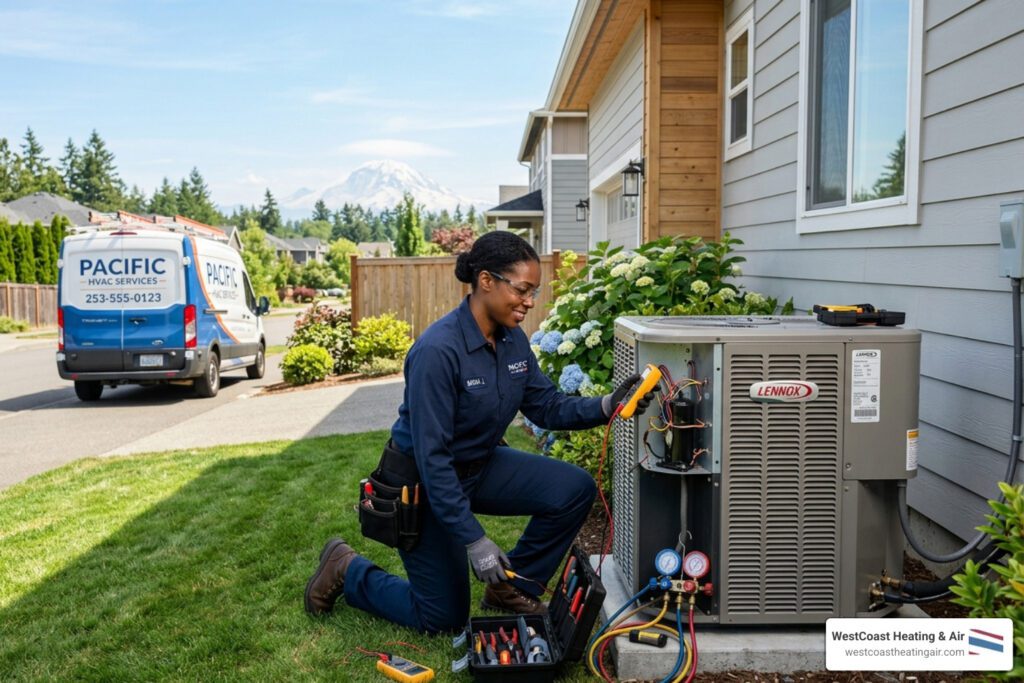
When Your AC Fails in Tacoma, WA, Every Minute Counts
Emergency AC maintenance in Tacoma, WA is something no homeowner wants to deal with — but when Tacoma’s summer temperatures climb into the upper 80s and low 90s, a failing cooling system can quickly go from uncomfortable to dangerous.
Here’s what to do right now if your AC is failing:
- Turn off your system at both the thermostat and the circuit breaker to prevent further damage.
- Check for obvious issues like blocked vents, tripped breakers, or a thermostat that needs new batteries.
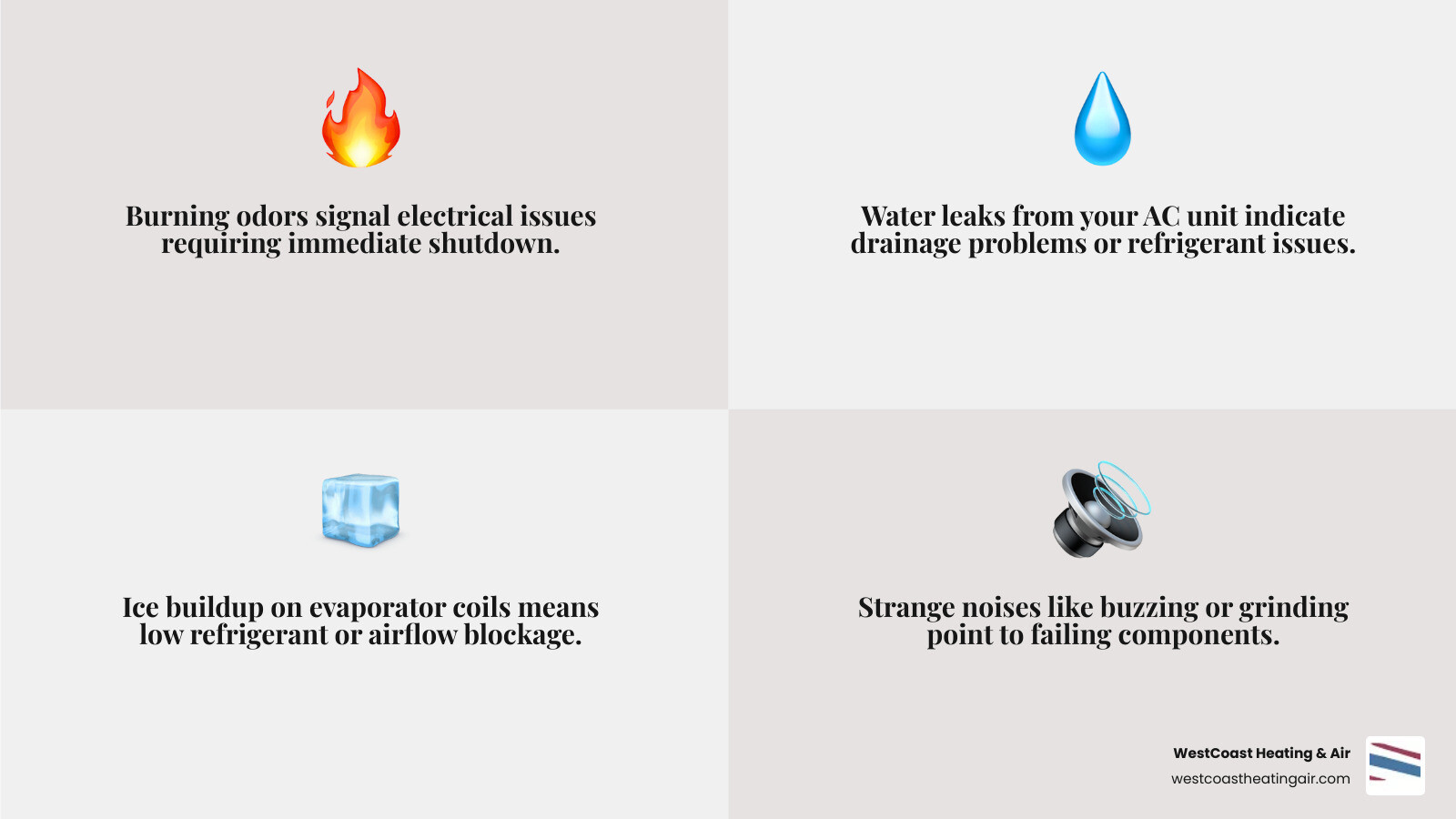
- Look for warning signs — burning smells, water leaks, ice buildup, or strange noises all signal a true emergency.
- Ventilate your home by opening windows if unusual odors are present.
- Call a certified residential HVAC technician immediately — do not attempt to repair electrical or refrigerant issues yourself.
- Move vulnerable residents (elderly, children, or those with medical conditions) to a cooler space while you wait.
Tacoma’s coastal humidity makes AC systems work harder than in drier climates, increasing the risk of sudden breakdowns — especially during peak summer heat. Ignoring early warning signs often turns a minor repair into a major (and costly) system failure.
I’m Michael Smith, owner of WestCoast Heating & Air, and after 30 years at Boeing followed by hands-on work in the residential HVAC industry across the Pacific Northwest, I’ve seen how quickly an overlooked AC issue can escalate into a full emergency AC maintenance situation in Tacoma, WA. Whether it’s a frozen evaporator coil on a 90-degree afternoon or a refrigerant leak discovered too late, I’ll walk you through exactly what to watch for and what to do.
Is My Cooling System Failing? Identifying Emergency AC Maintenance in Tacoma, WA
It is a common Tuesday afternoon in Tacoma. The sun is beating down on Commencement Bay, and inside your home, the air feels… heavy. You walk over to the vents, and instead of a crisp, cool breeze, you feel a lukewarm puff of air. Is this a minor glitch, or are you looking at a full-blown cooling crisis?
Identifying when you need emergency AC maintenance in Tacoma, WA is the first step toward protecting your home. In our region, we aren’t just fighting the heat; we are fighting the humidity. When the moisture levels rise, your Air Conditioning system has to work double-time to dehumidify the air while cooling it. This extra strain is often what pushes a struggling unit over the edge.
As a Residential Heating And Cooling Company, we frequently see systems that have simply “given up” because a small part failed and triggered a chain reaction.
Critical Safety Signs Requiring Emergency AC Maintenance in Tacoma, WA
Not every AC issue is a “drop everything and call” situation, but safety concerns always take priority. If you notice any of the following, treat it as a critical emergency:
- Burning Odors: If your vents are emitting a smell like burning plastic or electrical ozone, shut the power off immediately. This often indicates overheating wires or a failing motor that could lead to a fire.
- Buzzing or Grinding Sounds: Your AC should hum, not scream. Loud mechanical noises usually mean a component like the compressor or blower fan is about to fail catastrophically.
- Visible Sparking or Smoke: This is a clear electrical hazard. Do not touch the unit; head straight for the circuit breaker.
- Refrigerant Leaks: If you see liquid pooling around your unit that isn’t water, or if you hear a persistent hissing sound, you might have a refrigerant leak. This is a chemical hazard that requires professional handling.
- Significant Water Leaks: While some condensation is normal, a sudden deluge of water can damage your home’s structure and electrical systems. This is especially common with Ductless Heating And Cooling units if the condensate line becomes clogged.
When to Call for Emergency AC Maintenance in Tacoma, WA During a Heatwave
In Tacoma, we are used to mild weather, so when a heatwave hits and temperatures soar into the 90s, our bodies—and our AC units—aren’t always prepared. During these times, a loss of cooling isn’t just an inconvenience; it can be a health risk.
You should seek immediate help if:
- Vulnerable Residents are Present: If you have infants, elderly family members, or individuals with chronic respiratory or cardiac conditions in the home, maintaining a safe temperature is vital.
- Indoor Temperatures are Climbing Rapidly: If your thermostat shows the indoor temperature rising despite the AC running, the system has lost its ability to reject heat.
- Humidity is Out of Control: High humidity makes it harder for the body to cool itself. If your home feels like a sauna, your AC’s dehumidification cycle has failed.
We provide Tacoma Emergency Heat Pump Maintenance That Never Sleeps because we know that heatwaves don’t follow a 9-to-5 schedule. When the coastal humidity settles in and the sun refuses to quit, you need a team that responds in hours, not days.
Immediate Steps to Take While Waiting for a Technician
Once you’ve made the call for emergency AC maintenance in Tacoma, WA, your priority shifts to damage control and keeping your family comfortable. Don’t just sit in a sweltering house—take these proactive steps.
First, perform a system shutdown. Even if the unit is still “trying” to work, running a malfunctioning AC can turn a simple part replacement into a total system replacement. Turn it off at the thermostat, then flip the dedicated breaker in your electrical panel.
Next, check the basics. We’ve seen many “emergencies” that were actually just a tripped breaker or a dead battery in the thermostat. If you have a ductless system, refer to these 24 Hour Ductless Maintenance Puyallup Tips to see if a simple filter cleaning or remote reset might solve the problem.
Ventilate wisely. If the air outside is cooler than inside (usually late at night or early morning), open the windows. However, during the heat of the day, keep the blinds closed and the windows shut to trap whatever cool air is left.
Emergency vs. Non-Emergency Symptoms
| Symptom | Emergency Status | Action to Take |
|---|---|---|
| Burning smell or sparks | CRITICAL | Shut off power, evacuate if smoke persists, call us. |
| Complete loss of cooling in 90°+ heat | HIGH | Turn off unit, move vulnerable people to cool areas, call us. |
| Strange grinding or screeching noises | MODERATE | Shut off unit to prevent mechanical failure, call for service. |
| Slightly reduced airflow | LOW | Check and change your air filter; schedule a standard visit. |
| Thermostat screen is blank | LOW | Replace batteries; if it stays blank, call for service. |
Seasonal Risks and Preventing Future Breakdowns
Tacoma’s weather is unique. We deal with long, damp winters where the AC sits idle, followed by sudden bursts of heat in the spring and summer. This “start-stop” cycle is incredibly hard on mechanical equipment.
When the seasons shift, especially during the fall transition, it is easy to forget about the AC. However, this is exactly when you should be looking at our Tacoma emergency furnace maintenance guide to prepare for the cold, while also ensuring your cooling components are tucked away safely.
To prevent needing emergency AC maintenance in Tacoma, WA next year, follow these local tips:
- Spring Tune-Ups: Always have a professional inspect your system before the first heatwave. We check refrigerant levels, clean the coils, and ensure the electrical connections are tight.
- Filter Changes: This is the simplest DIY task. A clogged filter restricts airflow, causing the evaporator coil to freeze. In Tacoma, with our pollen and occasional wildfire smoke, you should check your filter every 30 to 90 days.
- Debris Removal: Our Pacific Northwest winds love to blow pine needles, leaves, and twigs into outdoor condenser units. Keep a two-foot “clear zone” around your outdoor unit to ensure proper airflow.
- Ductless Care: If you use a mini-split, keep the outdoor unit clear of snow in winter and cottonwood fluff in summer. Check out our Emergency Ductless Heating Repair Tacoma Guide for more on maintaining these versatile systems.
Frequently Asked Questions about Tacoma AC Emergencies
What qualifies as a true AC emergency?
A true emergency involves safety risks (burning smells, electrical sparks, gas/refrigerant leaks), potential property damage (major water leaks), or a complete loss of cooling during extreme heat, especially if vulnerable people live in the home. If your system is making a sound like a “bag of rocks” in a dryer, shut it down immediately—that is an emergency waiting to happen.
How quickly can I expect a response in Tacoma?
Response times can vary based on weather conditions and current demand, but as a local, family-owned company based in Puyallup, we take pride in our ability to reach Tacoma, University Place, and Sumner residents quickly. Our goal is always to get your cooling restored in hours, not days, because we know how miserable a hot house can be.
Can I prevent emergencies with regular maintenance?
Absolutely. Most emergency calls we receive are for issues that could have been spotted during a routine spring tune-up. Small things like a worn-out capacitor or a slightly low refrigerant charge don’t cause problems in 70-degree weather, but they will cause a total system failure when it hits 90 degrees.
Conclusion
At WestCoast Heating & Air, we understand that your home is your sanctuary. When the heat rises and your AC fails, it disrupts your comfort, your sleep, and your peace of mind. With over 20 years of local experience serving the South Sound from Steilacoom to Orting, we bring a level of expertise and personal care that only a family-owned business can provide.
We don’t just fix machines; we design residential comfort solutions tailored to the unique climate of the Pacific Northwest. Whether you are in Tacoma, Puyallup, or Spanaway, we are here to ensure your family stays cool and safe all summer long.
Don’t wait for a total breakdown to happen. Beat the heat with professional residential air conditioning services today and ensure your home remains the cool retreat you deserve. If you are currently facing an emergency, remember: shut down the power, stay hydrated, and give us a call. We’ve got you covered.