
Sudden Heating Failures During the First Winter Freeze
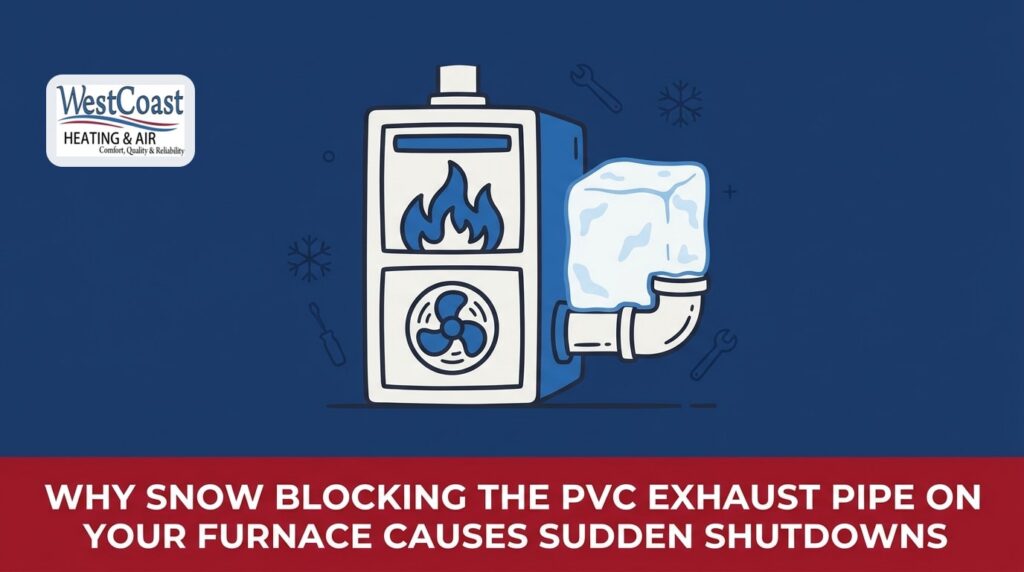
When the first real November freeze sets in and you wake up to an uncomfortably cold house, the issue is frequently just snow blocking pvc exhaust pipe on furnace components outside your home. You check your thermostat, but the system is completely unresponsive, or perhaps it is blowing cold air before shutting down entirely. In that moment of frustration, most homeowners assume the worst—a catastrophic equipment failure—but the reality is usually much simpler.
Before you panic about needing immediate gas furnace repair, it helps to understand why modern heating systems react this way to winter weather. Our team at WestCoast Heating & Air typically sees that a sudden loss of heat during an early cold snap frequently traces back to exterior vent obstructions rather than internal mechanical breakdowns. High-efficiency condensing furnaces are incredibly safe and efficient, but they rely heavily on a steady stream of fresh air from outside to operate correctly. When early winter storms roll in and cover these vital exterior vents, your system recognizes the danger and shuts itself down on purpose.
Understanding this critical connection between the weather outside and the equipment inside can save you from spending a freezing night in discomfort. By knowing what to look for, you can determine if your system just needs a quick, safe clearing of the exterior pipes, or if it is time to schedule professional gas furnace maintenance to get your home warm again.
The Mechanics: How Your High-Efficiency Furnace Breathes
To understand why a little bit of snow can cause a massive heating failure, you have to understand how modern heating systems are designed. Unlike older standard furnaces that pull air from inside your basement or utility closet and vent exhaust vertically through a metal chimney, modern high-efficiency units (typically rated at 90% AFUE or higher) use a completely different method. They utilize dedicated PVC pipes that exit horizontally through the side of your house.
These PVC pipes serve a critical dual purpose. One pipe acts as the intake, pulling in fresh, clean combustion air from the outdoors. The second pipe acts as the exhaust, pushing dangerous combustion gases and moisture safely out of your home. This sealed combustion process is what makes the system so incredibly energy-efficient, but it also means the furnace is entirely dependent on those pipes remaining completely clear.
Here is the exact sequence of how your high-efficiency system breathes during a normal heating cycle:
- The Call for Heat: Your thermostat detects a temperature drop and sends a signal to the furnace control board to begin the heating cycle.
- The Inducer Motor Starts: Before any gas is released, a small fan called the draft inducer motor turns on. Its job is to pull fresh air through the intake pipe and push leftover gases out the exhaust pipe.
- The Pressure Verification: As the inducer motor runs, it creates a specific amount of negative pressure (draft). The system must verify this pressure is correct before proceeding.
- The Ignition Sequence: Only after the proper airflow is confirmed will the system open the gas valve and ignite the burners to heat your home.
The Role of the Pressure Switch
The entire safety of this operation hinges on a small but vital component known as the pressure switch. This switch acts as the primary safety gatekeeper for the entire heating cycle. It constantly measures the exact draft pressure created by the inducer motor.
If the system detects an obstruction, such as snow blocking pvc exhaust pipe on furnace operations, the pressure drops instantly. The pressure switch is designed to fail safe—meaning if the required pressure is not met due to an obstruction, the switch trips and immediately shuts off the burners. This prevents dangerous gas buildup and ensures your system never runs unless it can safely vent the exhaust outside.
| Furnace Type | Venting Material | Venting Location | Vulnerability to Snow |
|---|---|---|---|
| Standard Efficiency (80% AFUE) | Metal Flue Pipe | Vertical through the roof/chimney | Low (protected by roof height and chimney caps) |
| High Efficiency (90%+ AFUE) | PVC Pipe | Horizontal through the side wall | High (susceptible to snowdrifts and freezing rain) |
Why Wet Pacific Northwest Snow Creates Solid Ice Blockages
Not all winter weather impacts your exterior vents in the same way. In regions that experience dry, light, powdery snow, a strong gust of wind or the force of the furnace exhaust itself might be enough to blow the snow away from the pipe opening. However, the climate in the Pacific Northwest creates a unique and highly problematic scenario for high-efficiency heating systems.
In areas like Puyallup WA, winter storms frequently bring heavy, wet precipitation often referred to locally as “Cascade concrete.” In our years of keeping local homes warm, the technicians at WestCoast Heating & Air have seen firsthand how this dense, moisture-rich snow clings to everything it touches, including the side of your house and your PVC vent pipes. When this heavy snow accumulates over the vent, it creates a physical barrier, but the real problem begins when the furnace tries to run.
Because high-efficiency furnaces extract so much heat from the combustion process, the exhaust gases leaving the PVC pipe are relatively cool compared to older systems, but they are still warm enough to contain a massive amount of moisture. When this warm, wet vapor hits the freezing wet snow covering the vent, it rapidly melts the inner layer of snow. As the ambient freezing temperatures surrounding the pipe cool that newly melted water, it rapidly turns into a solid block of ice.
This freeze-thaw cycle happens very quickly during a storm. Within a matter of hours, what started as a loose pile of wet snow transforms into a solid, impenetrable ice cap that completely seals the vent. Once that ice cap forms, the inducer motor can no longer push exhaust out, the pressure switch detects the blockage, and triggers an immediate safety lockout inside the home, leaving you without heat.
The Hidden Danger: Carbon Monoxide and Furnace Lockout Mode
It is easy to feel frustrated when your heating system shuts down during a freezing night, but that shutdown is actually a vital protective measure. A blocked exhaust pipe is not just a nuisance; it is a severe safety hazard. If your furnace were allowed to continue burning gas while the exhaust pipe was sealed shut by ice, the dangerous combustion byproducts would have nowhere to go.
The most lethal of these byproducts is carbon monoxide (CO). Carbon monoxide is an odorless, colorless, and tasteless gas that is produced whenever fuel is burned. If the exhaust is blocked, this toxic gas is forced to back up into the heat exchanger and can eventually spill out into your living spaces. The furnace enters “lockout mode” specifically to prevent these lethal gases from entering your home.
Attempting to bypass these safety switches, or repeatedly forcing the system to restart without checking for snow blocking pvc exhaust pipe on furnace components, can lead to severe health hazards for your family. The control board will usually allow a few retry attempts before going into a hard lockout, completely disabling the system until the issue is resolved.
Taking proactive steps to prevent furnace carbon monoxide leaks is essential for every homeowner with gas appliances. This includes keeping your exterior vents clear, scheduling annual professional inspections, and knowing exactly where to place carbon monoxide detectors near sleeping areas and heating equipment. A properly placed CO detector serves as your final line of defense if an exhaust issue ever compromises your indoor air quality.
Safe Steps to Clear Snow and Ice from Your Furnace Vent
If you find yourself without heat during a winter storm in Puyallup WA, checking your exterior PVC pipes should be your very first troubleshooting step. However, clearing the vent must be done carefully to avoid damaging the brittle plastic pipes or pushing debris further into the system.
Follow these safe steps to inspect and clear your furnace vents:
- Turn off the thermostat completely: Before you head outside, switch your thermostat to the “Off” position. This prevents the furnace from attempting to fire up while you are working near the exhaust, keeping you safe from sudden bursts of exhaust gas.
- Locate the exterior PVC pipes: Walk around the outside of your home to find the intake and exhaust pipes. They are typically white PVC pipes protruding from the side of the house, usually a few feet off the ground. There may be two separate pipes or a single concentric vent (a pipe within a pipe).
- Use your hands or a soft brush: Put on a thick pair of winter gloves and use your hands to gently wipe away accumulated snow. If the snow is packed, a soft-bristled snow brush (like the one you use for your car) is the best tool for the job.
- Never use sharp tools: This is a critical warning. Never use shovels, ice picks, hammers, screwdrivers, or sharp tools to chip away ice. Cold PVC is incredibly brittle in freezing temperatures and will shatter easily. If you crack the pipe, you will need professional repairs before the furnace can safely run again.
- Clear a 3-foot radius: Do not just clear the opening of the pipe. Shovel or brush away snow to create a minimum 3-foot clearance zone around the vents. This ensures adequate airflow, prevents exhaust gases from recirculating back into the intake pipe, and stops drifting snow from immediately re-blocking the vents.

What to Do If Your Furnace Remains in Hard Lockout
Once you have carefully cleared the snow and ice from the exterior vents, head back inside and turn your thermostat back to the “Heat” setting. In most cases, this simple action will initiate an automatic reset on modern furnaces. You should hear the inducer motor start up, followed by the ignition sequence, and shortly after, warm air should begin flowing through your vents.
However, if the system attempts to start but immediately shuts down again, or if it remains completely unresponsive, your furnace may have entered a “hard lockout.” A hard lockout occurs when the furnace’s control board registers too many failed ignition attempts during the November first-freeze or subsequent storms. The computer essentially locks the system down permanently until a manual reset is performed to ensure the home remains safe.
If you reach this point, it is crucial that you stop troubleshooting. Never attempt to open the internal furnace cabinet to manually reset pressure switches, alter internal wiring, or bypass safety mechanisms. These components deal with highly combustible gas and high voltage, and tampering with them is incredibly dangerous.
When the vent is clear but the heat won’t turn on, it is time to call for emergency gas furnace repair. As your rapid-response emergency backup for Pacific Northwest winter weather failures, WestCoast Heating & Air has the local expertise to safely diagnose the control board, verify the pressure switch is operating correctly, and restore your heat without compromising the integrity of your system’s safety features.
Frequently Asked Questions About Furnace Vent Blockages
Why did my furnace stop working after a snowstorm?
Your furnace likely stopped working because snow or ice blocked the exterior PVC exhaust or intake pipes. Modern high-efficiency furnaces have safety switches that immediately shut the system down if they detect a loss of airflow. This prevents dangerous combustion gases from backing up into your home.
How do I safely unfreeze my furnace exhaust pipe?
You should safely unfreeze your furnace exhaust pipe by using your gloved hands or a soft-bristled snow brush to wipe away the accumulation. Never use hot water, as it can quickly refreeze and make the problem worse, and never use sharp tools like ice picks or shovels that can shatter the cold, brittle PVC plastic.
What happens if a furnace exhaust pipe is blocked?
If a furnace exhaust pipe is blocked, the pressure switch inside the furnace detects the lack of proper draft and cuts power to the gas valve. The furnace will enter a safety lockout mode and refuse to run. This is a critical safety feature designed to prevent carbon monoxide from spilling into your living areas.
Can snow block a furnace exhaust pipe?
Yes, snow can easily block a furnace exhaust pipe, especially heavy, wet snow combined with strong winds. Because high-efficiency exhaust vents exit horizontally through the side wall near the ground, they are highly susceptible to snowdrifts and ice accumulation during major winter storms.
How much clearance does a PVC furnace vent need in the winter?
A PVC furnace vent needs a minimum of a 3-foot clearance radius during the winter to operate safely. This wide clearance zone ensures that fresh combustion air can enter the intake freely, exhaust gases can dissipate safely without recirculating, and drifting snow won’t immediately cover the pipes again.
Will my furnace automatically reset after I clear the snow?
Many modern furnaces will automatically reset and attempt to fire up once you clear the snow and turn the thermostat back on. However, if the system failed multiple times before you cleared the blockage, it may be in a “hard lockout” which requires a professional HVAC technician to safely reset the control board.
Understanding why your exterior vents get blocked by frost and snow is the first step in protecting your home during a winter freeze. By safely inspecting and clearing your PVC pipes, you can often restore your heat in minutes. But if your system remains locked out after the vents are clear, don’t take chances with your family’s safety—schedule your professional tune-up or emergency repair to ensure your home stays warm and secure all season long.