

Is It Time to Repair or Replace Your HVAC System? Here’s How to Know
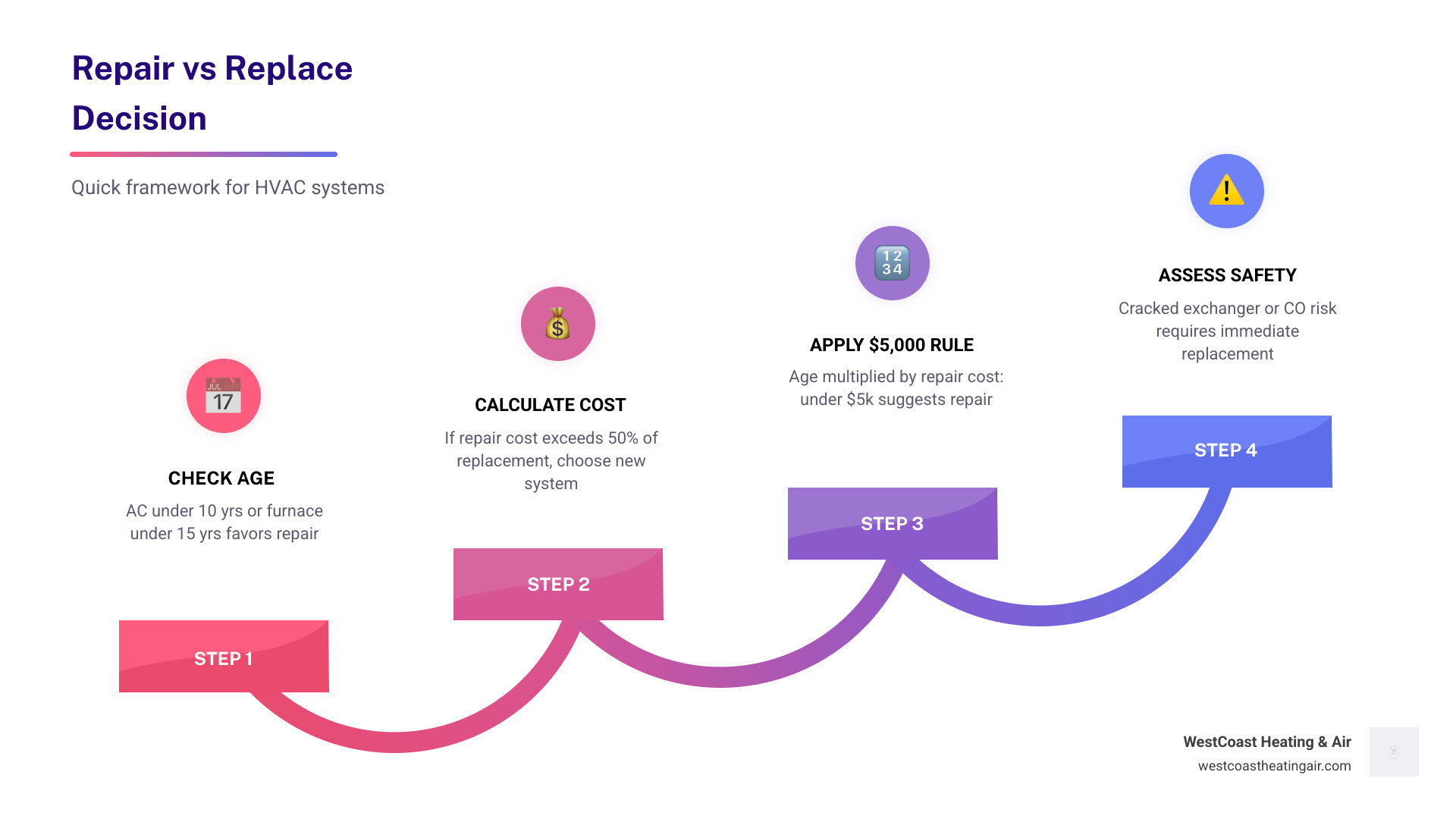
Knowing when to repair vs replace your HVAC system can save you from throwing money at a unit that’s already on its way out — or from replacing one that still has plenty of good years left. Here’s a quick answer to help you decide:
Repair your HVAC system if:
- The system is less than 10 years old (AC) or less than 15 years old (furnace)
- The repair cost is less than 30% of the cost of a new system
- The system age multiplied by the repair cost is under $5,000
- Issues are minor and isolated (capacitor, thermostat, flame sensor)
- The unit is still under warranty
Replace your HVAC system if:
- Your AC is over 10 years old or your furnace is over 15 years old
- The repair cost exceeds 50% of replacement cost
- System age multiplied by repair cost exceeds $5,000
- You’ve had multiple major repairs in the past two to three years
- Your system uses R-22 refrigerant (phased out and now very costly)
- There are safety concerns such as a cracked heat exchanger or carbon monoxide risk
For most homeowners, this decision hits at the worst possible time — the middle of a summer heat wave or a cold winter morning when the system just stops working. The pressure to decide quickly can lead to costly mistakes in either direction. That’s why having a clear, practical framework matters so much.
Every HVAC system eventually reaches a tipping point where continued repairs stop making financial sense. Most units last between 15 and 20 years, but age alone doesn’t tell the whole story. Repair history, energy bills, comfort performance, and safety all factor into what is ultimately a significant financial decision for your home.
I’m Michael Smith, owner of WestCoast Heating & Air in Puyallup, and after 30 years at Boeing followed by hands-on experience helping Pacific Northwest homeowners navigate exactly this kind of decision, I understand how to weigh the real costs of when to repair vs replace your HVAC system. In this guide, I’ll walk you through every factor that matters so you can make a confident, informed choice.
Key Factors in When to Repair vs Replace Your HVAC System
Making an informed choice about your home’s heating and cooling isn’t just about reacting to a sudden breakdown. It requires looking at the big picture of your system’s overall performance, its day-to-day energy consumption, and the long-term viability of its components.
When our team visits homes across Puyallup, Tacoma, and Sumner, we look at several intersecting factors before making a recommendation:
- System Performance and Comfort: Is your system actually keeping your home comfortable? If your upstairs feels like a sauna while your downstairs feels like an icebox, or if the indoor air constantly feels muggy and stale, a simple repair might not solve the underlying performance issues.
- Energy Efficiency Trends: Take a close look at your monthly utility bills. If you notice a steady, unexplained climb in energy usage compared to the same months in previous years, it means your system is working harder and running longer to do the same job. This decline in efficiency is a classic sign of internal wear.
- Refrigerant Type: If your air conditioner was installed before 2015, there is a strong chance it operates on R-22 refrigerant (commonly known as Freon). The EPA completely phased out the production and import of R-22. Because the supply is extremely limited, recharging an older R-22 system is incredibly expensive. A refrigerant leak in an R-22 unit is almost always a decisive signal that it is time to upgrade.
By evaluating these factors together, you can avoid the “repair spiral”—that frustrating cycle where you pay for one minor fix, only for another component to fail a few months later. For a deeper dive into these warning signs, check out our guide on Signs It’s Time to Upgrade Your HVAC System.
How System Age Affects When to Repair vs Replace Your HVAC System
Just like any hard-working appliance, your HVAC system has a natural design life. While routine preventative maintenance can push these units to the upper limits of their life expectancy, physical wear and tear eventually takes its toll.
- Central Air Conditioners (10 to 15 Years): Because of the heavy workloads during warm summer spells, air conditioning compressors and condenser coils undergo significant thermal stress. Once an AC unit crosses the 10-year mark, major component failures become much more common.
- Gas Furnaces (15 to 20 Years): Furnaces tend to last a bit longer than cooling units, but they face intense heating and cooling cycles that expand and contract the metal heat exchanger. After 15 years, the risk of metal fatigue and safety compromises increases. If you are weighing your options, explore Why Your Old Gas Furnace Is Feeling the Heat from Modern Heat Pumps to see how modern heating technology has evolved.
- Heat Pumps (10 to 15 Years): Because heat pumps provide both heating in the winter and cooling in the summer, they operate year-round. This dual duty means they accumulate run hours much faster than a standalone furnace or AC, typically putting their optimal replacement window around 12 years.
If your systems are approaching these age thresholds, investing in major repairs can be risky. You might fix the immediate problem only to have a different expensive component fail shortly after. When planning ahead, reading up on Furnace System Upgrades can help you understand the efficiency gains of modern equipment.
Using the 5,000 Rule to Determine When to Repair vs Replace Your HVAC System
When you are faced with a sudden repair quote, it can be hard to think objectively. Fortunately, the HVAC industry relies on a simple, time-tested mathematical guideline known as the $5,000 Rule to help remove the emotion from the decision.
To apply this rule, you simply multiply the age of your system (in years) by the quoted repair cost:
$$text{System Age} times text{Repair Cost} = text{Decision Index}$$
- If the result is under $5,000, repairing the unit is generally the more practical and cost-effective choice.
- If the result is over $5,000, your money is almost certainly better spent as a down payment on a modern, reliable replacement.
Real-World Examples of the $5,000 Rule:
- Scenario A (Repair): Your 6-year-old heat pump in Puyallup needs a new blower motor. The repair quote is moderate.
$$6 text{ years} times text{moderate repair cost} = text{Well under $5,000 threshold}$$
Decision: Repair the system. It is young enough to have plenty of reliable service life ahead. - Scenario B (Replace): Your 14-year-old air conditioner in Tacoma has a failed compressor. The repair quote is substantial.
$$14 text{ years} times text{substantial repair cost} = text{Well over $5,000 threshold}$$
Decision: Replace the system. Spending significant money on a system nearing the end of its lifespan is a poor long-term investment.
Using this formula gives you a clear financial gut-check, ensuring you don’t pour good money into a failing system.
When Repairing Your Residential HVAC System Makes Sense
While we always want to ensure our homes are running as efficiently as possible, replacing an entire HVAC system is a major project. There are many scenarios where keeping your existing unit running is absolutely the smartest and most economical path.
Repairing your system is highly recommended when:
- The Unit is Relatively Young: If your air conditioner is under 10 years old or your furnace is under 12 years old, it likely has years of dependable operation left once the immediate issue is resolved.
- The Repair Cost is Low: If the repair cost is under 30% of what a new system would cost, repairing is almost always the smarter investment.
- The System is Under Warranty: Most modern residential systems come with a 5-to-10-year parts warranty. If the broken component is covered, you will only be responsible for the labor costs, making the repair highly cost-effective.
- You Have a Strong Maintenance History: A system that has received annual professional tune-ups is far less likely to suffer from systemic decline. If you have taken great care of your unit, an isolated component failure is usually just a minor speed bump rather than a sign of total system failure.
If you are evaluating your overall home setup and considering different system configurations, our guide on The Honest Truth About Ductless vs Central HVAC Systems offers great insights into how different residential setups compare when it comes to long-term reliability.
Common Wear-and-Tear Components Worth Fixing
Many HVAC issues are caused by small, inexpensive electrical or mechanical parts that are designed to be easily replaced. Just like replacing the spark plugs or tires on a car, swapping out these wear-and-tear items does not mean your whole system is failing.
- Capacitors: These small, cylindrical components store electrical energy to help start and run the system’s motors. They are highly sensitive to summer heat and electrical surges, making them one of the most common—and inexpensive—parts to replace.
- Contactors: Think of a contactor as a heavy-duty switch that controls the flow of electricity to your compressor and fan motor. Over time, the electrical contacts can pit or wear out, but replacing them is quick and straightforward.
- Thermostats: Sometimes, a system that won’t turn on or constantly cycles isn’t broken at all; it just has a faulty or outdated thermostat. Upgrading to a modern smart thermostat is an easy, low-cost fix that can instantly improve comfort and control.
- Flame Sensors: In gas furnaces, the flame sensor is a safety device that detects whether a flame is present when the gas valve is open. If it gets dirty or corroded, the furnace will shut down shortly after lighting. A simple cleaning or low-cost replacement is all it takes to get things running safely again.
Red Flags That Signal It is Time for a Full Replacement
On the other side of the coin, there are clear warning signs that indicate your system is simply delaying an inevitable breakdown. Continuing to patch up a system with these symptoms is often a waste of household resources.
If you notice any of these red flags, it is time to start planning for a replacement:
- The “Repair Spiral”: If you have had to call an HVAC technician for repairs multiple times over the last two or three years, your system is in systemic decline.
- Stubborn Comfort Issues: If certain rooms are consistently too hot or too cold, or if your home struggles with high humidity during local muggy spells, your aging equipment is no longer capable of maintaining balanced indoor conditions.
- Skyrocketing Energy Bills: When internal components degrade, the system must run longer and work harder to heat or cool your home, leading to a noticeable spike in your monthly utility costs.
- The R-22 Refrigerant Trap: As mentioned, older AC units using phased-out Freon are incredibly expensive to service. A leak in an R-22 coil is a definitive sign that a full system upgrade is the only logical step forward.
Investing in a new system not only eliminates these headaches but can also be a major asset if you plan to sell your home in the near future. To see how an outdated system can impact your home’s value, read Is Your Old AC Killing Your Resale Price?. For older homes in neighborhoods like Steilacoom or SeaTac, you can also learn about your options in Teaching an Old House New Tricks: Retrofitting HVAC.
Critical Safety Hazards and Systemic Failures
While some HVAC issues only affect your comfort, others directly threaten your family’s health and safety. In these scenarios, repairing the system is often physically impossible or legally unsafe, making immediate replacement the only viable option.
- Cracked Heat Exchanger: The heat exchanger in your furnace is the metal chamber that keeps combustion gases (including deadly carbon monoxide) separate from the clean air circulating through your home. If this metal cracks due to age or overheating, carbon monoxide can leak directly into your living spaces. A cracked heat exchanger is an absolute safety urgent; the system must be shut down immediately and replaced.
- Severe Electrical Hazards: Aging wiring, corroded controls, and failing motors can create severe fire hazards inside your indoor air handler or outdoor condenser. If a technician discovers compromised electrical systems that pose a fire risk, patching them up is rarely a safe or lasting solution.
- Major Compressor Failure on an Outdated System: The compressor is the heart of your air conditioner. If it fails on a unit that is over 10 years old, replacing just the compressor is rarely wise. The labor-intensive nature of the job, combined with the fact that the rest of the system is also heavily worn, makes a full system replacement the much safer and smarter financial path.
The Impact of System Sizing and Home Comfort
Sometimes, the reason an HVAC system struggles isn’t because a part is broken, but because the system was never sized correctly for the home in the first place.
An improperly sized system—whether it is too large or too small—will experience constant operational stress, leading to premature component failure and terrible indoor comfort.
- Oversized Systems: A system that is too powerful will turn on, quickly blast the home with hot or cold air, and then shut off. This is known as “short-cycling.” Because it runs in short bursts, it never stays on long enough to properly dehumidify the air, leaving your home feeling clammy and causing rapid wear on the electrical components.
- Undersized Systems: A system that is too small will run continuously, struggling to reach your thermostat’s set temperature on very hot or cold days. This constant operation spikes your energy bills and burns out motors years ahead of schedule.
If your home has never felt truly comfortable, a simple repair won’t fix the root cause. To understand why getting the size right is so critical, read Why Oversized and Undersized HVAC Systems Are a Total Nightmare. If you are curious about how professional sizing works, you can explore The Importance of Proper System Sizing for Your South Sound Home to see how technicians calculate heating and cooling loads.
Long-Term Benefits of Upgrading to a Modern HVAC System
While the upfront cost of a new HVAC system is a significant investment, the long-term benefits of upgrading go far beyond simply avoiding repair bills. Modern residential systems have made massive leaps in efficiency, comfort control, and environmental sustainability over the last decade.
- Unmatched Energy Savings: Modern high-efficiency systems can reduce your heating and cooling energy consumption by 20% to 40% compared to systems built just 10 to 15 years ago. Over the lifespan of the equipment, these monthly savings can easily offset a major portion of your initial investment.
- Advanced Variable-Speed Technology: Older systems are either 100% “on” or completely “off,” which leads to temperature swings. Modern systems feature variable-speed blowers and compressors that adjust their output in tiny increments. They run quietly in the background at lower, highly efficient speeds, keeping your home’s temperature incredibly stable.
- Enhanced Indoor Air Quality: Newer systems are designed to accommodate advanced filtration systems, humidity controllers, and air purifiers. This helps capture dust, pollen, and pet dander far more effectively, creating a healthier environment for your family.
To explore how modern systems compare in daily operation, read our detailed breakdown on Comparing the Cost and Comfort of Modern HVAC Systems. If you are interested in cutting-edge, eco-friendly heating and cooling, you can also learn about the Advantages of Upgrading to a High Efficiency Heat Pump.
| Feature | Standard Older System (10+ Years) | Modern High-Efficiency System |
|---|---|---|
| Cooling Efficiency | 8 – 10 SEER | 16 – 22+ SEER2 |
| Heating Efficiency | 80% AFUE (Furnace) | 95% – 98% AFUE / High-HSPF2 Heat Pumps |
| Compressor Type | Single-Stage (On/Off) | Variable-Speed / Inverter-Driven |
| Refrigerant | R-22 (Phased out, highly expensive) | Eco-Friendly R-410A or Low-GWP alternatives |
| Blower Motor | Standard PSC (Constant high speed) | Variable-speed ECM (Ultra-quiet, low energy) |
| Average Energy Savings | Baseline | 20% to 40% reduction in monthly bills |
Frequently Asked Questions about HVAC Decisions
Deciding when to repair vs replace your HVAC system naturally brings up a lot of questions. Here are some of the most common concerns we hear from homeowners in our local communities:
Should I replace my furnace and air conditioner at the same time?
In most cases, yes. Replacing both units together is highly recommended for several reasons:
- Matched System Performance: Your indoor furnace and outdoor air conditioner share the same blower motor and ductwork. If you pair a brand-new, high-efficiency AC with an old, inefficient furnace, the older blower motor will prevent the new AC from reaching its rated efficiency.
- Labor Savings: A large portion of the cost of an installation is the labor and setup. By installing both units at the same time, the installation crew only has to prep your home, modify the ductwork, and run electrical lines once, saving you significant labor costs compared to doing the jobs separately.
- Single Warranty and Peace of Mind: Replacing both units gives you a clean slate with a comprehensive manufacturer’s warranty covering your entire heating and cooling system.
To help you prepare for the process, we have outlined exactly what to expect in our guide: What to Expect During an HVAC Replacement.
How does my local climate affect the lifespan of my HVAC system?
Your local climate has a massive impact on how hard your system has to work and how quickly its components wear out.
In the Pacific Northwest—across areas like Puyallup, Tacoma, Tumwater, and SeaTac—our mild summers mean air conditioners don’t run constantly. However, our long, damp winters mean furnaces and heat pumps run for months on end.
This high heating demand can accelerate wear on heat exchangers and heat pump reversing valves. Additionally, the constant moisture and cool outdoor temperatures mean heat pumps must frequently enter “defrost mode” to clear ice from the outdoor coils, putting extra strain on the system’s electrical relays.
Because of these unique local conditions, proper system sizing and design are critical to ensure your system doesn’t burn out prematurely. To learn more about how we design systems specifically for our local weather, check out How to Size Your HVAC System for the Pacific Northwest.
What role does regular maintenance play in delaying system replacement?
Regular professional maintenance is the single most effective tool you have to extend the lifespan of your HVAC system and avoid premature replacement.
Just like changing the oil in your car, annual tune-ups keep your system running cleanly and efficiently. During a preventative maintenance visit, a technician will clean the coils, clear the condensate drains, check electrical connections, and inspect safety controls.
This simple care does three critical things:
- Prevents Catastrophic Failures: Catching a worn capacitor or a dirty flame sensor early prevents those components from failing and causing domino-effect damage to much more expensive parts like the compressor or blower motor.
- Maintains Energy Efficiency: Cleaning dirt and dust off coils and fans reduces the physical resistance your system faces, keeping your energy bills low.
- Protects Your Warranty: Most manufacturers explicitly require proof of annual professional maintenance to keep your parts warranty valid. If a major component fails and you cannot provide maintenance records, your warranty claim may be denied.
Conclusion
Deciding when to repair vs replace your HVAC system is one of the most significant home maintenance decisions you will make. While the math behind the $5,000 rule and age thresholds provides an excellent starting point, nothing replaces a professional, honest evaluation of your home’s unique setup.
At WestCoast Heating & Air, we are proud to serve our neighbors in Puyallup, University Place, Tumwater, Tacoma, Sumner, Steilacoom, Spanaway, SeaTac, Roy, and Orting. With over 20 years of local experience, our family-owned team is dedicated to providing customized system design, clear customer education, and honest recommendations. We never push for a replacement when a reliable, safe repair is the more practical choice for your family’s budget.
If your heating or cooling system is struggling, making strange noises, or causing your energy bills to climb, let us help you find the most reliable, cost-effective solution for your home. Contact the experienced team at WestCoast Heating & Air today to schedule a professional, pressure-free system evaluation!