
Why Knowing How to Maintain Your Heating and Cooling System Can Save You Thousands
Knowing how to maintain your heating and cooling system is one of the most valuable things you can do as a homeowner. Here’s a quick summary of the core steps:
How to Maintain Your Heating and Cooling System:
- Replace air filters every 1–3 months depending on your household conditions
- Schedule professional tune-ups twice a year — spring for cooling, fall for heating
- Clear debris from around your outdoor unit and keep a 2-foot clearance
- Flush the condensate drain quarterly to prevent clogs and water damage
- Keep vents unblocked by furniture, rugs, or curtains
- Monitor your energy bills for sudden increases that may signal a problem
- Test your thermostat at the start of each season to confirm it’s reading accurately
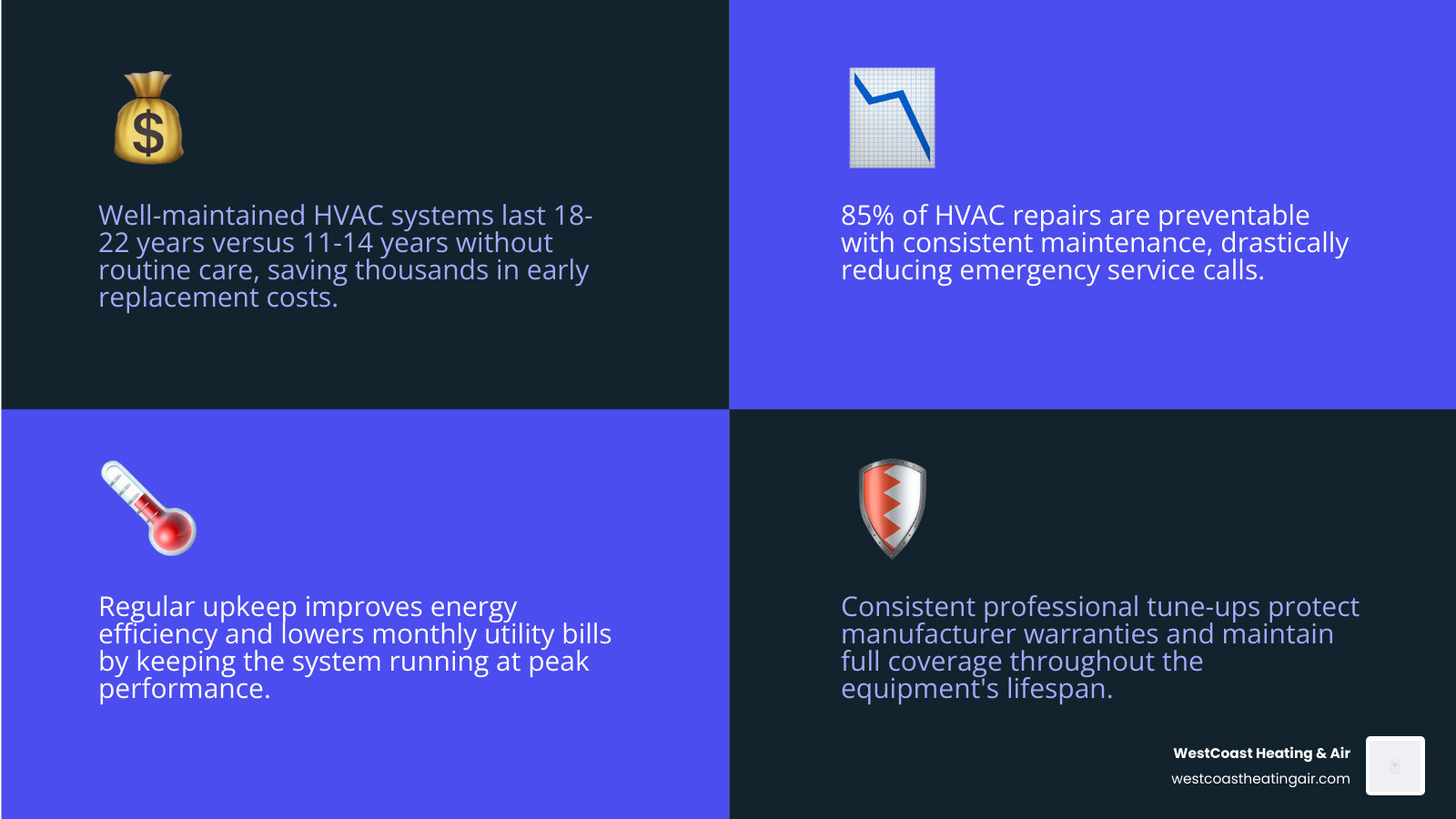
Most homeowners don’t think about their HVAC system until something goes wrong — and that’s usually on the hottest day of summer or the coldest night of winter. The reality is that neglected systems work harder, cost more to run, and fail years earlier than they should. Research shows that 85% of HVAC repairs are preventable with routine maintenance, and a well-maintained system can last 18 to 22 years compared to just 11 to 14 years without it. That’s a significant difference in comfort, cost, and peace of mind — especially for homeowners in the Pacific Northwest, where reliable heating and cooling isn’t a luxury, it’s a necessity.
I’m Michael Smith, owner of WestCoast Heating & Air in Puyallup, Washington — and after 30 years with Boeing followed by hands-on work helping local families with their heating and cooling systems, I’ve seen what consistent care does for a system’s performance and longevity. In this guide, I’ll walk you through everything you need to know about how to maintain your heating and cooling system, from simple weekly habits to seasonal checklists and knowing when to call a pro.
The Long-Term Benefits of Regular HVAC Maintenance
When life gets busy in Western Washington, it is incredibly easy to treat your heating and cooling system like a refrigerator: you plug it in, expect it to run forever, and only pay attention to it when the ice cream melts. However, your HVAC system is a complex network of electrical, mechanical, and thermodynamic components. Regular upkeep is not an optional luxury; it is the single best way to protect your comfort and your wallet.
Why Learning How to Maintain Your Heating and Cooling System Matters
Let’s talk numbers for a moment. Space heating and cooling account for nearly half of the average home’s annual energy bills. When dust, pollen, and pet dander accumulate on your system’s coils and filters, the equipment has to work overtime to push air through the blockages.
By prioritizing airflow optimization and learning the Maintenance Secrets to Keep Your HVAC Running Smoothly, you can reduce your system’s energy consumption by 5% to 15%. In fact, a thoroughly tuned-up system can use up to 10% to 30% less energy than a neglected one. Beyond the immediate monthly savings, routine care directly improves your indoor air quality by removing circulating allergens from your breathing space, keeping your household healthier and happier.
Protecting Your Manufacturer Warranty and System Lifespan
Did you know that skipping your annual service can actually void your equipment’s warranty? Major brands like Daikin, Mitsubishi, and Carrier require documented annual professional maintenance to honor their parts warranties. If a major component like your compressor fails in year seven, and you cannot produce service records, you could be left footing a massive bill.
Additionally, neglected systems are prone to early retirement. While a well-maintained furnace or heat pump can reliably serve your home for 15 to 20 years, a dirty, unlubricated system is likely to suffer a catastrophic failure by year 11 or 12. Understanding What Happens If You Skip HVAC Maintenance reveals that minor, inexpensive issues quickly snowball into major mechanical breakdowns if left unchecked.
Essential Steps on How to Maintain Your Heating and Cooling System

You do not need a background in engineering to keep your HVAC system happy. In fact, some of the most critical maintenance steps are simple, low-cost tasks that you can perform yourself in under an hour. Taking a proactive approach ensures your home remains a cozy sanctuary regardless of what the Pacific Northwest weather is doing outside.
Demystifying Air Filters: MERV Ratings and Replacement Frequency
If you only do one thing for your heating and cooling system, let it be this: change your air filter. A dirty air filter restricts airflow, which forces your system’s blower motor to work twice as hard. This restriction is the leading cause of nearly half of all summer “no-cool” emergency service calls.
To get the most out of your system, you need to understand filter ratings and schedules:
- What is a MERV Rating? MERV stands for Minimum Efficiency Reporting Value, and it ranges from 1 to 16 for residential systems.
- MERV 1–4: Basic fiberglass filters. They stop large dust bunnies but let fine dust and allergens pass right through.
- MERV 8–11: The “sweet spot” for most homes. These pleated filters capture pollen, pet dander, and mold spores without restricting airflow.
- MERV 13+: High-efficiency filters. While they capture microscopic particles, they can actually restrict airflow in older or standard residential systems, causing more harm than good if the system isn’t designed to handle them.
- How Often to Change Your Filter: We recommend checking your filter monthly. If you hold it up to a light and cannot see through it, it’s time for a replacement. As a rule of thumb, standard 1-inch filters should be swapped every 60 to 90 days. However, if you have pets, live in a dusty area, or have family members with asthma, you should change them every 30 to 45 days. High-efficiency 4-inch media filters can often last 9 to 12 months.
Understanding The Importance of Seasonal Filter Changes Airflow Optimization is your first line of defense against high utility bills and premature system wear.
Homeowner Checklist: How to Maintain Your Heating and Cooling System Daily
Between professional visits, there are several simple habits you can practice to keep your system operating in peak condition. For a detailed breakdown of these tasks, check out our guide on 3 Easy DIY HVAC Upkeep Tasks Homeowners Can Do Between Professional Visits.
Here is a quick daily and weekly checklist you can follow:
- Keep Vents Clear: Walk through your home and ensure that furniture, thick rugs, dog beds, or long drapes are not blocking any supply or return registers. Blocking these vents throws off the system’s static pressure, causing uneven temperatures and system strain.
- Maintain Outdoor Clearance: Your outdoor condenser unit needs to “breathe” to release heat. Keep a clear 2-foot radius around the unit. Trim back bushes, pull weeds, and clear away fallen leaves or grass clippings.
- Flush the Condensate Drain: Every summer, your air conditioner pulls gallons of water out of the air. This water drains out through a small plastic line. To prevent algae and mold from clogging this line and flooding your home, pour one cup of distilled white vinegar down your condensate drain access port once a season.
- Do a Visual and Audio Inspection: Pay attention to how your system sounds. If you start hearing unusual rattles, squeals, or clicking noises, it’s a sign that a belt, motor, or bearing needs professional attention.
The Ultimate Seasonal HVAC Maintenance Schedule
Timing is everything when it comes to HVAC maintenance. You don’t want to wait until the first freezing night in Puyallup or the first sticky, humid summer day in Tacoma to find out your system is on strike. By scheduling your service during the “shoulder seasons” (spring and fall), you can beat the peak-season rush and ensure your system is fully prepared for extreme temperatures.
To help you plan, we have detailed guides on The Best Time to Schedule Your Heating and Cooling Tune-Ups and How Often Should You Schedule an HVAC Tune-Up.
Spring and Summer Prep: Cooling System Readiness
As the rainy Western Washington winter transitions into warmer spring days, your air conditioner or heat pump needs proper preparation before it is forced to run continuously.
- Clean the Outdoor Coil: Over the winter, dirt, pollen, and debris accumulate on your outdoor condenser coil. Gently rinse the coil with a garden hose from the inside out to wash away the grime. Never use a pressure washer, as the high pressure will bend the delicate aluminum coil fins and restrict airflow.
- Check the Condensate System: Ensure the drain line is free-flowing and that your condensate pump (if you have one) is plugged in and operating correctly.
- Test the Thermostat: Turn your system on to “Cool” and set the temperature a few degrees below the room temperature. Listen to make sure the outdoor unit starts up smoothly and that cool air begins flowing within a few minutes.
For local homeowners looking to maximize their summer comfort, we highly recommend reading our specialized tips on Spring Maintenance to Prevent Summer Problems and Sweaty Foreheads and our local Washington Spring HVAC Maintenance Tips for Local Homeowners.
Fall and Winter Prep: Heating System Readiness
When the autumn chill rolls into the Puget Sound region, your heating system becomes the heart of your home. Proper fall preparation ensures your family stays warm and safe all winter long.
- Inspect the Furnace Area: Keep the area around your furnace completely clear. Never store flammable materials, paints, gasoline, or aerosol cans near your heating unit.
- Check the Heat Exchanger and Burners: For gas furnaces, a professional must inspect the burners and heat exchanger for cracks, rust, or soot buildup. A cracked heat exchanger can leak deadly carbon monoxide into your home’s air supply.
- Test Safety Detectors: Before turning your heater on for the season, test all smoke and carbon monoxide detectors in your home. Replace batteries annually, and remember that carbon monoxide detectors expire and must be replaced every 7 years, regardless of battery life.
- Prepare Heat Pumps for Cold Weather: If you use a heat pump, ensure the outdoor unit is not buried under falling leaves or winter debris. Keep the base clear of ice and snow buildup during winter storms so the system can defrost properly.
To make sure your home is fully prepared for the cold, read our guide on Fall HVAC Maintenance Prepare Your Home for the Autumn Cold.
DIY vs. Professional HVAC Maintenance: Knowing the Boundaries
While we love empowering homeowners to take charge of their home maintenance, it is crucial to recognize where DIY ends and professional expertise begins. Trying to tackle complex electrical or chemical tasks yourself can lead to expensive equipment damage, personal injury, or voided warranties.
| Maintenance Task | DIY Safe? | Requires a Licensed Professional? | Why It Matters |
|---|---|---|---|
| Changing Air Filters | Yes | No | Maintains airflow and protects the blower motor. |
| Clearing Condenser Debris | Yes | No | Ensures proper heat transfer and system efficiency. |
| Flushing Condensate Drains | Yes | No | Prevents water damage and mold growth. |
| Cleaning Evaporator Coils | No | Yes | Delicate indoor coils require specialized chemical cleaners. |
| Refrigerant Level Checks | No | Yes | Federal law (EPA Section 608) requires certification to handle refrigerant. |
| Electrical Component Testing | No | Yes | High-voltage capacitors and wiring present severe shock hazards. |
| Combustion Analysis | No | Yes | Specialized equipment is required to detect carbon monoxide leaks. |
| Duct Sealing & Repairs | No | Yes | Professional sealing prevents losing 20–30% of conditioned air. |
What to Expect During a Professional HVAC Tune-Up
When you hire a reputable contractor for an annual tune-up, you aren’t just paying for someone to look at your system. A true, professional maintenance visit takes 60 to 90 minutes and involves precise measurements and adjustments.
To help you prepare, we’ve put together a guide on Everything You Need to Know About Your Next HVAC Service Visit. During a standard visit, your technician should:
- Tighten Electrical Connections: Loose connections can cause unsafe system operation, short circuits, and premature component failure.
- Lubricate Moving Parts: Friction increases electricity usage and causes motors to burn out early.
- Calibrate the Thermostat: Ensuring your thermostat reads accurately keeps your system from running longer than necessary.
- Provide a Detailed Service Report: A quality technician will provide you with a written report detailing electrical voltage draws, capacitor health, refrigerant pressures, and safety control operations. If you receive a simple one-page invoice with no measurement data, you did not receive a true tune-up!
Critical Tasks That Require a Licensed Technician
There are several tasks that simply cannot be done without specialized tools and professional licensing.
- Refrigerant Charge Verification: If your system is low on refrigerant, it means you have a leak. Technicians must find and repair the leak, then carefully measure the refrigerant levels using superheat and subcooling calculations. Under EPA Section 608 regulations, handling these chemical refrigerants without a license is illegal and carries heavy fines.
- Combustion Analysis: For gas systems, technicians use electronic analyzers to measure carbon monoxide levels and ensure fuel is burning safely and efficiently.
- Duct Sealing: About 20% to 30% of the air moving through typical residential duct systems is lost due to leaks, holes, and poor connections. Sealing these ducts with professional mastic sealant or metal-backed tape (never standard duct tape!) can improve your system’s efficiency by up to 20%.
Repair vs. Replace: Navigating the Lifespan of Your HVAC System
Even with the best maintenance plan, every heating and cooling system eventually reaches the end of its useful life. Knowing whether to patch up an old system or invest in a modern, energy-efficient upgrade is one of the most important decisions a homeowner has to make.
Warning Signs Your Heating and Cooling System Needs Immediate Repair
If your system is exhibiting any of the following red flags, do not wait for your scheduled seasonal tune-up. Call a professional immediately to prevent further damage:
- Weak Airflow: If you can barely feel air coming out of your vents, you could have a failing blower motor, a frozen coil, or severely clogged ductwork.
- Frequent Short Cycling: If your system turns on and off every few minutes without completing a full 10-to-20-minute cycle, it is placing immense strain on the compressor and blower motor.
- Strange Noises: Squealing, grinding, banging, or loud clicking noises when the system starts are clear indicators of mechanical distress.
- Unusual Odors: A musty smell can point to mold in your ductwork or evaporator coil, while a sharp, electrical burning smell indicates overheating wires. If you ever smell sulfur or rotten eggs, turn off your gas line immediately and evacuate your home—this indicates a natural gas leak.
- Water Pooling: Standing water around your indoor furnace or air handler means your condensate line is blocked or your evaporator coil has frozen and is melting.
Deciding When to Replace an Aging System
If your system is over 10 to 12 years old and starting to require frequent repairs, it may be time to consider equipment replacement. To help make this decision easier, we recommend using the $5,000 Rule:
The $5,000 Rule: Multiply the age of your system (in years) by the cost of the repair. If the result exceeds $5,000, replacing the system is generally the smarter financial decision.
Example: A 12-year-old system with a $500 repair bill totals $6,000 ($500 x 12). Under this rule, replacement is highly recommended.
Additionally, upgrading to a modern system offers massive energy efficiency benefits. Older furnaces may operate at only 60% efficiency, meaning 40 cents of every dollar spent on heating goes right up the chimney. In contrast, modern high-efficiency furnaces can reach up to 97% efficiency, and advanced heat pumps provide incredibly efficient heating and cooling even in sub-freezing temperatures.
Frequently Asked Questions about HVAC Maintenance
How often should you service your HVAC system?
For standard homes with separate heating and cooling systems (like a gas furnace and a central air conditioner), we recommend professional service twice a year: once in the spring for your AC and once in the fall for your furnace. If you use a heat pump system year-round for both heating and cooling, it should still be serviced twice a year to keep up with the continuous workload.
Can a dirty air filter really damage my HVAC system?
Yes, absolutely. A clogged filter blocks airflow, which can cause your indoor evaporator coil to freeze into a solid block of ice during the summer. When this ice melts, it can flood your home and damage electrical components. Restricted airflow also forces your blower motor to run hotter, which can lead to motor burnout or a complete compressor failure—one of the most expensive repairs in an HVAC system.
Does closing vents in unused rooms save energy?
No, this is a very common energy myth! Your HVAC system is designed and balanced to move a specific volume of air throughout your entire home. When you close registers in unused rooms, you increase the static pressure inside your ductwork. This extra pressure forces air leaks in your ducts, reduces system airflow, and can cause your heat exchanger to overheat or your cooling coils to freeze. To keep your system balanced, always keep at least 80% of your home’s registers completely open.
Keep Your Home Comfortable Year-Round with WestCoast Heating & Air
Maintaining your heating and cooling system doesn’t have to be overwhelming. By practicing a few simple DIY habits, keeping your filters fresh, and partnering with a trusted professional for seasonal tune-ups, you can enjoy lower energy bills, cleaner indoor air, and a system that serves your family reliably for decades.
At WestCoast Heating & Air, we have spent over 20 years serving our neighbors across Puyallup, Tacoma, Sumner, Orting, Spanaway, Steilacoom, SeaTac, Roy, Tumwater, and University Place. As a local, family-owned business specializing exclusively in residential services, we pride ourselves on customized home system designs, honest customer education, and top-tier service. We never push unnecessary repairs or high-pressure sales; our goal is simply to keep your home comfortable and safe.
Whether you need a quick spring tune-up, a winter safety inspection, or are ready to explore energy-efficient upgrades for your home, we are here to help. Contact WestCoast Heating & Air today to schedule your next service visit and experience the difference that local expertise and dedicated care can make for your home.