
When Peak Summer Heat Meets Heavy Pet Shedding
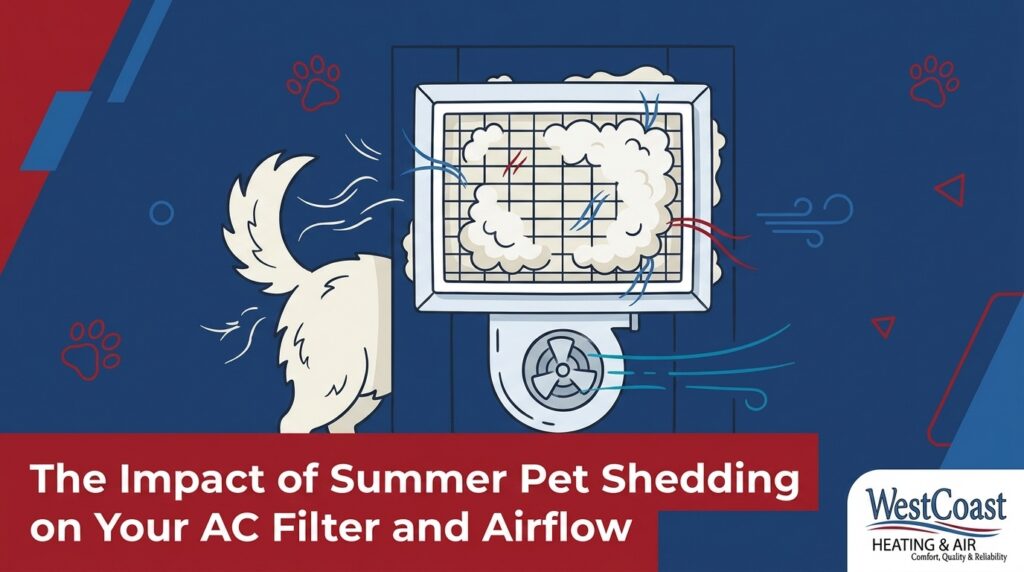
July peak summer in the Pacific Northwest usually arrives with a sudden vengeance. One week the weather is perfectly mild, and the next, temperatures spike dramatically, forcing your air conditioner to run when you need us. At the exact same time, your dog or cat begins rapidly shedding their winter coat to adapt to the sudden heat. This collision of heavy shedding and continuous cooling cycles creates a hidden disaster inside your HVAC system. The Impact of Summer Pet Shedding on Your AC Filter and Airflow is immediate and severe, often mimicking a catastrophic equipment failure right when you need relief the most.
If you need assistance right away, explore our heating and cooling services to keep your home comfortable.
Many homeowners in our region are caught off guard by these sudden temperature shifts. When the heat hits, pets naturally shed excess fur to regulate their body temperature. Because your air conditioner is running constantly to combat the outdoor heat, your return vents are continuously pulling large volumes of indoor air—along with all that freshly shed fur—directly into your filter. This sudden influx of debris places an enormous burden on your HVAC system.
Before you panic about a broken compressor or a massive repair bill, it is critical to recognize how quickly pet fur can restrict your system’s ability to breathe. Understanding the difference between a simple airflow restriction and a total mechanical failure is the first step in protecting your comfort. By recognizing the signs early, you can restore your home’s cooling power with a simple maintenance adjustment rather than an urgent problem service call.
The Mechanics of Airflow Restriction: How Fur Suffocates Your System
The Problem: When pet hair enters your return vents, it does not just sit loosely on the surface of your filter. Instead, the continuous suction of the blower motor weaves the hair and dander into a dense, impenetrable mat. As a local PNW expert, WestCoast Heating & Air understands the unique indoor air quality challenges local pet owners face, especially when homes are closed up tight to keep the heat out.
The Cause: Your air conditioner relies on a precise volume of return air to function correctly. When a thick blanket of fur coats the filter media, it drastically reduces the amount of air that can pass through. This mechanical restriction starves the blower motor of the air it needs. The system is still trying to push cold air into your living spaces, but because it cannot pull enough warm air from the house, the overall airflow drops significantly.
The Solution: The immediate fix is inspecting and replacing the restrictive barrier. However, preventing this rapid buildup requires a deeper understanding of what is actually clogging the media. Scheduling professional AC maintenance can help ensure your system is clean and optimized to handle this increased debris load.
The Difference Between Dust and Pet Dander
Standard household dust is relatively dry and lightweight. While it will eventually clog a filter, it usually builds up slowly over several months. Pet dander, on the other hand, contains microscopic flakes of skin and natural oils. These oils are exactly what make dander so problematic for HVAC systems.
- Oily Adhesion: The natural oils in pet dander act like a mild adhesive, clinging stubbornly to the filter fibers.
- Binding Agent: As loose fur hits the sticky layer of dander, it binds together, creating a felt-like barrier much faster than dry dust ever could.
- Moisture Trapping: In humid conditions, this dander-and-fur matrix can even trap moisture, further solidifying the blockage and completely suffocating the airflow.
This rapid, sticky buildup is why pet owners in Puyallup WA often find their filters completely ruined in a fraction of the expected lifespan during heavy shedding periods.
The Chain Reaction: Blower Motor Strain and Frozen Coils
Ignoring a fur-clogged filter does more than just reduce the cool air coming from your vents; it triggers a dangerous mechanical chain reaction. When the blower motor has to fight against a solid wall of pet hair, it works significantly harder. This intense strain causes the motor to draw more electricity, run hotter, and endure unnecessary wear and tear. Over time, this continuous overworking can lead to premature motor failure.
The consequences extend beyond the blower motor directly to your evaporator coil. Your air conditioner cools your home by extracting heat from the indoor air. Warm air from your house blows over the icy-cold indoor coil, transferring its heat to the refrigerant inside. When a matted filter restricts that airflow, there is not enough warm air moving over the coil to keep it above freezing. The natural condensation on the coil rapidly turns to ice. Before long, the entire coil is encased in a solid block of ice, halting the cooling process entirely.
If the system continues to run with a frozen coil, you risk liquid refrigerant flowing backward into the outdoor compressor—a highly sensitive component designed only to pump gas, not liquid. This “liquid slugging” can destroy a compressor entirely. We see how extreme summer strain exacerbates underlying issues; for example, one homeowner reached out when 80-degree weather was looming and their AC system completely failed after only eight years due to a combination of incorrect installation and severe system strain. The compromised unit could not handle the heat, requiring a rapid replacement before the hottest weather hit. Keeping your filter clear of pet hair prevents this exact type of suffocating strain. If you suspect your system has already suffered damage, seeking reliable AC repair early can save your equipment from total failure during the July peak summer heat.

Misdiagnosis: Is Your AC Broken, or Just Choking?
When the temperature inside your home is climbing and the vents are barely pushing out cool air, it is incredibly easy to panic. Homeowners frequently misdiagnose a suffocating system as a catastrophic failure. They assume the refrigerant has leaked out, the compressor is dead, or the entire unit needs to be replaced. As a transparent local expert, we prefer helping homeowners resolve simple airflow issues rather than pushing unnecessary overhauls.
Understanding how your equipment works is vital for accurate troubleshooting. When one customer recently had a new furnace and AC unit installed for their new house, the crew provided a thorough walkthrough of the system upon completion. That kind of education is essential, because knowing what to look for helps you prevent misdiagnosing a simple filter clog as a total breakdown. Before you assume the worst, walk through this diagnostic checklist to see if your AC is just choking on pet hair.
- Check the airflow volume: Hold your hand over a supply vent. If the air feels cold but the pressure is incredibly weak, your system is likely choked, not broken.
- Listen to the system: Is the unit running continuously without ever shutting off? A suffocated system will run non-stop because it cannot move enough air to satisfy the thermostat.
- Inspect the indoor unit for ice: Look at the copper lines near your indoor air handler or furnace. If you see ice buildup or frost, turn the system off immediately.
- Pull the filter: Slide the filter out and hold it up to a light. If you cannot see light passing through the media due to a thick blanket of fur, you have found the culprit.
By checking the filter first, you can often solve the problem for the cost of a new filter rather than a service call. For more insights on maintaining proper airflow, reviewing a guide to filter replacement timing can help you stay ahead of the shedding curve in Puyallup WA.
The 30-Day Rule for Multi-Pet Households
The standard advice printed on most air filter packaging suggests replacing the media every 90 days. While that timeline works perfectly for a single-occupant home with no pets in mild weather, it is a dangerous guideline for a multi-pet household during the July peak summer.
When your pets are actively shedding and your air conditioner is running 15 hours a day, a fresh filter can become completely compromised in just a few weeks. The U.S. Department of Energy notes that replacing a dirty, clogged filter with a clean one can lower your air conditioner’s energy consumption by 5% to 15%. To protect your equipment and your wallet, adopt a strict 30-day rule during the hottest months.
- Week 1: The Baseline. Install a fresh, properly sized filter. Note the date on the cardboard frame with a marker. Your airflow will be at its peak efficiency.
- Week 2: The Visual Check. After 14 days, pull the filter out and inspect it. You will likely already see a visible layer of pet hair forming on the surface. If you have large, heavy-shedding breeds, the filter may already be turning gray.
- Week 3: The Performance Shift. By day 21, the sticky dander and fur have likely begun to mat. You might notice the system running slightly longer cycles to cool the house.
- Week 4: The Replacement. At day 30, remove and discard the filter regardless of whether it looks “completely” blocked. The microscopic dander embedded in the fibers is restricting airflow even if the surface hair does not look severe.
Setting a recurring monthly reminder on your phone is the easiest way to ensure this vital maintenance task never slips through the cracks during the busy summer season.
Balancing Filtration and Airflow: The MERV Rating Dilemma
When pet owners in Puyallup WA realize how much dander is circulating in their air, their first instinct is often to buy the most expensive, highly rated filter available. They assume that a higher filtration rating will solve their pet hair problems. However, buying the wrong filter can actually make your airflow problems significantly worse.
Filters are graded on the MERV (Minimum Efficiency Reporting Value) scale. This rating measures how effectively the filter traps microscopic particles. While a high MERV rating is excellent for catching tiny allergens, it achieves this by weaving the filter fibers incredibly tight. This tight weave creates a high level of static pressure, meaning the blower motor has to work extremely hard just to pull air through a clean filter.
| MERV Rating | Filtration Capability | Impact on Airflow (Static Pressure) | Recommendation for Pet Owners |
|---|---|---|---|
| MERV 1-4 | Catches large dust and lint. | Very low resistance, excellent airflow. | Too weak. Will let pet dander pass through and coat the indoor coil. |
| MERV 5-8 | Catches pet hair, mold spores, and dust mites. | Moderate resistance, safe for most systems. | Good. Catches shedding fur without severely straining the blower motor. |
| MERV 9-12 | Catches fine dander, lead dust, and auto emissions. | Higher resistance. Requires a strong blower motor. | Best Sweet Spot. Excellent for pet allergies, but must be changed strictly every 30 days. |
| MERV 13-16 | Catches bacteria, smoke, and microscopic allergens. | Extremely high resistance. Can suffocate older systems. | Avoid unless your specific HVAC system was explicitly designed for hospital-grade filtration. |
The Danger of Over-Filtering: If you install a MERV 13+ filter on an older blower motor not designed for that level of static pressure, you are effectively suffocating the system from day one. Once pet hair begins to coat that already-restrictive filter, the system will rapidly freeze up. Stick to the “sweet spot” of MERV 8 to 11 to balance healthy indoor air quality with safe, efficient airflow.
Proactive Steps to Protect Your HVAC System
Relying solely on your air conditioner’s filter to manage all the pet hair in your home is a losing battle during the July peak summer. The most effective way to protect your HVAC system is to stop the fur from becoming airborne in the first place. By adopting a few proactive household habits, you can drastically reduce the strain on your cooling equipment.
- Increase Daily Brushing: Take your pets outside for a thorough brushing session every single day during peak heat waves. Removing the loose undercoat before it falls off in the house prevents massive amounts of fur from ever reaching your return vents.
- Vacuum with a HEPA Filter: Standard vacuums often exhaust fine dander right back into the air. Use a vacuum equipped with a true HEPA filter to permanently trap pet hair and dander from your carpets and rugs. Vacuum high-traffic pet areas at least twice a week.
- Clear the Return Grilles: Walk around your home and locate all the large return air grilles. Ensure no couches, bookshelves, or heavy curtains are blocking them. Your system needs a clear path to pull air.
- Wipe Down the Vent Grates: Pet hair naturally clings to the metal or plastic grates of your return vents. Wipe these grates down weekly with a damp microfiber cloth to prevent fur from building up on the outside and being sucked in all at once.
These simple steps take only a few minutes a week but can significantly extend the life of your monthly air filter and keep your blower motor running smoothly.
Protecting Your Comfort During Peak Summer
Keeping your home cool and comfortable when the temperatures soar should not be a constant battle. By understanding how heavy seasonal shedding interacts with your cooling equipment, you take back control of your indoor environment. The easiest, most cost-effective way to prevent major AC breakdowns is simply keeping a close eye on your filter media.
Remember that a struggling system often just needs to breathe. If your air conditioner is running constantly but your house is still warm, your first instinct should always be to check the filter before assuming the worst. Consistent, proactive maintenance is the key to surviving the hottest months in Puyallup WA without unexpected interruptions.
If you have updated your filter and cleared your vents, but your system is still struggling to keep up, it is time to call in the professionals. Scheduling a routine check-up ensures that your blower motor hasn’t sustained hidden wear from previous clogs and that your refrigerant levels are exactly where they need to be. Stay cool, stay proactive, and keep your system breathing easy all summer long.
Frequently Asked Questions
Can dog hair cause the AC to freeze up?
Yes, dog hair is one of the most common causes of frozen evaporator coils in the summer. When fur heavily mats the air filter, it blocks the warm return air from reaching the indoor coil. Without that warm air flowing over the chilled copper lines, the natural condensation freezes solid, eventually encasing the entire coil in ice.
p>How often should I change my AC filter if I have multiple pets?
During peak cooling seasons, you should inspect and replace your filter every 30 days. The standard 90-day recommendation is meant for homes without pets in mild climates. With multiple pets shedding in the summer, a filter can become entirely restricted in just a few weeks.
p>What exactly happens when pet hair clogs the AC filter?
The pet hair acts as a physical barrier that starves the blower motor of return air. This forces the motor to work significantly harder, increasing energy consumption and running up your utility bills. Eventually, this lack of airflow leads to poor indoor cooling, extended run cycles, and potential mechanical failure.
p>Does pet hair permanently ruin air conditioners?
Pet hair itself does not ruin the equipment, but the severe airflow restriction it causes certainly can. If a system runs continuously with a blocked filter, the resulting frozen coils can cause liquid refrigerant to flow back into the compressor. This “slugging” can permanently destroy the compressor, requiring a costly replacement.
p>Why is my AC running constantly but not cooling the house?
This is a classic symptom of a suffocated HVAC system. The unit is trying to reach the temperature set on your thermostat, but because a dirty filter is blocking the airflow, it cannot push enough cold air into the rooms. The system runs non-stop in a futile attempt to cool the space.
p>Should I use a MERV 13 filter if I have heavy-shedding dogs?
Generally, no. While MERV 13 filters catch microscopic allergens, they are highly restrictive and can suffocate older blower motors. For heavy-shedding pets, a MERV 8 to 11 filter is usually the “sweet spot” because it captures hair and dander without dangerously reducing your system’s required airflow.