
The Shock of a Frozen Heat Pump After a Late Fall Storm
Late November freezing rain storms in the Pacific Northwest can turn your backyard into an ice rink overnight. At WestCoast Heating & Air, we regularly receive frantic calls from Puyallup homeowners wondering about the safest methods for removing freezing rain from hvac units. You wake up, feel a distinct chill inside your house, and look outside only to find your outdoor heat pump completely encased in a solid, heavy block of ice. Seeing your primary heating source frozen solid right before the holiday season is an incredibly stressful experience, and the immediate panic you feel is completely natural. Your first instinct is likely to rush outside and do whatever it takes to break that ice off so your family can stay warm.
However, our team has seen firsthand how rushing to clear that ice improperly can cause catastrophic, irreversible damage to your system. While it is frustrating to see your equipment struggling, proper care during these severe weather events is a critical part of maintaining your heating and cooling system. Late fall weather systems in the Pacific Northwest uniquely combine plunging temperatures with high, heavy moisture, creating the perfect recipe for severe ice glazing that dry-cold climates rarely see.
Why Panic Leads to Expensive Mistakes
When faced with a sudden loss of heating capability, many homeowners turn to quick fixes they find online. Unfortunately, most of these internet hacks are designed for light frost or dry snow, not the heavy, wet ice storms we experience in our region. Taking a blunt instrument or boiling water to your delicate equipment will often destroy the internal components before the ice even melts.
The safest approach is to understand how your system operates under extreme duress. When severe weather completely overwhelms your system and your home’s temperature begins to drop rapidly, relying on professional heat pump maintenance services is always the safest fallback to protect your investment.
Normal Frost vs. a Freezing Rain Ice Shell
To properly care for your outdoor unit as we head into deeper winter weather, you first need to understand the visual and functional differences between standard operational frost and environmental ice glazing. Heat pumps naturally generate a small amount of frost during their normal heating cycles, but a freezing rain storm creates an entirely different set of problems.
Understanding Normal Winter Operation
When your heat pump is working to heat your home, it extracts ambient heat from the cold outdoor air. As the refrigerant moves through the outdoor coils, it drops the temperature of the metal below the freezing point. Any moisture in the surrounding air condenses on these coils and freezes, creating a light, white, flaky layer of frost. This is completely normal and expected. The system is designed to handle this light frost easily.
The Threat of Environmental Ice Glazing
Environmental freezing rain is a completely different threat. Instead of moisture condensing slowly from the air, liquid rain falls from the sky and freezes the instant it touches the cold metal of your outdoor unit. Because Puyallup and the greater Puget Sound region experience high winter humidity combined with damp cold, our technicians know this creates the perfect conditions for severe ice buildup. This heavy, solid, clear glaze completely encases the unit, blocking all airflow.
| Characteristic | Normal Operational Frost | Freezing Rain Ice Shell |
|---|---|---|
| Appearance | Light, white, powdery, and flaky | Clear, solid, heavy, and thick |
| Coverage | Usually limited to the sides (the coil fins) | Encases the entire unit, including the top fan grille |
| Airflow Impact | Slightly reduced, but air still moves | Completely blocked, choking the system |
| System Response | Easily cleared by a standard defrost cycle | Often overwhelms the standard defrost cycle |
| Frequency | Daily during standard winter temperatures | Only during specific severe weather events |
While your system can easily handle a light layer of white frost, a solid ice shell acts like a brick wall. It blocks all airflow from reaching the coils, forcing the compressor to work overtime. If left unchecked, the compressor will eventually overheat and fail, leading to a complete system breakdown.
The Danger of the ‘Hot Water’ Myth
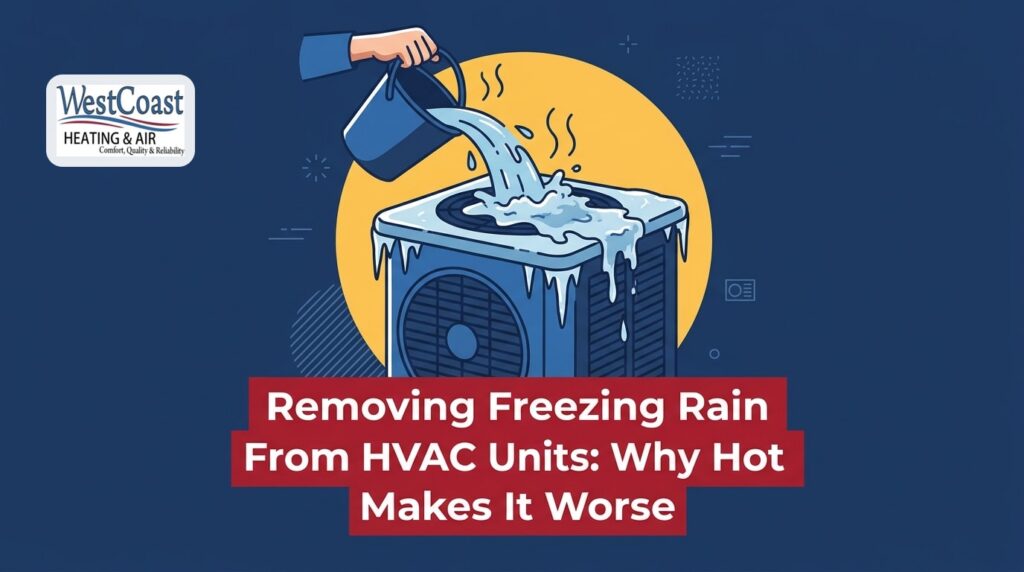
If you search online for ways to thaw a frozen heat pump, you will almost certainly find advice telling you to pour a bucket of hot or boiling water over the unit. This is the most common piece of generic internet advice, and it is also one of the most dangerous things you can do to your system.
The Psychological Urge for a Quick Fix
The urge to use hot water makes sense on a psychological level. When you see a block of ice, you know that heat melts it. Pouring boiling water over the solid ice block seems like the fastest way to melt it quickly and get your heat running again. However, this method completely ignores the laws of thermodynamics and the delicate engineering of your HVAC equipment.
The Science of Thermal Shock
The primary danger of using hot water is a phenomenon called thermal shock. Your outdoor unit is constructed from various metals, including copper refrigerant lines and aluminum fins, which are sitting at freezing temperatures. When you suddenly introduce 120-degree or boiling water to sub-freezing metal, the material expands violently and rapidly. This sudden extreme temperature change can easily crack cold metal components, rupture pressurized refrigerant lines, and permanently destroy the coil system.
The Refreezing Effect
Even if you avoid cracking the metal, pouring hot water on your unit usually makes the ice problem worse. As local experts at WestCoast Heating & Air who understand the specific regional climate of the Pacific Northwest, we see this constantly. In damp, freezing weather, hot water cools incredibly rapidly. Once it hits the freezing metal and the surrounding ice, it loses its heat in seconds and instantly refreezes. Instead of melting the ice, you have just added another thick, solid layer to the ice shell.
This common DIY mistake often turns a temporary weather issue into an expensive, premature system replacement. Generic internet advice fails in our climate because it does not account for the heavy moisture and rapid refreezing conditions that define our local winters.
What NOT to Do When Your Unit is Encased in Ice
Beyond the hot water myth, homeowners often try a variety of creative—and highly destructive—methods to clear ice from their outdoor units. When your heat pump is struggling against a severe winter storm, patience is your best tool. Taking matters into your own hands with physical force will almost certainly void your warranty and ruin your equipment.
The Dangerous DIY Checklist
- Never use ice picks, screwdrivers, or shovels: It is incredibly tempting to chip away at the ice with a sharp tool. However, the aluminum fins on your outdoor coil are thinner than a soda can. Hitting the ice will permanently crush, bend, or puncture these delicate fins, destroying the unit’s ability to transfer heat.
- Do not underestimate the expansion of ice: Water expands by approximately 9 percent when it freezes. This means the freezing rain has wedged tightly into the microscopic spaces between the delicate aluminum fins. Because the ice is locked into the metal, striking the ice means you are directly striking and bending the fins.
- Never try to smother the unit to keep it warm: Some homeowners attempt to build a tent over the unit or wrap it in heavy blankets to trap heat. This completely restricts the airflow the system needs to function. Just like the dangers of wrapping your air conditioner in a tarp for the winter, smothering a heat pump traps moisture inside and prevents the system from breathing.
- Do not use a hair dryer or heat gun: While less shocking than boiling water, standing outside in a freezing rain storm with an electrical appliance is a serious safety hazard. Furthermore, a hair dryer does not produce enough widespread heat to melt a solid ice shell; it will only melt a tiny localized spot that will quickly refreeze.

How Your Heat Pump’s Built-In Defrost Cycle Works
Before you take any action, it is vital to understand that modern heat pumps are engineered to handle winter weather automatically. Your system has a built-in self-preservation feature designed specifically to melt ice buildup. Understanding this automated process can save you a lot of unnecessary worry.
The Defrost Cycle Timing
Your heat pump features a specialized circuit board and temperature sensors dedicated to monitoring the outdoor coil. When the coil temperatures drop below a certain threshold and ice begins to form, the system initiates a defrost cycle. Depending on the manufacturer and the severity of the weather, systems typically trigger this cycle every 30, 60, or 90 minutes of active compressor run time.
What Happens During the Cycle
When the defrost cycle activates, the system essentially goes into reverse. It temporarily switches into air conditioning mode, taking the warm refrigerant from inside your home and sending it back outdoors to the cold coils. This sudden rush of warm refrigerant heats up the outdoor unit from the inside out, melting the ice buildup safely and evenly.
Visual Signs of a Working Defrost Cycle
During this process, you will notice a few specific changes in how the unit operates. First, the outdoor fan will stop spinning completely; this prevents cold air from blowing over the coils while they are trying to heat up. Second, as the hot refrigerant melts the heavy ice, a large cloud of steam may rise from the top of the unit. Many homeowners mistake this steam for smoke and panic, but this is a perfectly normal sign that the defrost cycle is working exactly as intended.
Safe Steps for Removing Freezing Rain From HVAC Units
While you should never use force or extreme heat, there are a few safe, actionable steps you can take to help your system recover when it is buried under a heavy glaze of ice. The goal is to support the system’s natural functions without causing accidental damage.
Your Safe Recovery Action Plan
- Check the thermostat and be patient: Ensure your system is running and set to heat. Before doing anything else, give the system time to trigger its natural defrost cycle. If the storm just ended, the unit may simply need another 30 to 60 minutes of run time to initiate the melting process automatically.
- Switch to emergency heat temporarily: If your home is getting uncomfortably cold and the outdoor unit is struggling, check your thermostat for an “Emergency Heat” or “Auxiliary Heat” setting. This activates the backup electric heating strips inside your air handler. It keeps your home warm while giving the frozen outdoor unit a much-needed break from running.
- Clear the surrounding environment: Put on some winter gear and carefully clear away surrounding debris, deep snowdrifts, or overhanging branches that might be blocking airflow. If gutters are overflowing and dripping excess water directly onto the unit, clear them to prevent rain damage to your outdoor HVAC unit and stop new ice from forming.
- Use a gentle flow of cold water (conditionally): If the freezing rain storm has completely passed and the ambient outdoor temperature has risen safely above freezing (above 32°F), you can use a garden hose with a gentle flow of cold water to help melt the remaining ice. Never use a high-pressure nozzle, and never attempt this while temperatures are actively freezing, as the water will simply add to the ice shell.
When to Stop Waiting and Call a Professional
While patience is a virtue during a winter storm, there is a clear threshold where DIY observation ends and professional intervention is absolutely required. If your heat pump remains completely encased in a heavy ice shell for more than a few hours without the defrost cycle activating, the system has likely failed.
Warning Signs of System Failure
Listen closely to the outdoor unit. If you hear the outdoor fan making loud, aggressive grinding noises, turn the system off immediately. This sound usually means the fan blades are striking the heavy ice buildup. Allowing the fan to continue hitting the ice will burn out the fan motor or snap the blades entirely.
Our technicians at WestCoast Heating & Air frequently respond to calls where a failure to defrost points to a deeper mechanical or electrical issue. A failed defrost control board, a broken temperature sensor, a stuck reversing valve, or low refrigerant levels can all prevent the system from melting the ice. These are complex issues that require a licensed technician to properly diagnose and repair.
Most importantly, emphasize to your household that running a completely frozen unit continuously is a recipe for disaster. The system cannot pull heat through a solid block of ice. Forcing it to try will eventually burn out the compressor, turning a manageable repair into a massive replacement cost.
Restore Your System’s Efficiency Before the Next Freeze
Winter weather in the Pacific Northwest is notoriously unpredictable. A freezing rain storm can vanish as quickly as it arrived, only to be followed by a deep freeze a few days later. If your heat pump struggled through the last storm or failed to clear its own ice, it needs immediate attention before the next weather front moves in.
Don’t wait for your system to fail completely in the middle of a freezing night. Reach out to our team at WestCoast Heating & Air to verify that your defrost control board, sensors, and refrigerant levels are functioning correctly. Schedule your professional service today to ensure your home stays reliably warm throughout the holiday season. If you do find yourself needing a system replacement, keep in mind that generic federal tax credits or utility incentives may apply to qualifying high-efficiency heat pump installations—always verify current programs with your utility provider or tax professional.
Frequently Asked Questions
Can I pour hot water on my frozen heat pump?
No, you should never pour hot or boiling water on a frozen heat pump. The extreme temperature difference causes thermal shock, which can instantly crack cold metal components and rupture refrigerant lines. Furthermore, in freezing weather, the hot water cools rapidly and instantly refreezes, making the ice shell even thicker.
How do you melt ice off an outside AC unit safely?
The safest way to melt ice is to let the system’s built-in defrost cycle handle it automatically. If the outdoor temperature has risen above freezing, you can use a gentle flow of cold water from a garden hose to help speed up the process. Never use sharp tools, ice picks, or high-pressure water to force the ice off.
Why is my heat pump freezing up in winter?
A light layer of frost is a normal part of a heat pump’s winter operation as it extracts heat from cold, damp air. However, if it forms a solid block of ice, it could be due to environmental freezing rain, a blocked air filter, or a failing defrost control board. If the system does not melt the ice itself within a few hours, a professional inspection is needed.
How long does a heat pump defrost cycle take?
A typical heat pump defrost cycle lasts anywhere from 5 to 15 minutes, depending on the severity of the ice buildup. The system will usually initiate this cycle automatically every 30, 60, or 90 minutes of compressor run time when the outdoor coil temperatures drop below freezing.
Is it normal for my heat pump to steam in the winter?
Yes, seeing steam rise from your heat pump during the winter is completely normal. When the unit enters its defrost cycle, it sends warm refrigerant to the outdoor coils to melt the accumulated ice. As the heavy ice melts and evaporates in the cold air, it creates a cloud of steam that is often mistaken for smoke.
Will freezing rain permanently damage my outdoor HVAC unit?
Freezing rain itself will not usually cause permanent damage as long as you do not try to break the ice off with force. The damage occurs when homeowners use sharp tools that puncture the aluminum fins or hot water that cracks the metal. However, forcing the unit to run while completely encased in ice for days can eventually burn out the compressor.