
What Tacoma Homeowners Need to Know About Gas Furnace Repair Services
Gas furnace repair services in tacoma, wa are something no homeowner wants to think about — until the heat stops working on the coldest night of the year. Tacoma winters regularly dip into the low 30s, and a furnace that quits on you isn’t just uncomfortable. It’s a real problem that needs a real fix, fast.
If your furnace is acting up, here’s a quick look at what you need to know:
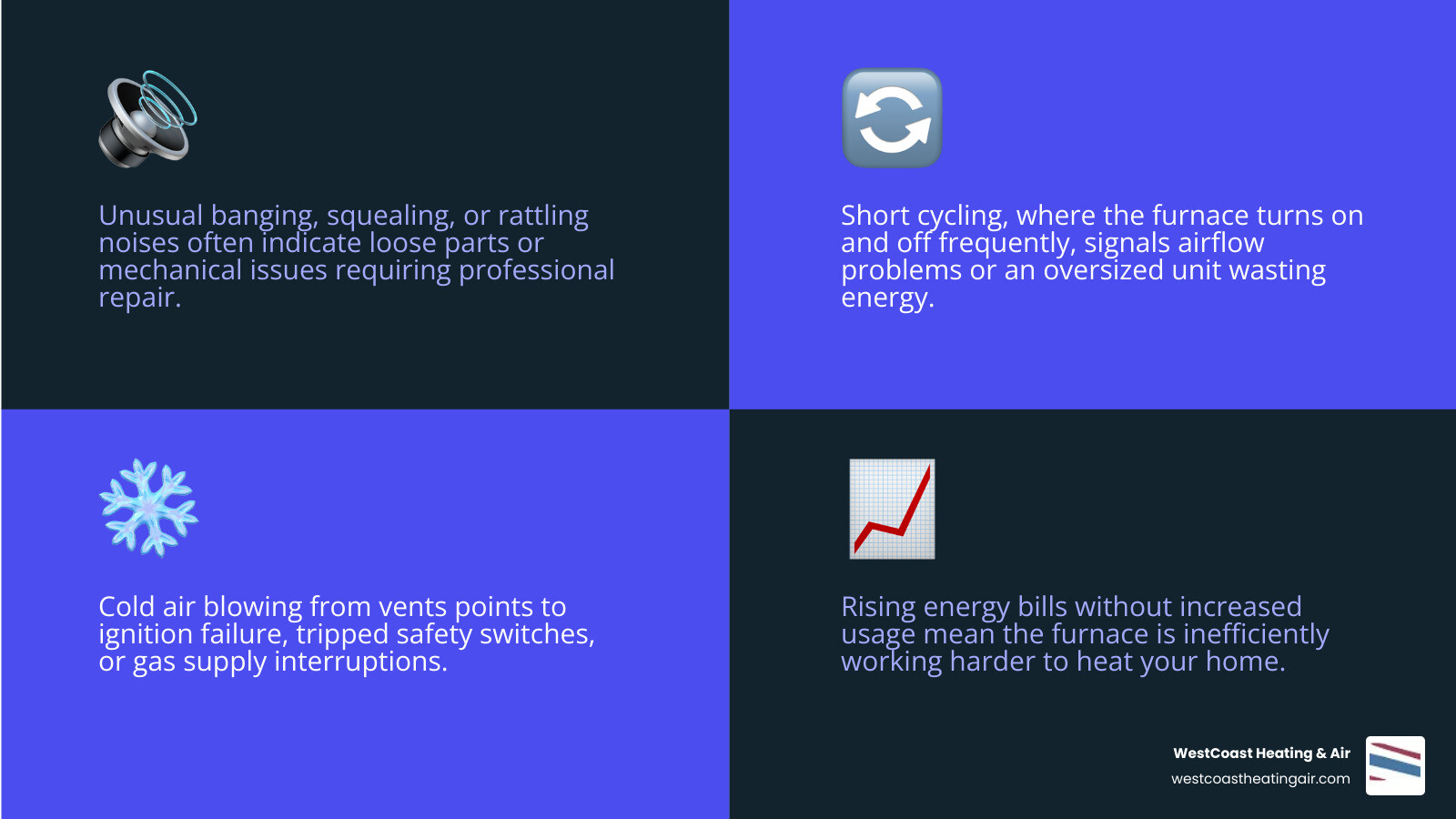
- Unusual noises (banging, squealing, rattling) often signal a mechanical issue that needs professional attention
- Short cycling — when your furnace turns on and off repeatedly — can mean an airflow problem or an oversized unit
- Cold air from vents may point to ignition failure, a tripped safety switch, or a gas supply issue
- Rising energy bills without a change in usage often mean your furnace is working harder than it should
- Yellow or flickering pilot light can indicate a carbon monoxide concern and should be checked immediately
- Inconsistent heat across rooms may mean duct issues or a failing blower motor
Most gas furnaces last between 15 and 20 years with regular maintenance. If yours is older or showing any of the signs above, it’s worth getting a professional diagnosis before a small issue turns into a full breakdown.
I’m Michael Smith, owner of WestCoast Heating & Air, and after 30 years at Boeing followed by hands-on work in the Pacific Northwest residential HVAC industry, I’ve seen how the right expertise makes all the difference when it comes to gas furnace repair services in tacoma, wa and the surrounding South Sound region. Let’s walk through everything you need to know to keep your home warm, safe, and efficient this winter.
Recognizing the Need for Gas Furnace Repair Services in Tacoma, WA
Living in the South Sound, we know that a functioning furnace is the heart of a cozy home. However, gas furnaces are complex machines. When they begin to fail, they rarely do so silently. Recognizing the early warning signs can save you from a total system shutdown during a January freeze.
One of the most common indicators that something is wrong is a sudden spike in your monthly utility bills. If you haven’t changed your heating habits but your bill is climbing, your furnace is likely struggling to reach the desired temperature, running longer cycles and consuming more fuel than necessary.
Another red flag is inconsistent room temperatures. If your living room is sweltering while your bedroom feels like a meat locker, it’s a sign that your system is no longer distributing air effectively. This could be a blower motor issue, a failing internal component, or even common furnace issues related to your ductwork.
Identifying Unusual Noises and Short Cycling
If your furnace starts sounding like a percussion ensemble, it’s time to pay attention.
- Banging or Booming: This often occurs when the burners are dirty, causing a delay in ignition. The gas builds up and creates a small “mini-explosion” when it finally catches.
- Squealing or Screeching: This usually points to a frayed blower belt or a motor bearing that has reached the end of its life.
- Rattling: This could be as simple as a loose panel or as serious as a cracked heat exchanger.
Short cycling is another critical symptom. This happens when the furnace turns on, runs for a few minutes, and shuts off before the house is actually warm. This cycle repeats rapidly. Not only does this prevent your home from reaching a comfortable temperature, but it also places immense strain on the ignition system and blower motor. Following some basic troubleshooting tips can help you identify if the problem is a clogged filter, but persistent short cycling requires a pro to check the high-limit switch and internal sensors.
Thermostat and Ignition Problems
Sometimes the “furnace problem” isn’t in the furnace cabinet at all — it’s on your wall. An unresponsive thermostat can lead to no heat or erratic cycling. If your screen is blank or the furnace doesn’t respond when you nudge the temperature up, it could be a simple battery issue or a wiring fault.
However, if the thermostat is fine but you still have no heat, the ignition system is usually the culprit. Modern furnaces use electronic igniters rather than standing pilot lights. If these igniters crack or become coated in soot, they won’t light the gas. If you notice your furnace clicking repeatedly without starting, these are urgent repair signs that need immediate intervention to prevent gas buildup or further component damage.
Why Professional Expertise is Vital for Tacoma Winters
When the temperature in University Place or Steilacoom drops below freezing, you need more than just a “quick fix.” You need a system that is calibrated for the unique damp and cold climate of the Pacific Northwest. Professional gas furnace repair services in tacoma, wa ensure that your system is not just running, but running safely and efficiently.
Gas furnaces involve high-voltage electricity, combustible natural gas, and the production of toxic exhaust. Attempting a DIY repair on these systems is incredibly risky. Our technicians use specialized tools, such as combustion analyzers and manometers, to ensure that gas pressure is correct and that the fuel is burning cleanly. This level of technical diagnostic work is what separates a professional repair from a temporary patch.
Restoring Efficiency During Cold Snaps
A furnace that is poorly tuned will consume significantly more fuel to produce the same amount of heat. During a Tacoma cold snap, your furnace might run for 10 or 12 hours a day. If it is only 70% efficient due to dirty burners or a malfunctioning inducer motor, you are essentially throwing money out the chimney.
By improving energy efficiency through professional calibration, we ensure that the heat output matches the manufacturer’s specifications. This involves checking the “temperature rise” — the difference between the air coming in and the air going out — to ensure the heat exchanger is transferring energy as effectively as possible.
Ensuring Long-Term System Reliability
We believe in a “fix it once” philosophy. When we visit a home in Puyallup or Orting, we aren’t just looking at the broken part; we are looking at the health of the entire system. Professional diagnostics can identify component wear before it leads to a midnight breakdown. For example, a capacitor that is slightly out of range might still start the motor today, but it will likely fail when the system is under heavy load during a storm. Providing reliable heating solutions means looking at the big picture to ensure your residential comfort lasts all season long.
The Role of Maintenance in Preventing Urgent Gas Furnace Repair Services in Tacoma, WA
The best way to handle a urgent furnace problem is to prevent it from happening in the first place. Statistics show that the vast majority of “no heat” calls we receive in Tacoma could have been prevented with a simple annual tune-up.
| Feature | Maintained Furnace | Neglected Furnace |
|---|---|---|
| Lifespan | 20+ Years | 12-15 Years |
| Efficiency | Peak AFUE Rating | 5-15% Efficiency Loss |
| Repair Frequency | Rare / Minor | Frequent / Urgent |
| Safety | Verified Yearly | Risk of CO Leaks |
| Air Quality | Clean / Filtered | Dusty / Potential Mold |
Regular preventative care acts like an oil change for your car. It keeps the moving parts lubricated, the sensors clean, and the safety controls tested.
Benefits of Annual Professional Inspections
A professional inspection goes far beyond what a homeowner can see. During a tune-up, we perform a multi-point safety check that includes:
- Combustion Analysis: Ensuring the gas-to-air ratio is perfect.
- Heat Exchanger Inspection: Looking for microscopic cracks that could leak carbon monoxide.
- Blower Cleaning: Removing dust that forces the motor to work harder.
- Electrical Tightening: Ensuring no wires have vibrated loose over the years.
Whether you are seeking maintenance in Spanaway or a tune-up in Sumner, these visits are the key to safety compliance and lower utility bills.
DIY Maintenance Tasks for Homeowners
While the technical work should be left to the pros, there are several things you can do to support your furnace’s health. The most important task is changing your air filter every 1 to 3 months. A clogged filter is the number one cause of furnace failure, as it restricts airflow and causes the heat exchanger to overheat.
Additionally, you should:
- Keep the area around your furnace clear (at least 3 feet of space).
- Ensure all return air vents in your home are unobstructed by furniture or rugs.
- Check your outdoor intake and exhaust pipes for bird nests or snow buildup.
- Follow our maintenance tips to keep your system breathing easy between professional visits.
Safety First: Addressing Gas Leaks and Carbon Monoxide
Safety is our absolute priority. Gas furnaces are generally very safe, but they are combustion appliances. This means they produce Carbon Monoxide (CO), an odorless, colorless, and tasteless gas that can be fatal.
Detecting and Addressing Cracked Heat Exchangers
The heat exchanger is the metal component that separates the burning gas from the air being blown into your home. Over time, the constant heating and cooling causes the metal to expand and contract. Eventually, this can lead to cracks. If a crack forms, the toxic exhaust gases can mix with your home’s breathing air.
Professional urgent guides emphasize that a cracked heat exchanger cannot be “patched” or “glued.” For safety reasons, the component (or the entire furnace) must be replaced. We use specialized cameras and dye tests to find these cracks early, protecting your family from the “silent killer.”
What to Do if You Smell Gas
Natural gas is naturally odorless, but utility companies add a “rotten egg” smell (mercaptan) so you can detect leaks. If you smell gas in your Tacoma home:
- Do not turn on any lights or appliances. A single spark can ignite the gas.
- Evacuate everyone from the house immediately.
- Leave the door open as you exit to help ventilate.
- Call your gas company and a residential HVAC professional from a safe distance outside.
Ensuring gas line integrity and performing regular combustion analysis are standard parts of our residential furnace services, giving you peace of mind that your home is secure.
When to Repair vs. Replace Your Home Heating System
Eventually, every furnace reaches a point where the cost of repairs outweighs the benefit of keeping the unit. Knowing when to make the switch is a major financial decision for any homeowner.
Evaluating the Age of Your Furnace
If your furnace is between 15 and 20 years old, it is approaching the end of its reliable service life. At this age, parts become harder to find, and the likelihood of a major component failure — like the heat exchanger or blower motor — increases significantly. If you find yourself calling for gas furnace repair services in tacoma, wa more than once a year, you are likely dealing with system obsolescence.
We often suggest the “50% rule”: if the cost of a repair is more than 50% of the value of a new system, it’s time for a replacement. Investing in a new unit provides long-term value by eliminating repair bills and significantly reducing monthly energy costs.
Efficiency Gains from Modern Gas Furnaces
Modern technology has come a long way since the early 2000s. Older furnaces typically have an AFUE (Annual Fuel Utilization Efficiency) rating of about 80%. This means 20% of the gas you pay for goes straight out the exhaust vent.
New high-efficiency furnaces can reach ratings of 96% to 98%. They feature:
- Variable-Speed Blowers: These move air more quietly and consistently, eliminating the “blast” of hot air followed by cold spots.
- Modulating Gas Valves: These adjust the flame size based on exactly how much heat is needed, rather than just being “on” or “off.”
- Secondary Heat Exchangers: These capture extra heat from the exhaust that older units simply wasted.
Upgrading your gas furnace can lead to energy savings of up to 30% or more, making the transition to a new system pay for itself over time through lower utility bills.
Frequently Asked Questions About Gas Furnace Repair Services in Tacoma, WA
How long does a typical residential gas furnace last?
In the Tacoma and Puyallup area, a well-maintained gas furnace typically lasts between 15 and 20 years. However, neglect can shorten that lifespan to 12 years, while meticulous scheduled maintenance can sometimes push a high-quality unit past the 25-year mark.
What are the most common signs of a failing furnace?
The most frequent signs include unusual banging or squealing noises, a sudden increase in energy bills, the furnace “short cycling” (turning on and off too frequently), and blowing cold air instead of warm. If you notice a yellow or flickering pilot light instead of a steady blue flame, call a pro immediately.
How often should I schedule professional furnace service?
You should have your furnace professionally serviced once a year. The best time to schedule this is in the late summer or early fall, before the first cold snap hits. This ensures your system is ready for the heavy lifting of a Tacoma winter and allows you to catch any small issues before they become expensive urgent situations.
Conclusion
At WestCoast Heating & Air, we understand that your home is your sanctuary. As a local, family-owned company with over 20 years of experience serving the South Sound, we don’t just see ourselves as repairmen — we see ourselves as your partners in home comfort. From University Place to Roy, and everywhere in between, we are committed to providing customized system design and thorough customer education.
We believe that a well-informed homeowner is a happy homeowner. Whether you need a simple tune-up to prepare for the frost or a complex repair to get your heat back on, our team is here to help with the honesty and quality you deserve. Don’t wait for the next big storm to find out if your heating system is up to the task. Schedule your gas furnace service today and let us keep your family cozy all winter long.