
Why Rain and Humidity in Puyallup Are Harder on Your HVAC Than You Think
How rain and humidity affect your system performance is something every Pacific Northwest homeowner eventually runs into — often right when they need reliable heating or cooling the most. In Western Washington, persistent moisture doesn’t just make the air feel heavy. It quietly strains your HVAC equipment, degrades indoor air quality, and drives up energy bills in ways that aren’t always obvious until something breaks.
Here’s a quick look at the key ways rain and humidity impact your home’s heating and cooling system:
| Effect | What It Means for Your Home |
|---|---|
| Saturated air filters | Restricted airflow, reduced efficiency |
| High indoor humidity (above 50%) | Stuffy air, dust mites, allergen growth |
| Condensation on coils and ductwork | Mold risk, drainage issues, system strain |
| Water near outdoor unit | Electrical hazards, corrosion, short circuits |
| Short cycling from humidity overload | Higher energy bills, faster equipment wear |
| Electrical component exposure to moisture | Tripped breakers, control board failures |
These aren’t rare edge cases. In the Puyallup area, rainy seasons stretch for months, and the effects compound over time if left unchecked.
I’m Michael Smith, owner of WestCoast Heating & Air, and after decades of hands-on problem-solving — first at Boeing and now serving Pacific Northwest families — I’ve seen how rain and humidity affect your system performance in ways that catch even careful homeowners off guard. In the sections below, we’ll walk through exactly what’s happening to your system, what warning signs to watch for, and what you can do to protect your investment year-round.
How Rain and Humidity Affect Your System Performance in Western Washington
Living in the Pacific Northwest means we are no strangers to damp weather. From the coastal breezes reaching Steilacoom and University Place to the heavy downpours that roll through Orting and Puyallup, our climate presents a unique set of challenges.
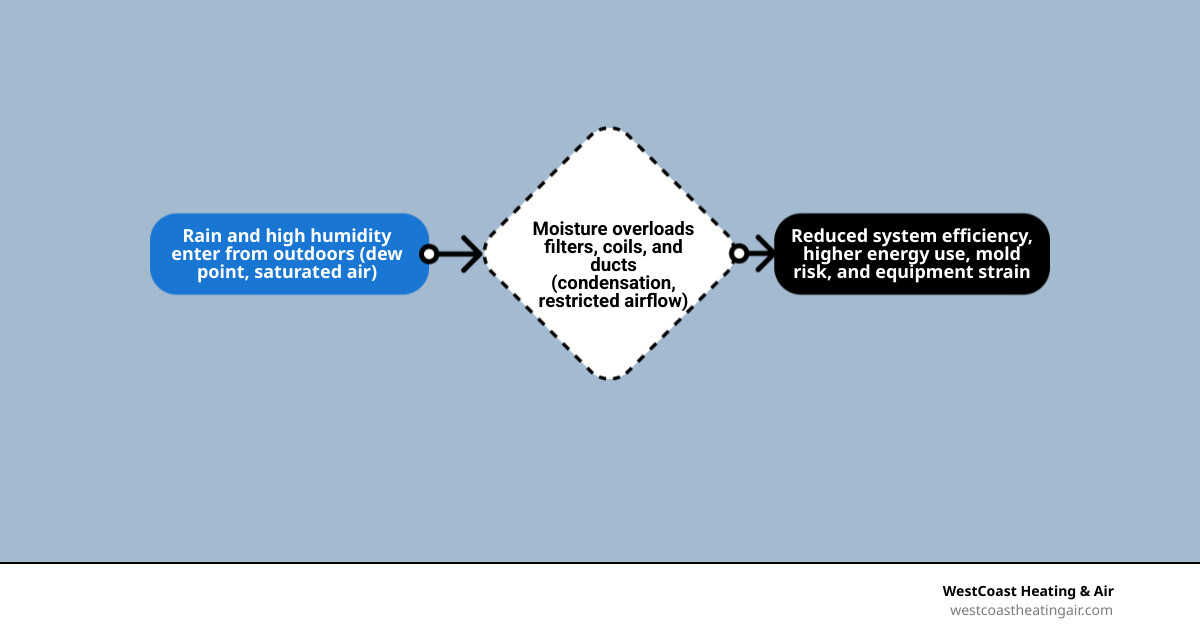
When a heavy overnight rainstorm hits, it does more than just soak your lawn. It completely changes the composition of the outdoor air. When you wake up the following morning, even if the rain has stopped, the air is saturated with moisture. This high outdoor humidity directly impacts how your heat pump or air conditioner functions during the day.
An HVAC system’s primary job is not actually to “create cold air”—it is to transfer heat. In the summer, it absorbs heat from inside your home and releases it outdoors. In the winter, your heat pump extracts heat from the outdoor air to warm your living spaces. However, when the outdoor air is thick with moisture, the thermodynamic process becomes much more difficult. Water vapor holds heat very effectively. For your outdoor unit to release heat into highly humid air, it must work significantly harder, consuming more electricity and running longer cycles.
Additionally, our region experiences rapid temperature swings. A chilly, damp morning in Tacoma can easily transition into a warm, humid afternoon. These fluctuations force your system to adapt constantly. During cooler, wet periods, your heat pump may need to run its defrost cycle frequently to keep ice from forming on the outdoor coils. If the system is already struggling with restricted airflow from a damp filter, these constant operational shifts can quickly lead to system wear and tear. To understand how our local climate patterns interact with your home comfort setup, you can read more about Western Washington Weather vs Your HVAC System.
The Science Behind How Rain and Humidity Affect Your System Performance
To truly understand how rain and humidity affect your system performance, we have to look at the relationship between relative humidity and the dew point. Relative humidity is the amount of water vapor present in the air expressed as a percentage of the amount needed for saturation at that same temperature. The dew point is the physical temperature at which water vapor condenses into liquid water.
In your residential air conditioning or heat pump system, the indoor evaporator coil gets very cold during a cooling cycle. If the air inside your home is highly humid, the temperature of this coil will quickly drop below the dew point of the surrounding air. When this happens, moisture from the air condenses directly onto the metal fins of the coil.
While a small amount of condensation is normal and expected, excessive humidity forces the evaporator coil to act like a giant sponge. Instead of focusing its energy on cooling the actual air temperature (sensible cooling), your system spends a massive portion of its energy capacity pulling water out of the air (latent cooling). This drastically reduces the overall heat transfer efficiency of the system.
When the air is saturated, the water on the coils can also attract dust, pollen, and other airborne particles, forming a sticky layer of grime that further insulates the coil and restricts airflow. By keeping your system running smoothly, you can avoid these efficiency losses. Discover how to keep your home comfortable year-round by reading about Dont Let the Rain Dampen Your Comfort with PNW Heat Pump Benefits.
The Impact of Excess Moisture on Indoor Comfort and Energy Efficiency

When high outdoor humidity finds its way inside your home, it directly threatens your family’s comfort and health. Ideally, indoor relative humidity should be kept between 30% and 50%. Once indoor humidity climbs above 50%, the quality of your indoor air is compromised.
Excessive moisture creates a breeding ground for biological growth. Dust mites, mold spores, and other common allergens thrive in damp conditions. If anyone in your household suffers from asthma or seasonal allergies, elevated humidity can quickly trigger respiratory discomfort, coughing, and other health issues.
Furthermore, high humidity makes your home feel much warmer than it actually is. The human body cools itself through the evaporation of sweat. When the air is already saturated with water vapor, sweat cannot evaporate efficiently, leaving you feeling sticky, warm, and sluggish. This lack of comfort often leads homeowners to turn down their thermostats, forcing their cooling systems to run continuously in a futile attempt to make the home feel dry.
To help visualize the difference, let’s compare how high humidity versus balanced humidity affects your home’s systems:
| System Component | Under High Humidity (>50% RH) | Under Balanced Humidity (30%-50% RH) |
|---|---|---|
| Evaporator Coils | Overloaded with condensation, reduced heat transfer, prone to grime buildup | Clean, efficient heat transfer, minimal water accumulation |
| Air Filters | Absorb moisture, clog quickly, restrict system airflow | Dry, clean, optimal airflow throughout the system |
| Ductwork | Prone to interior condensation, mold growth, and high static pressure | Dry interior surfaces, efficient air delivery |
| Energy Consumption | Significantly increased due to longer run times and lower thermostat settings | Optimized, steady energy usage meeting actual cooling demands |
| Indoor Comfort | Sticky, warm feeling; musty odors; elevated allergen levels | Crisp, clean air; efficient body cooling; pleasant environment |
Managing these levels is key to protecting both your home and your health. For practical advice on controlling these conditions, check out our Tips for Reducing Indoor Home Humidity.
How Rain and Humidity Affect Your System Performance and Energy Bills
When humidity levels remain high, your HVAC system has to work overtime, which directly impacts your monthly utility bills. One of the most common issues we see in places like Spanaway and SeaTac is a saturated air filter.
During periods of heavy rain and high humidity, the air filters in your home absorb moisture from the air. A damp filter acts like a solid wall, drastically restricting the airflow entering your HVAC system. When airflow is restricted, your system cannot pull enough warm air across the cold evaporator coil. This can cause the coil temperature to drop too low, leading to a frozen system that stops cooling entirely. If you have ever wondered why your system is running constantly but your house still feels warm, you can read about The Cold Hard Truth About Why Your AC Is Running But Not Cooling.
This lack of proper airflow often results in “short cycling”—a phenomenon where the system turns on and off rapidly. Short cycling prevents the system from running long enough to pull moisture out of the air, leaving your home sticky and uncomfortable while consuming massive amounts of starting electricity. It also confuses your thermostat, as local pockets of humid, warm air can cause the sensor to read temperatures inaccurately.
Moisture-Related Risks: Mold, Material Degradation, and Electrical Hazards
Prolonged exposure to rain and high humidity poses serious structural risks to your home and your heating and cooling equipment. When warm, humid air comes into contact with cool surfaces like uninsulated ductwork or drywall, condensation forms. Over time, this stagnant water leads to mold and mildew growth.
Mold doesn’t just ruin your indoor air quality; it can actively degrade the structural materials of your home. Wood framing can warp and rot, drywall can soften and crumble, and wallpaper or paint can bubble and peel. The average cost of repairing water and mold damage in residential properties can easily reach thousands of dollars, making prevention a much smarter financial decision.
Beyond structural damage, high humidity is a major enemy of your system’s electrical components. Moisture can find its way into outdoor electrical panels, wire connections, and control boards. When water mixes with dust and metal, it accelerates corrosion. Corroded electrical connections increase resistance, which reduces system efficiency, shortens the lifespan of expensive parts, and can even create dangerous electrical arcing risks. To keep your home safe and dry, learn more about Keeping the Mold Away HVAC Maintenance for Rainy Regions.
Electrical and Drainage Failures After Heavy Rainstorms
Heavy rainstorms in Western Washington can cause sudden, catastrophic failures if your system isn’t properly maintained. The most common culprit is a clogged condensate drain line. As your system pulls moisture out of the air, that water must drain away safely through a small plastic line. If this line is clogged with algae, dust, or mold, the water will back up. During a heavy rainstorm when humidity is high, this backup can happen in a matter of hours, leading to water spilling into your home, ruining ceilings, or flooding your crawl space.
Outdoor units are built to withstand rain, but they are not designed to sit in standing water. If your yard has poor drainage and water pools around your heat pump, it can submerge critical electrical components and fan motors. This can cause immediate short circuits, trip your breakers, and permanently damage your system’s compressor.
Furthermore, lightning strikes during local storms can cause massive power surges. If your system does not have dedicated surge protection, a single surge can fry the delicate control boards inside your unit. You can learn more about how outdoor elements interact with your physical equipment by reading How Does Rain Affect the HVAC Equipment.
Preventive Maintenance and Solutions for Puyallup Homeowners
Fortunately, you do not have to let the Pacific Northwest weather dictate your indoor comfort or ruin your equipment. There are several proactive steps you can take to protect your home.
First, consider installing a whole-home dehumidifier. Unlike portable units that only clear a single room, a whole-home dehumidifier works directly with your existing ductwork to remove excess moisture from the air before it ever circulates through your living spaces. This significantly reduces the latent cooling load on your heat pump, allowing it to run shorter, more efficient cycles. To explore your options, you can read our guide on How to Reduce Indoor Humidity in Puyallup.
Second, invest in professional duct sealing and insulation. Properly sealed and insulated ductwork can improve overall HVAC system performance by 20% to 30%. It prevents humid crawl space or attic air from being pulled into your living spaces and stops condensation from forming on the outside of the metal pipes.
Finally, ensure your outdoor unit has proper clearance. Keep shrubs, weeds, and fallen leaves cleared at least two feet away from the unit. This maintains optimal airflow and prevents damp organic debris from trapping moisture against the metal cabinet, which can accelerate rust and corrosion. If you want to dive deeper into custom solutions for our local climate, you can also read our Tips for Reducing Indoor Humidity in Puyallup or learn how to balance things year-round with How to Increase Indoor Humidity This Winter in Puyallup.
Protecting Your HVAC Investment with Seasonal Tune-Ups
The single most effective way to prevent rain and humidity from damaging your home’s system is to schedule regular professional residential maintenance. During a seasonal tune-up, a professional technician will perform a comprehensive multi-point inspection designed to catch small moisture-related issues before they turn into costly breakdowns.
This process includes:
- Thorough Coil Cleaning: Removing dirt and grime from indoor and outdoor coils to ensure efficient heat transfer and prevent mold growth.
- Electrical Component Testing: Inspecting contactors, capacitors, and wiring for any signs of corrosion, moisture intrusion, or wear.
- Drain Line Flushing: Clearing out the condensate drain line to ensure water can flow freely out of your home during high-humidity periods.
- Airflow Calibration: Checking static pressure and fan operation to ensure your system isn’t straining against restricted airflow.
By staying ahead of seasonal transitions, you protect your system’s lifespan and keep your energy bills low. If you are wondering whether a tune-up is worth it, we encourage you to read The Financial Case for Preventive Maintenance as well as What Happens If You Skip HVAC Maintenance. For year-round peace of mind, you can also learn how to protect your system from our damp winters by reading about Dont Let the Evergreen State Weather Wilt Your HVAC.
Frequently Asked Questions about Rain, Humidity, and HVAC Performance
Should I cover my outdoor heat pump or AC unit during heavy rain?
No, you should never cover your outdoor unit with a plastic tarp or a sealed cover. Outdoor units are specifically designed to withstand rain, wind, and snow. Covering the unit traps moisture inside the cabinet. This creates a highly humid micro-environment that promotes rapid rust, metal corrosion, and mold growth on the coils. If you want to protect your unit from falling branches or heavy pine needles, use a breathable mesh cover designed specifically for HVAC equipment, and always ensure the system is turned off if a cover is actively installed.
How do I know if high humidity is affecting my heating and cooling system?
There are several clear warning signs that humidity is impacting your system:
- Musty Odors: A damp, earthy smell coming from your vents indicates mold or mildew growth inside your ductwork or on your evaporator coils.
- Sticky Indoor Air: If your skin feels clammy or the air feels “heavy” even when the system is running, your HVAC unit is struggling to dehumidify.
- Window Condensation: Water droplets or fog forming on the inside of your windows is a sure sign that your indoor relative humidity has climbed above 50%.
- Frequent Cycling: If your system is turning on and off every few minutes without changing the temperature, it is likely short cycling due to humidity-related airflow restrictions.
Can a whole-home dehumidifier improve my HVAC system’s efficiency?
Absolutely. A whole-home dehumidifier takes over the heavy lifting of moisture removal, allowing your heat pump or air conditioner to focus solely on lowering the air temperature. Because dry air holds less heat than humid air, your home will feel cooler at a higher thermostat setting. This reduces the overall load on your compressor, lowers your energy consumption, and extends the operational lifespan of your entire heating and cooling system.
Conclusion
Understanding how rain and humidity affect your system performance is the first step toward maintaining a comfortable, efficient, and healthy home in Western Washington. From Puyallup and Sumner to Tacoma and Tumwater, our damp climate demands proactive care to protect sensitive electrical components, maintain clean indoor air, and keep energy bills under control.
At WestCoast Heating & Air, we are proud to be a local, family-owned company with over 20 years of hands-on experience serving our neighbors. We don’t believe in one-size-fits-all solutions. Instead, we focus on customized residential system design, thorough customer education, and top-quality home service tailored specifically to the unique climate of the Pacific Northwest.
Don’t wait for the next heavy rainstorm to find out if your system is up to the task. Schedule your seasonal HVAC maintenance with WestCoast Heating & Air today, and let our family keep yours comfortable, dry, and safe through every season.