
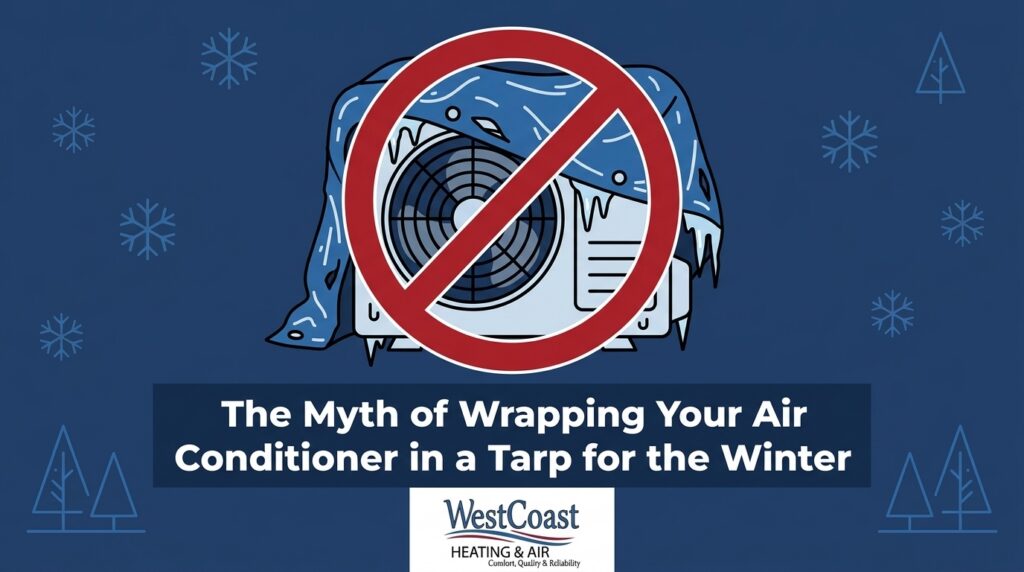
The Truth About Winterizing Your AC in the Pacific Northwest
Tying a heavy plastic tarp around your outdoor condenser doesn’t protect it from the elements—it actually accelerates its destruction. The myth of wrapping your air conditioner in a tarp for the winter is one of the most common misunderstandings we encounter as homeowners begin their September fall prep. When the temperature begins to drop and the skies turn gray, the natural instinct is to shield your expensive outdoor equipment from the impending weather. However, treating your HVAC system like a piece of patio furniture is a costly mistake that directly contradicts how the equipment was engineered to operate.
If you want to protect your system correctly, focusing on fall HVAC maintenance and taking the right steps to prevent rain damage to your outdoor HVAC unit will save you from unexpected breakdowns when spring arrives.
At WestCoast Heating & Air, our deep local expertise in Pacific Northwest weather patterns means we routinely see the aftermath of well-meaning but misguided winterization tactics. Homeowners assume that because the region experiences heavy, relentless rain, a waterproof barrier is the safest bet. The reality is quite the opposite. Air conditioners require constant ventilation to stay dry. When you choke off that airflow with a tight canvas or plastic cover, you inadvertently create a hostile environment that attacks the internal components of your system.
The Psychology Behind the Tarp
Most homeowners don’t realize that standard winterization advice varies wildly depending on geography. Advice meant for a homeowner in the snowy Northeast—where blizzard conditions might pack three feet of ice into a fan grille—often makes its way to the damp, rainy Pacific Northwest. Here, the primary enemy isn’t crushing weight; it is pervasive, lingering moisture. Understanding the difference between these climates is the first step in protecting your system the right way.
How Outdoor HVAC Condensers Are Built to Survive the Elements
To understand why a tarp is unnecessary, you have to look at how modern air conditioners are manufactured. Outdoor condenser cabinets are specifically engineered to live their entire operational lifespan outside, fully exposed to extreme UV rays, torrential downpours, and freezing temperatures. They do not need a jacket.
Here is exactly how your outdoor unit is built to withstand the elements without any external help:
- Powder-Coated Galvanized Steel Cabinets: The outer shell of your condenser isn’t painted with standard exterior paint. It is treated with a baked-on, powder-coated finish over galvanized steel. This industrial-grade coating is highly resistant to flaking, chipping, and rust, allowing water to bead up and roll off harmlessly.
- Sealed Electrical Contacts and Motors: The sensitive components inside your unit—such as the compressor, the fan motor, and the dual-run capacitor—are either hermetically sealed or housed in heavy-duty weatherproof casings. Rainwater pouring through the top grille simply washes over these components without penetrating the electrical connections.
- Corrosion-Resistant Coils: The delicate fins and coils that wrap around the unit are typically made of aluminum and copper. These metals are specifically chosen for their efficient heat transfer and their natural resistance to rapid oxidation when exposed to fresh rainwater.
- Built-In Drainage Systems: If you look at the base pan of your outdoor unit, you will notice integrated weep holes and drainage channels. The system is designed to take on water and immediately drain it away. When you understand how rain affects HVAC equipment, you realize that natural rainfall actually benefits the system by washing away accumulated summer dust, pollen, and debris from the coils.
The crucial element in all of this engineering is airflow. The unit relies on ambient wind and cross-ventilation to dry out after a storm. Restricting this natural airflow disrupts the unit’s ability to protect itself, setting the stage for severe internal damage.
The Danger of Trapped Moisture: The Damp Terrarium Effect
The most destructive consequence of wrapping your AC unit is a phenomenon known as the damp terrarium effect. When you drape a heavy, non-breathable material over a metal box sitting on cold ground, you alter the microclimate inside that box.
In the Puyallup / Pacific Northwest region, the soil rarely dries out completely during the winter. Ground moisture constantly evaporates upward. If the unit is uncovered, this moisture simply dissipates into the breeze. If the unit is wrapped tightly in a tarp, that rising moisture hits the waterproof ceiling, condenses into water droplets, and rains back down onto the internal components.
The quick fix: Never use a material that acts as a vapor barrier. Proper HVAC maintenance for rainy regions prioritizes breathability over shielding.
Comparing Climate Threats
Why does a tarp cause so much damage here, when someone in a different state might use one without issue? It comes down to the type of winter weather.
| Climate Factor | Dry-Cold / Snowy Climates | Wet-Rainy Climates (Pacific Northwest) |
|---|---|---|
| Primary Threat | Heavy snowpack bending fan blades and crushing coils. | Constant, lingering ambient moisture and high humidity. |
| Moisture State | Frozen (ice and snow). Does not evaporate into the unit. | Liquid and vapor. Constantly evaporating from the soil. |
| Tarp Impact | May successfully deflect heavy snow loads. | Traps 100% of ground moisture, creating a greenhouse effect. |
| Resulting Damage | Minimal, provided the tarp is removed before spring thaws. | Accelerated rust, corroded electrical contacts, and aggressive mold growth. |
Inside this dark, damp terrarium, the constant presence of condensation accelerates rust on the cabinet joints and causes galvanic corrosion on the delicate copper and aluminum coils. Furthermore, the lack of UV light and airflow creates the perfect breeding ground for mold and mildew, which can coat the coils and severely restrict the system’s efficiency when you turn it back on in the summer.

Why a Wrapped AC Unit Becomes a Winter Haven for Pests
Beyond the physics of moisture, wrapping your air conditioner introduces a serious biological threat. As temperatures begin to drop during September fall prep, local wildlife immediately begins scouting for safe, dry places to overwinter.
Rodents are opportunists. Mice, rats, and squirrels are constantly seeking shelter from the wind, rain, and predators. An outdoor condenser is essentially a hollow metal cave. Normally, the open top and slotted sides make it a poor home—it’s drafty, wet, and exposed. However, the moment you drape a heavy tarp over it, you instantly transform that drafty metal box into a dry, wind-proof, five-star winter resort.
Consider the access points: mice can squeeze through gaps and holes as small as a dime. Even if you bungee-cord the tarp tightly around the base, rodents will easily find their way up through the refrigerant line penetrations or the drainage weep holes in the base pan. Once inside the dark, protected void of a wrapped unit, they cause extensive damage:
- Chewed Wiring: Rodents have a biological need to gnaw. They frequently strip the insulation off low-voltage thermostat wires, high-voltage capacitor leads, and sensor cables, leading to dangerous electrical shorts.
- Nesting Material: Mice will drag leaves, pine needles, fiberglass insulation, and trash into the cabinet, packing it tightly around the fan motor and compressor. This creates a severe fire hazard and blocks the unit’s ability to cool itself.
- Corrosive Waste: Urine and droppings left behind by an infestation are highly acidic and will rapidly eat through the thin metal of the condenser coils, leading to catastrophic refrigerant leaks.
By leaving the unit exposed to the natural elements, you ensure the interior remains uninviting, wet, and drafty—exactly the kind of environment rodents avoid.
Safe Alternatives to Full Tarps for Winter Protection
If you live in a heavily wooded area of the Puyallup / Pacific Northwest region, you might still be concerned about falling debris. Pine needles, heavy autumn leaves, and small branches can slip through the top fan grille and accumulate inside the base pan, where they decompose and block the drainage holes.
Fortunately, you can protect your unit from falling debris without suffocating it. Here is a checklist of safe, manufacturer-approved alternatives to full wraparound tarps:
- Use a top-only cover: These are specifically designed covers that only shield the top fan grille. They drop down no more than a few inches over the sides, completely blocking falling leaves while leaving the entire perimeter of the cabinet open for cross-ventilation.
- The DIY plywood method: If you don’t want to purchase a specialized cover, a simple piece of heavy plywood cut slightly larger than the top of the unit works perfectly. Place it flat over the fan grille and weigh it down with a heavy brick or cinder block. This deflects debris and rain from the top while maintaining 100% side airflow.
- Clear the surrounding perimeter: The best defense is a good offense. Cut back any encroaching bushes, tall grass, or low-hanging branches. Maintain a strict two-foot clearance zone around all four sides of the unit to promote maximum airflow and eliminate hiding spots for pests.
- Understand shading vs. covering: Building a permanent, breathable awning or structure over the unit can be beneficial, provided it doesn’t restrict exhaust airflow. Understanding the myth vs reality of shading your outdoor AC can help you make smart structural decisions without resorting to plastic wrap.
Ultimately, if you are forced to choose between wrapping the unit tightly or leaving it completely exposed to the winter weather, leaving it exposed is always the safer, less destructive option.
Frequently Asked Questions About Winter AC Protection
Should I cover my air conditioner in the winter?
No, you should not wrap your air conditioner in a tarp for the winter, especially in the damp Pacific Northwest. Full covers trap ground moisture inside the unit, accelerating rust and creating a sheltered environment for rodents. Outdoor condensers are manufactured with weather-resistant materials specifically designed to withstand rain, snow, and freezing temperatures without the need for external protection.
What happens if you wrap your AC unit?
Wrapping your AC unit creates a “damp terrarium” effect that traps rising soil moisture against the internal components. Because the unit cannot breathe, this trapped condensation leads to aggressive rust on the cabinet and galvanic corrosion on the coils. Furthermore, a wrapped unit provides a dry, wind-blocked shelter that attracts mice and rats, which frequently chew through the system’s electrical wiring.
Do I need to cover my outside AC unit in the rain?
No, rain actually helps wash away accumulated dirt, pollen, and debris from the exterior condenser coils. The internal electrical components are housed in sealed, weatherproof casings, and the base pan features drainage holes to prevent standing water. Allowing the unit to get wet and then dry naturally in the breeze is exactly how the manufacturer intended it to operate.
How do I protect my AC unit in the winter?
The best way to protect your AC unit during the winter is to keep the surrounding area clear of debris and ensure it has plenty of airflow. Trim back bushes and remove accumulated leaves from the base of the unit. If you are concerned about pine needles or leaves falling into the fan grille, use a top-only cover or a weighted piece of plywood that leaves the sides completely open for ventilation.
Will a tarp cause my AC to rust?
Yes, tightly wrapping a tarp around your AC acts as a vapor barrier that traps condensation against the metal components. While the exterior cabinet is powder-coated, the constant, lingering moisture trapped by the tarp will eventually find its way into joints, screws, and the delicate aluminum fins, significantly accelerating the oxidation and rusting process.
Ensure Your HVAC System is Ready for the Winter Shift
The clearest takeaway for homeowners tackling their September fall prep is that your air conditioner needs to breathe. Trust the engineering of your equipment, skip the heavy plastic tarps, and focus your energy on keeping the surrounding area clear of debris. By allowing natural airflow to do its job, you eliminate the risks of trapped moisture, accelerated rust, and costly rodent infestations.
If you’re unsure about the condition of your outdoor unit or want to ensure your entire system is prepared for the dropping temperatures, professional guidance is always your best bet. Our local experts can thoroughly evaluate your equipment for existing weather wear, clear out internal debris, and help you prevent rain damage to your outdoor HVAC unit before the heavy storms arrive.