
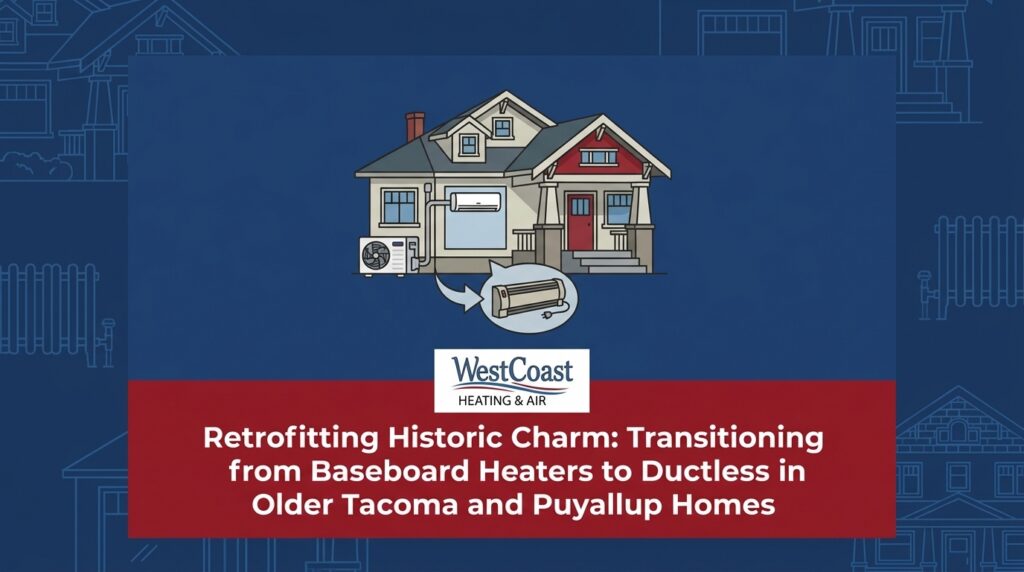
The Challenge of Upgrading Heating in Historic Pacific Northwest Homes
You know the feeling: staring at the electric meter after a long, damp winter and dreading the upcoming utility bill. Transitioning from baseboard heaters to ductless in older Tacoma and Puyallup homes is one of the most effective upgrades you can make to stop that meter from spinning out of control. Many local homeowners face the same concrete problem every year. You want the superior energy efficiency and cooling capabilities of a modern heat pump, but you are understandably worried about damaging the historic aesthetics, original woodwork, or fragile walls of your vintage property.
If you are ready to explore your options, our team at WestCoast Heating & Air knows how a professional Tacoma ductless heating installation can bridge the gap between historic preservation and modern comfort.
The urgency of timing: As we approach the September pre-heating season transition, the window to upgrade your system before temperatures drop is closing. Scheduling a retrofit before the cold weather sets in ensures your home is comfortable the moment the first frost arrives. However, upgrading an older home is not a simple plug-and-play operation. It requires a specialized approach.
- Preserving architectural integrity: Standard volume-installation techniques often ignore the delicate nature of historic homes, leading to cracked plaster and unsightly exterior wiring.
- Managing structural quirks: Older Tacoma and Puyallup housing stock often features narrow crawlspaces, solid wood framing, and unique wall compositions that require custom fabrication and careful drilling.
- Balancing airflow and aesthetics: Finding the right location for indoor air handlers without disrupting original built-ins or historic focal points takes careful planning.
By utilizing specialized installation techniques, our preservation-minded technicians can protect your home’s character while completely transforming how you heat and cool your living space.
Why Electric Baseboards Fall Short in the Modern PNW Climate
To understand why a ductless retrofit is so beneficial, it helps to look at how different heating technologies actually work. Traditional electric resistance heating—the technology inside your old baseboards—works by passing an electrical current through a resistor to generate heat. While this process is technically 100% efficient (all the electricity is converted to heat), it is incredibly energy-intensive. It takes a massive amount of electricity to generate enough heat to keep an older, often under-insulated home warm.
If you are considering a ductless installation in Puyallup, we can help you move away from heat generation and toward heat transfer. Ductless heat pumps do not create heat; they absorb ambient heat from the outside air and move it indoors. Because moving heat requires far less energy than creating it, modern ductless systems can achieve efficiency ratings of 300% or more. This exponential leap in efficiency is what drives down those high winter utility bills.
The modern climate reality: The Pacific Northwest climate is changing. While our mild, damp winters make heat pumps exceptionally efficient, our summers are getting noticeably hotter. Older un-air-conditioned homes in the area simply were not built to handle weeks of high heat. A ductless system solves this newer problem by providing powerful, zoned air conditioning during the summer, offering relief that baseboards simply cannot match.
| Feature | Electric Baseboards | Ductless Heat Pumps |
|---|---|---|
| Technology | Electric resistance (generates heat) | Refrigerant cycle (transfers heat) |
| Efficiency Potential | 100% (High energy consumption) | Up to 300%+ (Low energy consumption) |
| Summer Functionality | None (Heating only) | Full air conditioning and dehumidification |
| Air Quality Impact | Often burns settled dust, creating odors | Actively filters air and reduces humidity |
Furthermore, because upgrading to a heat pump significantly reduces the load on the local electrical grid, generic utility incentives often support upgrading from electric resistance heat to high-efficiency systems. Qualifying heat pump installations may be eligible for utility rebates or tax credits, though homeowners should always verify current local programs with their utility provider before beginning a project.

Navigating Lath and Plaster: Protecting Your Home’s Architecture
One of the biggest hurdles when retrofitting HVAC in older homes is dealing with the walls themselves. A defining feature of early 20th-century Craftsman and Victorian homes in the area is lath and plaster construction. Unlike modern homes built with uniform sheets of drywall, historic homes feature walls made of thin horizontal wooden strips (lath) covered in multiple layers of heavy plaster.
The risk of standard drilling: When a volume-based installer uses standard drywall techniques on a historic wall, the results can be disastrous. The vibration from aggressive drilling can cause the plaster keys (the plaster that squeezes between the lath to hold the wall together) to break off inside the wall cavity. This leads to severe cracking, crumbling, and the potential for large sections of plaster to detach entirely.
The Difference Between Standard Drywall and Historic Plaster
Understanding the structural differences is crucial for a safe installation. Drywall is relatively flexible and easy to patch. Historic plaster is rigid, brittle, and incredibly difficult to repair once compromised. Standard HVAC volume-installation methods fail in older homes because they rely on speed rather than precision.
To safely penetrate these walls, our technicians at WestCoast Heating & Air use specialized masonry bits and careful, slow-drilling techniques. By controlling the speed and pressure of the drill, we create the necessary three-inch hole for the ductless lineset without sending shockwaves through the surrounding wall. This meticulous approach prevents costly plaster repairs and ensures the structural integrity of the room remains intact.
Strategic Lineset Routing for a Flawless Exterior
Homeowners often hesitate to install ductless systems because they fear that ugly exterior linesets will ruin the facade of their historic property. A lineset—the bundle of copper refrigerant pipes, electrical wiring, and a condensation drain—must connect the indoor air handler to the outdoor compressor. In a standard installation, these lines are often run straight down the outside of the house, enclosed in bulky, highly visible plastic covers.
Working with our team means benefiting from WestCoast Heating & Air’s deep local expertise in custom routing to preserve your home’s original aesthetics. Instead of taking the easiest path, our specialized technicians look for creative, discreet ways to route the linesets. This often involves running the lines through unused closets, routing them down into crawlspaces, or tucking them discreetly under the exterior eaves where they are shielded from view.
When planning a custom retrofit, careful scheduling and thorough diagnostics are key. For example, a local homeowner recently reached out to us with a non-urgent issue regarding their older heating system. Our technicians scheduled service within days, diagnosed the immediate problems, and fixed their current needs while mapping out a long-term plan for future spring maintenance and system upgrades. That kind of deliberate, step-by-step planning is exactly what we bring to every historic home when mapping out complex lineset routes.
Creative Placement for Indoor Air Handlers
The interior aesthetics are just as important as the exterior. Indoor air handlers (the “heads” that mount on the wall) need to be positioned to provide optimal airflow without disrupting the room’s historic focal points. Rather than slapping a unit directly above a beautiful original fireplace or next to vintage built-in cabinetry, our technicians utilize low-wall units, ceiling cassettes, or less obtrusive wall spaces to ensure the technology blends into the room rather than dominating it.
- Custom-fabricated fittings: Adapting standard line hide covers to fit over thick historic trim or unique siding profiles.
- Color-matching covers: Painting the exterior line covers to match the exact shade of the home’s siding or trim, rendering them nearly invisible.
- Interior concealment: Using interior architectural features to hide wiring and piping before it reaches the exterior wall.
Electrical Considerations for Vintage Homes
Transitioning away from electric baseboards in older Tacoma and Puyallup housing stock requires a close look at the home’s electrical infrastructure. Ductless systems, like baseboards, require dedicated 220/240V circuits to operate. However, older homes may still have outdated electrical panels—such as older fuse boxes or early breaker panels—that require evaluation before adding new HVAC equipment.
Evaluating the panel: Our licensed professionals will assess your home’s electrical load capacity to ensure it can safely handle the new heat pump. Because we are removing the heavy electrical draw of multiple baseboard heaters, the overall load on the panel often decreases. In many cases, the existing 220/240V circuits used by the old baseboards can be repurposed to power the new outdoor compressor, simplifying the electrical transition.
If the old circuits cannot be repurposed, they must be safely capped and abandoned in place, or entirely removed back to the panel. Moving away from old, dust-collecting electric resistance heaters provides significant safety benefits, eliminating the fire hazards associated with baseboards that sit too close to drapes, furniture, or historic wooden trim.
Do You Need to Remove Your Old Baseboard Heaters?
The Problem: When planning a ductless retrofit, many homeowners are unsure what to do with the existing baseboard units. Leaving them in place can feel visually cluttered, but removing them might expose unfinished flooring or damaged trim.
The Cause: Baseboard heaters were often installed directly against the subfloor before the final flooring was laid, or they were integrated into the room’s baseboard trim. Because ductless systems provide total room heating, the old baseboards become completely redundant. However, the physical removal of the units requires careful logistical planning, especially in rooms with delicate historic woodwork.
The Solution: Removing old baseboards is not strictly required to install a ductless system. If you choose to leave them in place as a redundant (but unused) backup, our technicians will safely disconnect them from the electrical panel to ensure they cannot be accidentally turned on. If you prefer the aesthetic and space-saving benefits of completely removing the old units, the process involves safely capping the wires inside the wall. Keep in mind that removing the units usually requires patching the baseboard trim and potentially addressing gaps in the flooring. This patching process ties into the overall preservation of the room, allowing you to restore the original look of your historic molding while enjoying modern ductless heating maintenance and comfort.
Timing Your Retrofit for the Fall Heating Season
The calendar plays a major role in a successful HVAC upgrade. September is the critical transition window before average nighttime temperatures drop into the 40s. Waiting until the first major freeze to think about replacing your baseboards often leads to rushed decisions and uncomfortable weeks spent waiting for available installation dates.
The importance of lead time: Retrofitting older homes takes careful planning. We need time to evaluate the electrical panel, map out the least intrusive lineset routes, and potentially order custom-fabricated fittings or specific indoor handler styles. This level of customization requires lead time that is hard to come by in the middle of a winter cold snap.
By scheduling your retrofit during the September pre-heating season transition, you gain the peace of mind that comes with entering winter with a highly efficient, fully tested heating system. Proactive scheduling avoids the rush of urgent no-heat calls later in the fall, ensuring your historic home is treated with the patience and precision it deserves from WestCoast Heating & Air.
Ready to Upgrade Your Historic Home’s Comfort?
Preserving the architectural integrity of your vintage home doesn’t mean you have to settle for outdated, expensive heating technology. By transitioning from baseboard heaters to ductless in older Tacoma and Puyallup homes, you can protect your original plaster walls, maintain your beautiful exterior facade, and dramatically lower your winter utility bills.
As we approach the September pre-heating season transition, now is the time to prepare your home for the cold weather ahead. Don’t spend another winter relying on inefficient resistance heating. Schedule a consultation with our local experts at WestCoast Heating & Air, who understand the unique structural and aesthetic needs of older local properties, and discover how a carefully planned ductless retrofit can transform your historic home’s comfort.
Frequently Asked Questions
Can you replace baseboard heaters with a mini split?
Yes, replacing baseboard heaters with a ductless mini split is a highly effective upgrade. The process involves installing an outdoor compressor and strategically placing indoor air handlers in the rooms that need heating. Because ductless systems use heat transfer rather than electrical resistance, they provide significantly better efficiency and lower operating costs.
Do I need to remove old baseboard heaters when installing ductless?
Removing the old baseboard units is entirely optional. Many homeowners choose to leave them in place but permanently disconnected from the electrical panel to avoid the hassle of patching historic trim and flooring. If you prefer a cleaner look, the units can be removed and the wiring safely capped behind the wall.
Are ductless heat pumps better than electric baseboards?
Ductless heat pumps offer vastly superior performance compared to electric baseboards. While baseboards consume massive amounts of electricity to generate heat, a heat pump absorbs ambient heat from the outdoors, making it up to 300% more efficient. Additionally, heat pumps provide powerful air conditioning during the summer, whereas baseboards are strictly for heating.
How do you heat an older home without ductwork?
A ductless heat pump is the ideal solution for older homes lacking existing ductwork. Instead of tearing open walls and ceilings to install bulky sheet metal ducts, a ductless system requires only a small three-inch hole to connect the indoor and outdoor units. This preserves the home’s architecture while delivering precise, zoned comfort.
How do you install ductless in an older home without damaging plaster walls?
Protecting historic lath and plaster requires specialized drilling techniques and strict attention to detail. Our technicians use specialized masonry bits and a slow, controlled drilling speed to prevent the plaster keys from breaking inside the wall cavity. This careful approach stops the wall from cracking or crumbling during the installation process.
Can existing 240V baseboard circuits be used for a new ductless system?
In many cases, the existing 240V circuits used for your old baseboards can be repurposed to power the new ductless outdoor compressor. Our licensed professionals will evaluate your electrical panel to determine if the existing wiring meets the specific amperage requirements of the new system. If the circuits cannot be reused, they will be safely capped and abandoned.