
When Chilly Weather Exposes Thermostat Flaws
A chilly Pacific Northwest November is right around the corner, and if your furnace has been running nonstop since the first frost, you might be experiencing drafty hallway thermostat problems. The living room feels like a sauna, but the hallway where your thermostat sits is freezing cold. You walk by, check the screen, and see it reading a brisk 62 degrees. So, you bump the dial up a few more notches, hoping to finally take the chill out of the air. This constant battle with the temperature dial is a frustrating routine for many homeowners. Before you assume your entire heating system is failing, consulting with reliable heating and air services can help you determine if you need a major furnace repair in Puyallup or if a simple professional thermostat relocation will solve the problem.
The thermostat acts as the brain of your entire HVAC system. It tells the furnace when to ignite, how long to run, and when to shut down. However, this “brain” is completely blind to the rest of your house. It only knows the temperature of the exact spot where it is mounted on the wall. If that spot happens to be a poorly insulated corridor near the front door, the entire house suffers the consequences. As late fall temperatures drop, underlying HVAC placement flaws become painfully obvious. Homeowners are left with a difficult decision: continue manually adjusting the thermostat multiple times a day to compensate for the imbalance, or seek a permanent professional fix from our experts to restore whole-home comfort.
How a Drafty Hallway Tricks Your HVAC System
The Problem: You set your thermostat to a comfortable 70 degrees, but the furnace keeps running long after the main living areas have reached that temperature. The bedrooms are sweltering, the kitchen is uncomfortably warm, yet the heating system refuses to shut off.
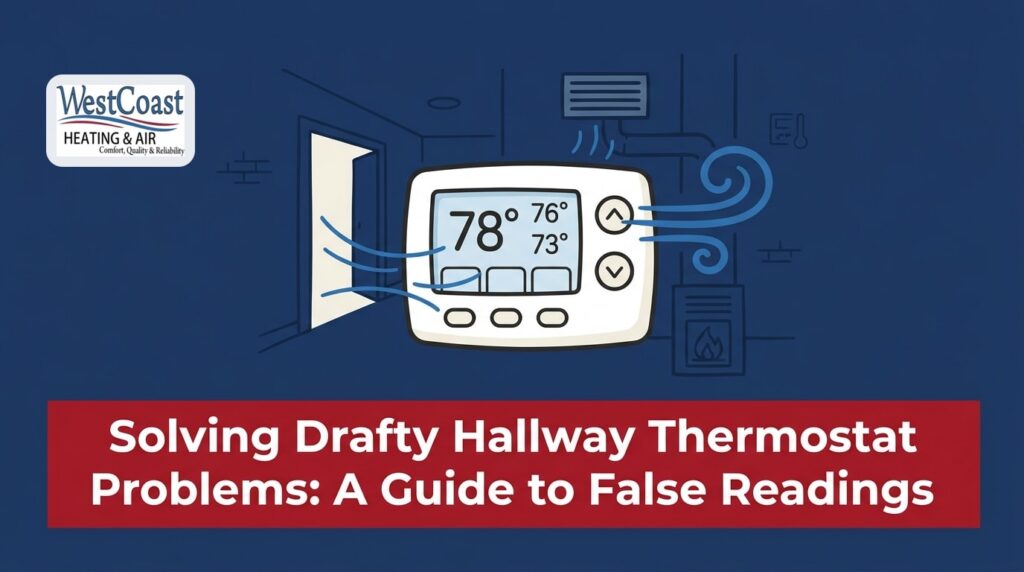
The Cause: Thermostats do not measure the average temperature of your entire home. They measure the ambient air immediately surrounding their internal sensors. In our years of serving Puyallup homeowners, our team at WestCoast Heating & Air frequently sees older home layouts where thermostats were placed in central hallways for easy access. Unfortunately, these hallways are often connected to unheated garages, or they feature front entryways with aging weatherstripping. Damp, chilly Pacific Northwest marine air easily seeps through these vulnerable gaps, creating invisible currents of cold air. These micro-drafts funnel directly over the hallway wall, washing the thermostat in a constant stream of cold air. Because the sensor is being actively chilled by the draft, it generates false low temperature readings. The thermostat believes the entire house is freezing, even when the living room is perfectly warm.
The Solution: To resolve the issue, you have to change what the thermostat is “seeing.” You cannot force a thermostat to ignore the air touching it. Instead, the focus must shift to relocating the sensor to an area that accurately represents the home’s baseline temperature, removing it from the path of the micro-draft entirely.
The Anatomy of a Micro-Draft
Micro-drafts are highly localized currents of air that move through a home due to temperature and pressure differences. When cold outdoor air meets the warm indoor air of your hallway, it creates a subtle convection loop. Cold air is denser and heavier than warm air, so it sinks toward the floor and rolls down the hallway. If your thermostat is caught in this invisible waterfall of cold air, it will constantly trigger the heating cycle. This is a pattern we see often in split-level homes or houses with open-concept entryways that lack interior doors to block the airflow.
How Modern Sensors Read the Room
Older thermostats used a vial of mercury to determine the temperature, which was somewhat slow to react. Modern digital thermostats use highly sensitive electronic components called thermistors. A thermistor changes its electrical resistance based on the exact temperature of the air touching it. Because they are so precise, thermistors react almost instantly to sudden temperature drops. When someone opens the front door to grab a package, the rush of cold air hits the thermistor, and the furnace immediately kicks on. This high sensitivity makes improper placement more problematic today than it was decades ago.
Common Symptoms of Poor Thermostat Placement
How do you know if you are dealing with a failing furnace or simply experiencing a sensor location issue? Because the symptoms of a bad sensor location often mimic the symptoms of a broken blower motor or a clogged filter, proper identification is essential. Look for these specific warning signs our technicians frequently encounter in local homes:
- Constant short-cycling: The furnace turns on, runs for just a few minutes, shuts off, and then immediately turns back on. This happens when a cold draft triggers the system, but the warm air from a nearby vent quickly satisfies the sensor, creating an endless loop of starting and stopping.
- Extreme temperature variations: You notice massive temperature swings between different rooms. The hallway might be 65 degrees, while the primary bedroom at the end of the ductwork is pushing 80 degrees because the furnace won’t stop running.
- Unexplained energy spikes: Your heating bills skyrocket unexpectedly early in the heating season. Furnaces use the most energy during the start-up phase. If poor placement causes the system to start and stop constantly, your utility bills will reflect that wasted energy.
- Ghost readings: The ambient temperature displayed on the digital screen simply does not match reality. This discrepancy is often the root cause of why your living room feels cold even when the thermostat says 70 degrees, or conversely, why the house feels like an oven when the screen reads a cool 68.
If you notice two or more of these symptoms occurring simultaneously, the mechanical components of your furnace are likely fine. The issue lies entirely in how the system is receiving its temperature data.
The Hidden Costs of Over-Firing Your Furnace
Ignoring a poorly placed thermostat does more than just ruin your evening comfort. It actively damages your HVAC equipment and shortens the lifespan of your entire heating system. When you constantly bump up the temperature dial to fight a drafty hallway, you force the furnace to over-fire.
The Toll on Your Heat Exchanger
The heat exchanger is the most critical and expensive component of your gas furnace. It is the metal chamber that safely separates the combustion exhaust from the breathable air circulating through your home. Every time the furnace turns on, the heat exchanger expands as it gets hot. When the cycle ends, it cools and contracts. If false low temperature readings cause the furnace to short-cycle constantly, this rapid expansion and contraction happens far too often. Over time, this causes metal fatigue, which can lead to dangerous cracks in the heat exchanger.
The Blower Motor Burnout Risk
Your furnace’s blower motor is designed to push warm air through the ductwork at a steady, calculated pace. When the system is forced to run continuously to satisfy a drafty hallway, the motor rarely gets a chance to rest and cool down. This continuous operation accelerates the wear and tear on the motor’s bearings and electrical windings, leading to premature burnout.
Misdiagnosed System Failures
Perhaps the biggest hidden cost is the risk of misdiagnosis. Homeowners who are frustrated by uneven heating often assume their equipment is simply too old to keep up. Knowing how to identify heat pump problems or furnace issues versus a simple placement error can save you from replacing perfectly good equipment. Many homeowners we meet have needlessly replaced blower motors or entire furnace units, only to find that the new system behaves exactly the same way—all because the thermostat was left in the drafty hallway.
Professional Fixes: Relocation vs. Wireless Sensors
When it comes to permanently solving airflow and temperature reading problems, there are two primary professional solutions. Neither of these should be attempted as a weekend DIY project. Thermostat wiring connects directly to your furnace’s main control board. Crossing the wrong low-voltage wires can instantly short out the motherboard, turning a simple relocation into a massive repair bill.
The Diagnostic Process: Mapping Your Airflow
This is where our team’s diagnostic expertise at WestCoast Heating & Air makes a difference. In our experience, true indoor comfort comes from holistic airflow mapping and proper whole-home calibration. A professional technician evaluates your home’s unique temperature zones, assesses the ductwork, and identifies where the micro-drafts are originating before recommending a fix. This comprehensive approach ensures the root cause is resolved, rather than just selling you unnecessary replacement parts.
| Solution Type | How It Works | Best For | Installation Impact |
|---|---|---|---|
| Hardwired Relocation | Physically moving the thermostat base to a central, temperature-stable interior wall away from drafts. | Homes with accessible attics or crawlspaces where new thermostat wire can be easily routed. | Requires running new wire behind the drywall, patching the old hole, and recalibrating the system. |
| Smart Thermostat with Wireless Sensors | Upgrading to a smart unit that uses battery-operated remote sensors placed in primary living areas to average the home’s temperature. | Multi-story homes, finished basements, or houses where running new wire is impossible without major drywall damage. | Minimal physical impact. The main unit stays in the hallway, but it uses the remote sensors to dictate the heating schedule. |
Both options effectively bypass the drafty hallway. Hardwiring is the traditional, foolproof method, while wireless sensors offer incredible flexibility for modern homeowners who want to prioritize the temperature of specific rooms at different times of the day.
Department of Energy Guidelines for Optimal Placement
To ensure your HVAC system operates efficiently and accurately, the US Department of Energy provides specific guidelines on where a thermostat actually belongs in a home. Following these rules prevents the furnace from overworking during a chilly Pacific Northwest November.
- Choose a central interior wall: The device must be installed on an interior wall. Exterior walls fluctuate in temperature based on the outdoor weather, the amount of insulation present, and direct wind chill, which will severely skew the sensor’s readings.
- Measure the ideal height: The thermostat should be mounted exactly 52 to 60 inches above the floor. Heat naturally rises, and cold air sinks. Placing the unit at this specific height ensures it reads the average temperature of the air you are actually breathing, rather than the cold air pooling near the baseboards.
- Avoid direct interference: The sensor must be kept completely away from direct sunlight, supply air registers, return vents, and natural drafts from windows or doors. Even the heat generated by a nearby television or a constantly glowing floor lamp can trick the sensor into thinking the house is warmer than it is.
- Consider zone balancing: For larger, multi-story homes, a single thermostat placement might never perfectly balance the entire house, regardless of where it is mounted. This is where furnace zone control systems become highly effective, allowing you to independently control the climate of different floors or wings of the house.

Frequently Asked Questions About Thermostat Placement
Can a draft affect a thermostat?
Yes, thermostats read the air immediately touching their internal sensors. A cold draft from a front door or unheated garage will cause the unit to register a much lower temperature than the rest of the house. This forces your heating system to run longer than necessary, wasting energy and overheating other rooms.
Why does my house still feel freezing when the thermostat is up?
This often happens when the thermostat is located in a warm pocket of the house, such as in direct sunlight or directly above a heating vent. The sensor gets warm quickly and shuts the furnace down before the heat can reach distant rooms. Alternatively, a severe draft can cause the system to short-cycle, preventing a steady flow of warm air from circulating.
Where is the worst place to put a thermostat?
Drafty hallways near entry doors, uninsulated exterior walls, directly above air vents, or in areas that receive direct afternoon sunlight are the worst locations. These spots experience severe, localized temperature fluctuations that do not represent the actual comfort level of your primary living spaces.
How do you fix a thermostat that reads the wrong temperature?
A professional HVAC technician can recalibrate the unit to ensure the sensor is functioning correctly. If the location is the problem, our technicians will either relocate the thermostat to a central interior wall or install a modern smart system with wireless remote sensors to average the home’s temperature.
Do I need to rewire my house to move my thermostat?
Not necessarily. While traditional physical relocation requires running new low-voltage thermostat wire through the walls or attic, modern smart heating systems offer an easier alternative. Smart thermostats use wireless remote sensors placed in various rooms, which completely eliminates the need for drywall repair or complex rewiring.
Restore Balance to Your Home Heating This Winter
Understanding exactly why poor placement causes massive system imbalances is the first step to achieving true indoor comfort. When your thermostat is blinded by cold micro-drafts, your furnace is forced to work overtime, leading to uneven heating, spiked energy bills, and unnecessary wear and tear on your equipment. You don’t have to spend another winter constantly adjusting the dial just to keep your living room comfortable. By seeking our professional diagnostic help at WestCoast Heating & Air to evaluate your home’s unique airflow and thermostat placement, you can permanently resolve false low temperature readings. Whether the solution is a hardwired relocation or the addition of wireless smart sensors, a properly placed thermostat ensures your heating system runs efficiently, reliably, and exactly when you need it.