
The Hidden Reason Your Furnace Struggles to Heat Your Home
If you are wondering how attic insulation affects HVAC efficiency, the answer usually starts with a heating system that runs constantly while your house remains relentlessly cold. You hear the furnace kick on, the vents blow warm air, but you still need a heavy blanket to sit comfortably on the couch. Dealing with this frustrating cycle naturally leads you to assume your equipment is failing. However, before you decide it is time to replace the machinery, you have a critical decision to make: do you invest in new hardware, or do you evaluate your home’s ability to hold onto the heat you are already paying for?
During a chilly damp Pacific Northwest November, your HVAC equipment only works as well as your home’s ability to retain that conditioned air. Heat loss through the attic directly undermines all your heating efforts, forcing the system to work overtime just to maintain a baseline temperature. If you are considering furnace system upgrades, we strongly recommend evaluating your home’s thermal boundary before committing to a gas furnace installation in Puyallup.
Understanding the Stack Effect and Your Home’s Thermal Envelope
To understand why your house feels so drafty, we need to look at the physical boundary that separates your cozy living room from the harsh outdoor weather. This boundary is known as the “thermal envelope.” It consists of your roof, walls, windows, doors, and foundation. When this envelope is weak or compromised, your heating system faces an uphill battle that it cannot win.
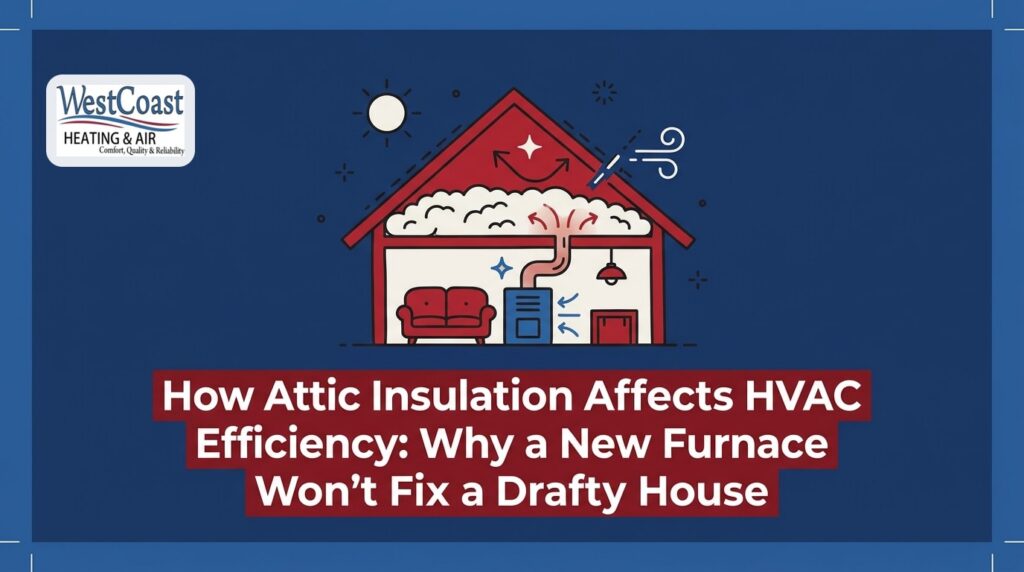
In many Puyallup WA area homes, the absolute weakest link in this thermal envelope is the attic. When an attic lacks proper insulation, a powerful physical phenomenon known as the “stack effect” takes over. As warm air from your furnace naturally rises, it escapes through the under-insulated ceiling and vents out through the roof. Because that massive volume of air leaves the house, it creates negative pressure in the lower levels of your home. This negative pressure acts exactly like a vacuum, aggressively pulling cold exterior drafts inside through the tiny gaps around your doors, windows, and foundation sill plates.
This constant cycle of escaping heat and infiltrating cold air explains the deep physical discomfort you feel. It is not just about the ambient air temperature; it is about the constant movement of cold drafts pulling radiant heat directly away from your body.
The Physics of Heat Loss in Older Architecture
Many older homes were built decades before modern energy efficiency standards existed. While the exterior walls might have basic fiberglass coverage, the attic space often lacks the thick thermal barrier required to actually trap rising heat. Building science experts note that roughly 25 percent of a home’s total heat loss occurs straight up through uninsulated or poorly insulated attics. Without a thick layer of protection up top, your home essentially acts like a giant chimney, venting the air you just paid to heat directly into the atmosphere.
Why the Thermostat Reading Can Be Misleading
You might look at the wall and see a perfectly comfortable number, but you still feel a deep chill in your bones. Air temperature at the thermostat simply does not account for radiant heat loss from your body to cold exterior walls, nor does it measure the frigid drafts sweeping across the floorboards. The stack effect creates a continuous cycle of cold air infiltration that tricks your senses. This is precisely why your living room still feels cold at 70 degrees. The thermostat only measures the stationary air immediately surrounding its sensor, remaining completely blind to the rapid heat loss happening everywhere else in the house.

How Attic Insulation Affects HVAC Efficiency Directly
When we talk about the performance of a heating system, most people immediately think of the AFUE (Annual Fuel Utilization Efficiency) rating printed on the yellow sticker on the side of the unit. While that percentage tells you how efficiently the machine burns fuel in a laboratory setting, true real-world HVAC efficiency is defined by how effectively that generated heat is maintained inside your living space. During a chilly damp Pacific Northwest November, a 98-percent efficient unit placed in a poorly insulated house will still perform terribly.
According to the EPA ENERGY STAR program, sealing leaks and adding adequate insulation can save homeowners an average of 15 percent on heating and cooling costs. The reason is straightforward: proper insulation acts as a thick, impenetrable thermal blanket. It traps the warmth inside the rooms, allowing your heating system to quickly satisfy the thermostat and shut down. Inadequate insulation forces the system to run longer, harder, and much more frequently.
Increased Furnace Runtimes and Energy Consumption
When heat escapes through the ceiling almost as fast as the furnace produces it, the thermostat struggles to reach its set point. This continuous heat loss results in dramatically increased runtimes. The blower motor spins for hours on end, the heat exchanger stays dangerously hot for extended periods, and the entire system experiences accelerated wear and tear. These longer runtimes consume significantly more energy, completely negating the financial benefits of owning high-efficiency equipment. You end up paying for continuous mechanical operation rather than actual indoor comfort.
The Problem of Uneven Temperature Distribution
Escaping heat also creates dramatic and frustrating temperature variations between the upper and lower floors of a home. Because hot air rises rapidly toward the poorly insulated attic, the upper floor bedrooms might feel sweltering while the ground floor kitchen remains frigid. This poor thermal retention makes it physically impossible for the heating system to warm the house evenly. If you are relying on air balancing to avoid cold spots, you must first ensure that the attic is not actively sabotaging your home’s thermal boundary.
The Impact of Damp Winter Air on Heating Performance
The damp, pervasive winter chill of the Pacific Northwest creates a unique and difficult challenge for home heating. In many Puyallup WA area homes, the winter air is not just cold; it is highly saturated with heavy moisture. This high humidity level dramatically changes the physics of how your home loses heat and how your furnace operates on a daily basis.
When the stack effect pulls cold outdoor air into your home to replace the warm air escaping through the attic, it is also pulling in that heavy, damp moisture. Heating moist air requires significantly more energy than heating dry air. Water vapor has a high specific heat capacity, meaning the furnace must work much harder and burn more fuel just to raise the ambient temperature of the humid air infiltrating your living space.
Poor insulation does not just let the cold air in; it lets the wet winter weather inside. This dampness settles deeply into your drywall, furniture, and carpets, making the indoor environment feel clammy and deeply chilly. Your body loses heat much faster in a damp environment, prompting you to turn the thermostat up even higher to find relief. This creates a vicious cycle: the furnace runs constantly to combat the damp cold, more warm air escapes through the attic, and more moist outdoor air is sucked inside to replace it. To achieve true heating efficiency in our specific regional climate, stopping this moisture infiltration at the source is absolutely essential.
Warning Signs Your Home’s Thermal Boundary Is Failing
Before you assume your heating equipment is completely broken, it is important to look for the physical indicators of heat loss. A failing thermal boundary presents several clear, non-technical symptoms that you can spot without any specialized diagnostic tools. If you notice these signs during a chilly damp Pacific Northwest November, you likely need a professional thermal evaluation rather than immediate equipment replacement.
Here is a checklist of common indicators that your attic insulation is no longer doing its job:
- Immediate temperature drops: Rooms cool down almost the second the furnace finishes its cycle and the blower shuts off.
- Cold drafts near the floor: Noticeable breezes creeping in around baseboards, electrical outlets, and exterior doors.
- Rapid roof snow melt: Snow melting off your roof much faster than your neighbors’ roofs, indicating massive heat escaping from the living space.
- Ice dams forming: Melted snow running down the roof and refreezing at the cold eaves, which is a classic sign of poor attic thermal retention.
- Constantly running equipment: The furnace blower motor rarely shuts off, even on mildly cold days when it should easily keep up.
Rapid Heat Loss Between Cycles
A well-insulated home acts like a high-quality thermos. It should hold its temperature for hours, not minutes, after the heating cycle ends. If you find yourself reaching for a sweater just ten minutes after the vents stop blowing warm air, rapid cooling is a primary symptom of a compromised thermal envelope. The heat is simply vanishing through the ceiling, rendering the previous heating cycle useless.
Inconsistent Comfort Across Zones
Poor insulation can make certain zones of the house virtually impossible to regulate. You might have one room that feels like a sauna and an adjacent room that feels like an icebox. Addressing the insulation is required before adding complex electronic controls or investing in furnace zone control systems. If the thermal barrier is broken, no amount of smart zoning or automated dampers will keep the cold air out.
| Symptom | Well-Insulated Home | Failing Thermal Envelope |
|---|---|---|
| Temperature Retention | Holds warmth for hours after the furnace stops. | Rooms feel chilly within minutes of the cycle ending. |
| Furnace Runtime | Short, efficient cycles spaced far apart. | Runs almost continuously to maintain the set point. |
| Floor Temperatures | Floors remain neutral and comfortable to walk on. | Noticeable cold drafts sweeping across the floorboards. |
Why We Recommend Checking Insulation Before Buying a New Furnace
There is a widespread misconception that a newer, larger heating system will magically fix a drafty house. At WestCoast Heating & Air, our honest, holistic approach to home comfort means we advise customers to address their thermal envelope before unnecessarily spending thousands on a new furnace upgrade. We believe in solving the root cause of the problem, not just treating the symptoms with bigger equipment.
Upgrading a furnace in a poorly insulated home just means you are heating the outdoors faster. A powerful new unit will still struggle to keep you comfortable if the heat immediately escapes through the roof. This is why we see so many Puyallup WA area homes where homeowners remain frustrated even after replacing their equipment; the machine is new, but the thermal boundary is still broken.
A comprehensive home energy evaluation identifies the true root cause of your discomfort. By addressing the thermal envelope first, you ensure that any future HVAC investments are sized correctly. A well-insulated home often requires a smaller, less expensive heating unit to maintain perfect comfort. Securing your attic insulation guarantees that your heating system will operate at peak efficiency, providing reliable warmth without the massive energy waste.
Frequently Asked Questions About Insulation and Heating Performance
Why does my living room feel cold when the thermostat says 70 degrees?
The thermostat only measures the air temperature directly surrounding its sensor. If your living room feels cold at 70 degrees, it is likely due to radiant heat loss and the stack effect pulling cold drafts across the floor. Escaping heat through the attic creates negative pressure, drawing chilly air in through gaps in the lower levels of the house.
Does attic insulation affect furnace performance?
Yes, attic insulation directly impacts how well your furnace performs on a daily basis. Adequate insulation traps the heat inside, allowing the furnace to run shorter cycles and use significantly less energy. Without it, the equipment must run continuously to replace the heat escaping through the ceiling, leading to accelerated wear and tear.
Should I replace my furnace or add insulation first?
You should almost always evaluate and upgrade your insulation before replacing your furnace. Improving your home’s thermal envelope ensures that heat stays inside, which might reveal that your current furnace is actually sufficient for your needs. Furthermore, proper insulation allows a technician to accurately size a new system, preventing you from overpaying for an oversized unit.
How much does insulation improve HVAC efficiency?
Sealing leaks and adding proper insulation can significantly improve overall system efficiency and lower your monthly bills. The EPA estimates that homeowners can reduce their heating and cooling costs by an average of 15 percent when they properly insulate attics, floors, and basements. It drastically reduces the workload on the blower motor and heat exchanger.
Can poor insulation ruin a furnace?
While poor insulation does not instantly break a furnace, it causes severe long-term damage over multiple seasons. Because the system has to run constantly to maintain the set temperature, parts like the blower motor and heat exchanger endure excessive strain. This continuous overworking dramatically shortens the lifespan of the equipment and leads to frequent breakdowns.
Why is my house cold even when the heat is on?
During a chilly damp Pacific Northwest November, your house may stay cold if the thermal boundary is compromised. The warm air produced by the heating system rises and escapes through the roof before it can adequately warm the living space. Until the attic is properly sealed, the heat will continue to escape as fast as the system generates it.
Take the Next Step Toward Reliable Winter Comfort
True HVAC efficiency and lasting home comfort rely entirely on the strength of your home’s thermal envelope. Understanding how attic insulation directly impacts furnace efficiency empowers you to make better, more effective home improvement decisions. Rather than blindly replacing equipment, focusing on thermal retention solves the root cause of cold drafts, uneven temperatures, and wasted energy.
Before the deep winter freeze sets in across Puyallup WA area homes, it is crucial to know exactly where your heat is going. Have your current heating system and thermal boundary evaluated by a professional. Taking the time to properly assess your home’s insulation will ensure your heating system operates smoothly, efficiently, and reliably all season long.