

Is Your Home Ready for the Switch? The Spring HVAC Transition From Heating to Cooling in Puyallup, WA
The spring HVAC transition from heating to cooling is something every Puyallup homeowner needs to tackle before the warm months arrive — and getting it right can mean the difference between a comfortable summer and a costly breakdown.
Here’s a quick overview of the key steps to make the switch smoothly:
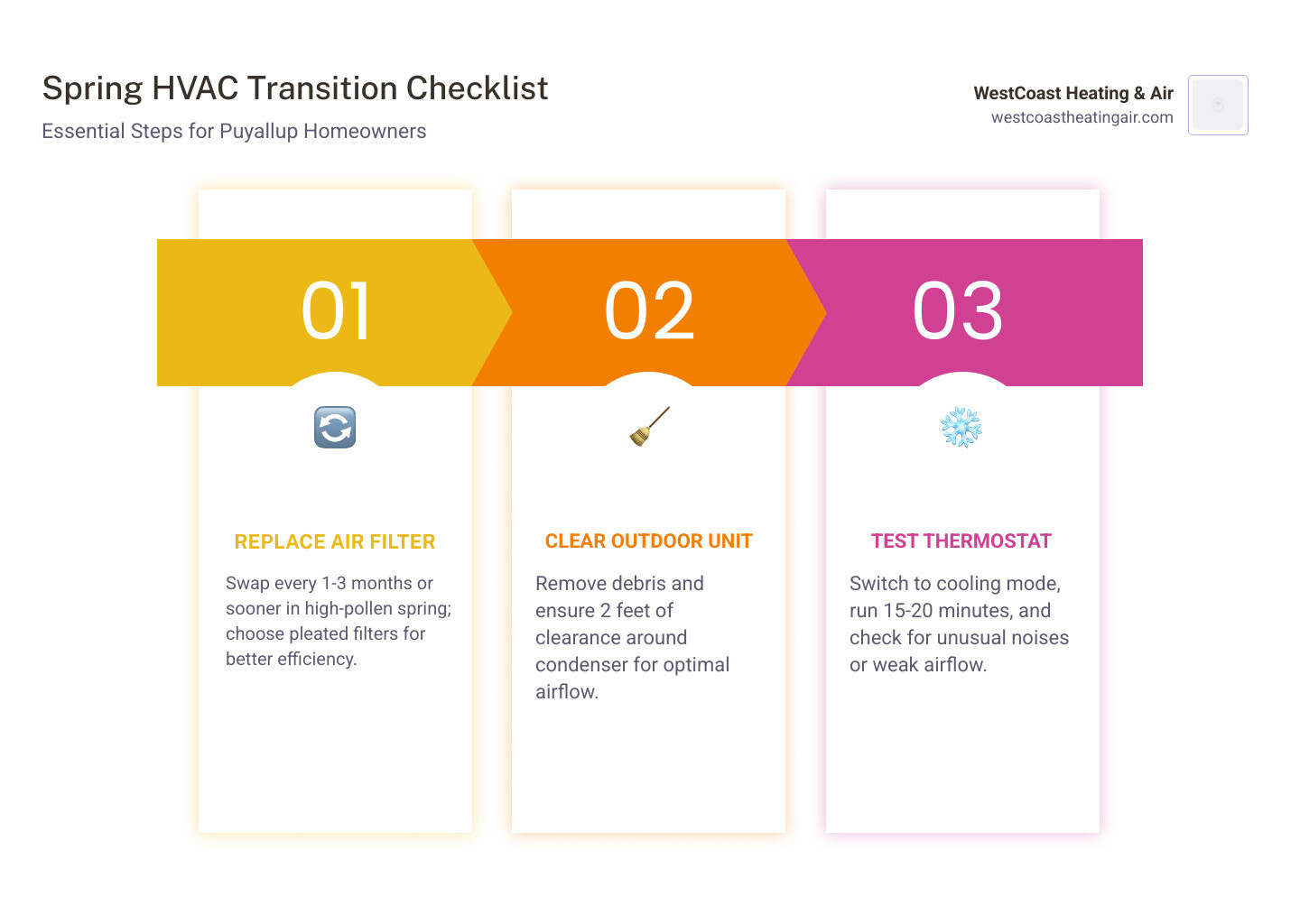
- Replace your air filter — Check it monthly and swap it out every 1–3 months, or sooner during high-pollen spring weeks.
- Clear your outdoor unit — Remove debris and make sure there’s at least 2 feet of clearance around the condenser.
- Switch your thermostat to cooling mode — Test it by running the system for 15–20 minutes and listening for anything unusual.
- Inspect your ductwork — Leaky ducts can waste up to 30% of conditioned air, driving up your energy bills.
- Schedule a professional tune-up — A technician can check refrigerant levels, electrical connections, and components you can’t easily access yourself.
Spring in the Pacific Northwest doesn’t always follow a straight line. One morning it’s 48°F, and by afternoon you’re reaching for the ceiling fan. That kind of temperature swing puts real stress on HVAC systems — especially ones that haven’t been serviced since last fall. Skipping this seasonal prep doesn’t just risk your comfort; it can shorten the life of your equipment and quietly inflate your energy bills month after month.
I’m Michael Smith, owner of WestCoast Heating & Air in Puyallup, and after decades of hands-on experience in complex systems — first at Boeing and now in residential HVAC — I’ve seen how a proper spring HVAC transition from heating to cooling protects both your equipment and your wallet. Let’s walk through exactly what you need to do this April 2026 to get your home ready for the months ahead.
Why Is the Spring HVAC Transition From Heating to Cooling Essential for Your Home?
As we move into April 2026, the shift from damp, chilly mornings to bright, sunny afternoons in the Puget Sound region signals it is time to think about your home’s comfort. Properly managing the spring hvac transition from heating to cooling is about more than just a literal flip of a switch; it is a vital part of home maintenance that ensures your system survives the summer.
Think of your HVAC system like a car. You wouldn’t take a cross-country road trip in the heat of July without checking the oil and tires first. Similarly, your Air Conditioning has been sitting dormant all winter while your furnace or heat pump worked overtime. Starting it up without a proper inspection can lead to sudden mechanical failure just when you need the cooling most.
Beyond preventing breakdowns, this transition is essential for:
- System Longevity: Regular seasonal care prevents the “wear and tear” that leads to premature system replacement.
- Energy Bill Reduction: A clean, well-tuned system doesn’t have to work as hard, meaning lower utility bills for you.
- Indoor Air Quality: Winter operation often leaves dust and debris trapped in your system. Cleaning it out now prevents those pollutants from circulating through your home all summer.
How Do I Prepare My Outdoor Unit? Maximizing Airflow for Summer
The outdoor condenser unit is the “lungs” of your cooling system. To cool your home, it has to release heat into the outside air. If that unit is choked by dead leaves, overgrown shrubs, or winter debris, it can’t breathe.

When we perform Spanaway Ac Maintenance Keeping Your Home Chilled And Thrilled, one of the first things we look at is clearance. Your outdoor unit typically needs between 12 to 18 inches of clearance to work, but for optimal performance, we recommend giving it at least 2 feet of open space on all sides.
Steps to clean your outdoor unit:
- Turn off the power: Safety first. Use the disconnect switch near the unit or the main breaker.
- Clear the area: Remove any leaves, branches, or nests that accumulated over the winter. Trim back bushes or grass that have grown too close.
- Gently clean the fins: Use a garden hose (not a pressure washer, which can damage the delicate metal fins) to wash away dirt and pollen.
- Check for damage: Look for frayed wires or signs that a neighborhood critter might have tried to make a home inside the unit during the winter.
DIY Residential Maintenance for a Smooth Spring HVAC Transition From Heating to Cooling
While some tasks require a pro, there are several things you can do yourself to ensure a successful spring hvac transition from heating to cooling. The most impactful task is checking your air filters.
During the spring, Pacific Northwest pollen counts can skyrocket. This pollen, combined with household dust and pet dander, can clog a filter in weeks. A dirty filter restricts airflow, forcing your blower motor to work harder, which can lead to overheating and higher energy costs.
Understanding MERV Ratings
When choosing a filter, look at the MERV (Minimum Efficiency Reporting Value) rating. A higher number means the filter catches smaller particles, but be careful—filters that are too thick can actually restrict airflow if your system isn’t designed for them.
| Filter Type | MERV Rating | Best For | Replacement Frequency |
|---|---|---|---|
| Basic Fiberglass | 1–4 | Protecting the equipment only | Every 30 days |
| Pleated Paper | 5–8 | Standard residential use | Every 60–90 days |
| High-Efficiency Pleated | 9–12 | Households with pets or allergies | Every 60 days |
| HEPA/Hospital Grade | 13–16 | Severe respiratory issues | Consult a professional |
Learning How To Reduce Cooling Costs This Summer starts with keeping these filters fresh. We recommend checking them every month during the spring transition. If you hold the filter up to a light and can’t see the light shining through, it’s time for a change.
My Energy Bills Are High. Optimizing Efficiency and Indoor Air Quality
If you’ve noticed your energy bills climbing despite keeping the thermostat at a reasonable temperature, your ductwork might be the culprit. Research shows that leaky ducts can lose a surprising amount of air—sometimes up to 30% of the air that passes through them.
In Western Washington, we also have to contend with high humidity. Spring humidity levels in our region can reach up to 86%. When your AC runs, it doesn’t just cool the air; it dehumidifies it. If your ducts are leaking, you are essentially trying to dehumidify the attic or the crawlspace instead of your living room.
For homeowners in older or unique homes in places like Steilacoom or Orting, traditional ductwork isn’t always an option. This is where the Unico System shines. It is a high-velocity system that can maintain a temperature differential of within 2 degrees throughout the entire living space, providing draft-free comfort and excellent humidity control.
Understanding Why Is An Oversized Air Conditioner Problematic is also key. If your system is too big, it will “short cycle,” turning on and off rapidly. This prevents it from running long enough to remove moisture from the air, leaving your home feeling clammy and damp even if the air is “cool.”
Testing Your Home System During the Spring HVAC Transition From Heating to Cooling
Don’t wait for the first 85-degree day in July to find out your AC isn’t working. Part of a smart spring hvac transition from heating to cooling is a “test run” while the weather is still mild.
The 20-Minute Test:
- Check Thermostat Batteries: If your thermostat uses batteries, April is the perfect time to replace them to avoid a mid-summer blank screen.
- Switch to ‘Cool’ Mode: Set the thermostat about 5 degrees lower than the current indoor temperature.
- Listen and Feel: Let the system run for 15 to 20 minutes. Listen for any screeching, rattling, or thumping. Feel the air coming from the vents—it should be consistently cool, not just “room temperature.”
- Observe the Cycle: Ensure the system stays on and doesn’t shut off after only a minute or two.
During this time, consider Should You Turn Off The Household Ac When Leaving Your Home. Usually, it’s more efficient to raise the temperature by a few degrees rather than turning it off entirely, which forces the system to work much harder to recover when you return.
Who Should I Call for a Tune-Up? Professional Residential Maintenance in Puyallup
While DIY steps are a great start, a professional residential “spring tune-up” is the best way to guarantee your system is ready for the long haul. At WestCoast Heating & Air, our residential technicians serve neighbors from University Place to Roy, providing a level of detail that goes beyond basic cleaning.
What does a professional residential spring tune-up include?
- Refrigerant Level Check: If your refrigerant is low, your system can’t absorb heat effectively. This usually indicates a leak that needs to be sealed.
- Electrical Inspection: We tighten all connections and measure voltage and current on motors.
- Condensate Drain Cleaning: AC units produce water (condensation). If the drain line is clogged with algae or debris, that water can back up and cause significant damage to your home.
- Coil Cleaning: We clean the indoor evaporator coil and the outdoor condenser coil to ensure maximum heat transfer.
- Component Lubrication: Moving parts need proper lubrication to reduce friction and prevent motor burnout.
Knowing How Often Should You Schedule An Hvac Tune Up is simple: once a year for residential cooling and once a year for heating. For Tacoma Homeowners Why Professional Ac Maintenance Is A Breeze, scheduling this in early spring ensures you beat the summer rush.
Why Is My AC Making Noise? Troubleshooting Common Residential Issues During the Seasonal Switch
When you first start your system during the spring hvac transition from heating to cooling, you might notice some “first-run” symptoms. Some are normal; others are red flags.
Common Residential Warning Signs:
- The “Dusty” Smell: A slight dusty odor when you first turn on the AC is often just dust burning off the internal components. However, if it smells like dirty socks or mold, you may have biological growth on your coils or in your ducts.
- Strange Noises: Squealing usually points to a failing belt or motor bearing. Banging or clanging could mean a loose part or debris inside the blower.
- Weak Airflow: If the air is cold but barely coming out of the vents, you might have a clogged filter, a blocked duct, or a failing blower motor.
- Frozen Coils: If you see ice on the copper lines or the indoor unit, turn it off immediately! This is usually caused by restricted airflow or low refrigerant.
If you encounter these issues, it may be time to Beat the Heat with AC Maintenance in Tacoma WA. If your system is more than 10-15 years old and requires frequent repairs, it helps to know the Signs Its Time To Upgrade Your Hvac System so you can plan for a replacement before an urgent problem happens.
Frequently Asked Questions about Seasonal Residential HVAC Changes
Why does my AC smell musty when I first turn it on in the spring?
This is often caused by “Dirty Sock Syndrome.” During the spring, moisture can accumulate on the evaporator coils. If there is dust or organic matter on those coils, it provides a breeding ground for mold and mildew. A professional cleaning of the indoor coils and a fresh, high-quality air filter can usually resolve this.
How often should I change my air filters during high pollen season?
In the Puyallup and Sumner areas, pollen can be very heavy in April and May. If you have pets or family members with allergies, we recommend checking your filter every 30 days. You might find that you need to replace it monthly during peak pollen season, even if the filter is rated for 90 days.
Can I run my heat and AC quickly during spring?
Yes, in the Pacific Northwest, this is actually quite common! However, you should avoid “short-cycling” the system. If you need to switch from heat to cool, turn the system to “Off” at the thermostat first. Wait about five minutes to let the residential refrigerant pressures equalize and the system to fully stop before switching to the other mode. This protects the compressor from unnecessary strain.
Conclusion
The spring hvac transition from heating to cooling is your best opportunity to ensure a stress-free summer. By taking a few DIY steps—like clearing your outdoor unit and swapping your filters—and pairing them with a professional tune-up, you can enjoy lower bills and better air quality all season long.
At WestCoast Heating & Air, we take pride in our customized system design and our deep roots in the Puyallup community. Whether you are in SeaTac, Spanaway, or right here in Orting, our team is dedicated to educating our customers and providing top-quality service backed by over 20 years of local experience.
Don’t wait for the heatwave to hit. Get in touch with a Residential Heating and Cooling Company you can trust. Contact us today to schedule your spring maintenance and breathe easy knowing your home is ready for whatever the Washington weather brings this year!