
Tired of Stuffy Afternoons? The Battle of Fall Temperature Swings
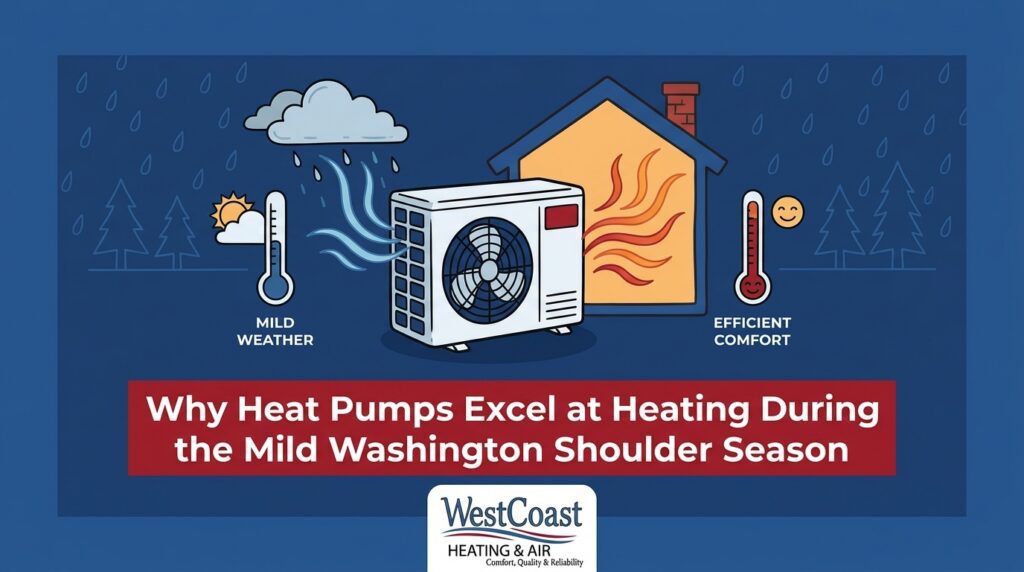
Are you constantly adjusting your thermostat because your house feels like a sauna by 3 p.m., even though you were shivering in the kitchen at 6 a.m.? At WestCoast Heating & Air, this is one of the most common complaints our team hears during the early fall. If you are trying to understand why heat pumps excel at heating during the mild Washington shoulder season, the answer usually starts with these frustrating temperature swings. During the September shoulder season, mornings are crisp and chilly, demanding a reliable heat source. However, by midday, the ambient temperature rises just enough that a traditional heating system suddenly feels overwhelmingly intense, leaving your living spaces stuffy, hot, and uncomfortable.
This daily battle forces homeowners into a constant cycle of turning their heating systems on and off. The core decision you face is whether a traditional gas furnace or a modern heat pump is the right tool for maintaining steady, quiet comfort without constant cycling. Evaluating this choice requires looking closely at how different equipment capacities match up to mild outdoor temperatures. For those considering an upgrade, exploring heat pump installation can be the key to solving this seasonal discomfort, and securing affordable heat pump installation in Puyallup ensures you are prepared for the unpredictable weather ahead.
The Mechanics of ‘Overshooting’: Why Gas Furnaces Struggle in Mild Weather
To understand why your home feels so uncomfortable during the early fall, it helps to look at exactly what happens inside your ductwork when the thermostat calls for heat. The primary culprit behind this stuffiness is a phenomenon known as “overshooting.”
The Problem of Overshooting
Overshooting occurs when a heating system blasts too much heat into a space too quickly, pushing the indoor temperature well past the number you actually set on the thermostat. Most standard gas furnaces operate on a single-stage mechanism. This means they only have two speeds: 100 percent on, or 100 percent off. They are engineered to combat freezing winter nights and icy winds. When you ask a single-stage furnace to warm up a house during 45-to-60 degree temperatures, it applies the exact same intense blast of combustion heat that it would use during a blizzard. The house warms up so rapidly that the thermostat cannot signal the system to shut down fast enough, resulting in a room that is several degrees hotter than you wanted.
The Hidden Costs of Short-Cycling
Because the furnace heats the house so quickly in mild weather, it shuts off almost immediately after turning on. A few minutes later, as the house naturally cools, the furnace fires back up at full blast. This rapid on-and-off pattern is called short-cycling. Not only does short-cycling cause annoying temperature fluctuations and stuffy rooms, but it also places immense mechanical strain on the system’s blower motor and heat exchanger. In our years of servicing HVAC systems across Puyallup, a pattern we see often is that this excessive wear and tear leads to premature breakdowns and the need for gas furnace repair.
The Pacific Northwest Climate Challenge
This overshooting issue is highly specific to the Pacific Northwest maritime climate. In many parts of the country, fall is a brief transition period before the deep freeze sets in. In western Washington, however, mild weather persists for weeks—sometimes months—meaning your gas furnace spends a significant portion of its operational life short-cycling and struggling to maintain a delicate balance.
How Variable Output Prevents the ‘On/Off’ Rollercoaster
If a single-stage furnace is like a light switch that only flips on or off, a modern heat pump operates more like a dimmer switch. This difference in mechanical design completely changes how a home feels during the transitional months in Puyallup and western Washington.
The Dimmer Switch Effect
Modern heat pumps are equipped with variable-speed compressor technology. Instead of blasting at full capacity every time it turns on, a variable-speed compressor can ramp its output up or down in tiny increments. If the morning requires 60 percent capacity to take the chill out of the air, the system provides exactly that. As the afternoon warms up and the house only needs a 20 percent trickle of heat to maintain the temperature, the heat pump adjusts its output accordingly. It perfectly matches the heating load of a mild day, virtually eliminating the aggressive temperature swings associated with overshooting.
Continuous Circulation and Air Quality
Because the heat pump provides a steady, low-speed trickle of warmth, it runs for much longer cycles than a gas furnace. While this might sound like it uses more energy, running at a low speed is actually incredibly efficient. More importantly, these longer cycles mean the system’s fan is continuously circulating air through your home’s ductwork and filtration system. This constant movement eliminates hot and cold spots, filters out airborne allergens more effectively, and prevents the stagnant, stuffy feeling that plagues homes during the early fall.
Configured for the Local Microclimate
Maximizing this variable-speed technology requires precise calibration. Our team at WestCoast Heating & Air specializes in configuring these advanced variable-speed systems specifically for the nuances of local microclimates. By fine-tuning the system’s sensors and airflow settings, the equipment can respond seamlessly to the unique humidity and temperature shifts of the western Washington region, ensuring your indoor environment remains perfectly balanced all season long.
Side-by-Side: Heat Pump vs. Gas Furnace in 45-to-60 Degree Weather
Comparing these two systems directly highlights exactly why the technology you choose dictates your daily comfort. When the outdoor thermometer hovers in the 45-to-60 degree range, the operational differences between a heat pump and a traditional gas furnace become starkly apparent.
| Feature | Modern Heat Pump | Traditional Gas Furnace |
|---|---|---|
| Operation Style | Variable capacity; provides a steady “trickle” of heat. | Single-stage; provides a 100% capacity “blast” of heat. |
| Cycle Length | Long, low-speed cycles that maintain continuous airflow. | Short, frequent cycles (short-cycling) as it rapidly turns on and off. |
| Indoor Air Feel | Steady, evenly circulated, and consistently filtered. | Stuffy, with noticeable temperature spikes and stagnant periods. |
| Energy Utilization | Moves ambient heat from outdoors to indoors with high efficiency. | Combusts fossil fuels at maximum capacity to generate heat. |
| Best Use Case | Excels in mild, extended shoulder seasons and moderate winters. | Designed primarily for extreme, below-freezing winter nights. |
As the table illustrates, the mechanical limitations of a single-stage furnace make it poorly suited for the gentle heating demands of the early fall. A heat pump’s ability to modulate its output makes it the superior choice for maintaining a calm, consistent indoor climate when the weather outside is mild but unpredictable.

Moving Heat Instead of Making It: The 300% Efficiency Advantage
Beyond physical comfort, the method by which these systems operate dictates their energy consumption. The fundamental difference between a furnace and a heat pump is that a furnace *generates* heat by combusting fuel, while a heat pump *moves* existing ambient heat from one place to another.
The Science of Moving Heat
Even when it feels chilly outside during the September shoulder season, there is still an abundance of thermal energy in the outdoor air. A heat pump uses a specialized refrigerant cycle to absorb this ambient heat from the outside air, compress it to raise its temperature, and transfer it inside your home. Because moving heat requires significantly less energy than creating it from scratch via combustion, the efficiency gains are massive.
Understanding Coefficient of Performance
According to data from the Department of Energy, heat pumps can operate at over 300 percent efficiency in mild weather conditions. In technical terms, this means that for every single unit of electrical energy the system consumes, it delivers three units of heat energy into your home. A highly efficient gas furnace, by comparison, maxes out at around 95 to 98 percent efficiency, meaning some energy is always lost in the exhaust process. This 300 percent efficiency advantage translates directly into lower energy consumption during the prolonged shoulder season.
Navigating Rebates and Incentives
Because of this incredible efficiency, upgrading your HVAC equipment can often qualify you for significant financial incentives. Various federal tax credits may apply to qualifying high-efficiency heat pump installations, and local utility programs frequently offer rebates for homeowners transitioning to energy-saving technologies. Homeowners are always advised to verify current programs with their utility providers or a tax professional. To ensure your highly efficient system continues to perform at this level year after year, scheduling routine heat pump maintenance services is highly recommended before the colder weather sets in.
Managing Unpredictable Evening Drops in the Pacific Northwest
One of the defining characteristics of the maritime climate in Puyallup and western Washington is the sharp temperature cliff that occurs in the early evening. A day that sits comfortably at 65 degrees in the mid-afternoon can easily plummet into the low 40s once the sun sets behind the Olympics or the Cascades.
The Sunset Temperature Cliff
This rapid thermal loss forces your heating system to transition quickly from a state of rest to active heating. A properly maintained variable-speed heat pump handles this sudden demand smoothly. It senses the dropping indoor temperature and slowly ramps up its compressor speed, bringing the house back to a comfortable baseline without a jarring blast of hot air or a disruptive noise from the vents.
Reliability When the Temperature Drops
Sudden evening cold snaps are notoriously the exact moments when neglected heating systems decide to fail. Having a reliable system ready for these evening drops is essential for your family’s peace of mind. Our team recently helped a local homeowner who experienced this firsthand when a system issue required urgent service during a chilly fall shoulder season evening. One of our technicians arrived within two hours, thoroughly assessed the problem, and provided an honest, reliable solution without any unnecessary upsells. Prompt, expert response is invaluable when heating systems unexpectedly quit during chilly fall or spring evenings, but preventing those breakdowns with a modern, capable system is always the best strategy.
Do You Still Need a Furnace for Winter?
A common question arises once homeowners understand how well heat pumps perform in the 45-to-60 degree range: what happens when the temperature drops below freezing? Homeowners in Puyallup and western Washington often wonder if they still need a traditional furnace to survive the deep winter months.
The Dual-Fuel Advantage
When consulting with Puyallup homeowners, our team typically recommends considering a dual-fuel, or hybrid, system for the best of both worlds. A dual-fuel setup pairs a high-efficiency heat pump with a traditional gas furnace. In this configuration, the heat pump handles all the heating duties during the long, mild shoulder seasons, operating at that incredible 300 percent efficiency. However, when a severe winter storm hits and temperatures plummet into the 20s, the system automatically switches over to the gas furnace. The furnace acts as a powerful backup, providing the intense combustion heat needed to combat extreme cold snaps.
Modern Cold-Climate Heat Pumps
It is worth noting that modern cold-climate heat pumps are incredibly capable on their own. Advances in inverter technology allow today’s premium heat pumps to extract heat from the outdoor air even when temperatures drop well below freezing. Whether you need a backup furnace depends heavily on your specific home’s insulation, existing ductwork, and overall thermal envelope. Consulting with a professional to determine the best HVAC setup for Western Washington weather will ensure you have a system tailored exactly to your property’s needs.
Frequently Asked Questions About Heating in Mild Weather
Why is my house so hot when the furnace kicks on?
Traditional furnaces operate at 100 percent capacity every time they turn on, which blasts too much heat too quickly during mild weather. This intense burst of heat causes the indoor temperature to overshoot the thermostat setting before the system has time to shut down. The result is a room that feels stuffy and significantly hotter than you intended.
At what temperature is a heat pump most efficient?
Heat pumps are highly efficient in mild conditions, particularly when outdoor temperatures are between 40 and 60 degrees. In this 45-to-60 degree temperature band, they can achieve over 300 percent efficiency by moving ambient heat rather than generating it from scratch. However, modern variable-speed units maintain strong efficiency ratings even as temperatures drop below freezing.
Is a heat pump better than a furnace in mild weather?
Yes, a heat pump is generally much better suited for mild weather due to its variable-speed technology. Instead of harsh on/off cycles, a heat pump provides a steady trickle of heat that matches the exact needs of the home. This longer, slower operation improves indoor air quality, eliminates hot and cold spots, and prevents the house from feeling stuffy.
Do I need a furnace if I have a heat pump in Washington?
Not necessarily; modern cold-climate heat pumps are fully capable of handling Pacific Northwest winters entirely on their own. However, some homeowners prefer dual-fuel systems that use a gas furnace for backup during extreme cold snaps. The right choice depends on your home’s insulation, layout, and your personal comfort preferences.
How does short-cycling damage a heating system?
Constant starting and stopping puts immense mechanical strain on motors, relays, and electrical components. This rapid cycling reduces the overall lifespan of the equipment and increases the likelihood of sudden breakdowns. Additionally, short-cycling increases energy consumption due to the high power draw required every time the system starts up.
Find the Perfect Balance for Your Home’s Climate
Surviving the early fall temperature swings requires equipment that actually matches the region’s unique maritime climate. While traditional furnaces are built for deep winter freezes, a heat pump offers unparalleled comfort, quiet operation, and exceptional efficiency during the long transition months of the September shoulder season. By moving ambient heat rather than combusting fuel, these systems prevent the stuffy overshooting that makes your living room uncomfortable on a mild afternoon.
If you are tired of constantly adjusting the thermostat and listening to your furnace short-cycle, now is the perfect time to evaluate your home’s specific heating needs. Exploring why heat pumps excel at heating during the mild Washington shoulder season is the first step toward a more comfortable, energy-efficient home. Reach out to local climate experts to weigh your options, explore system upgrades, and find the perfect balance for your indoor comfort this fall.