
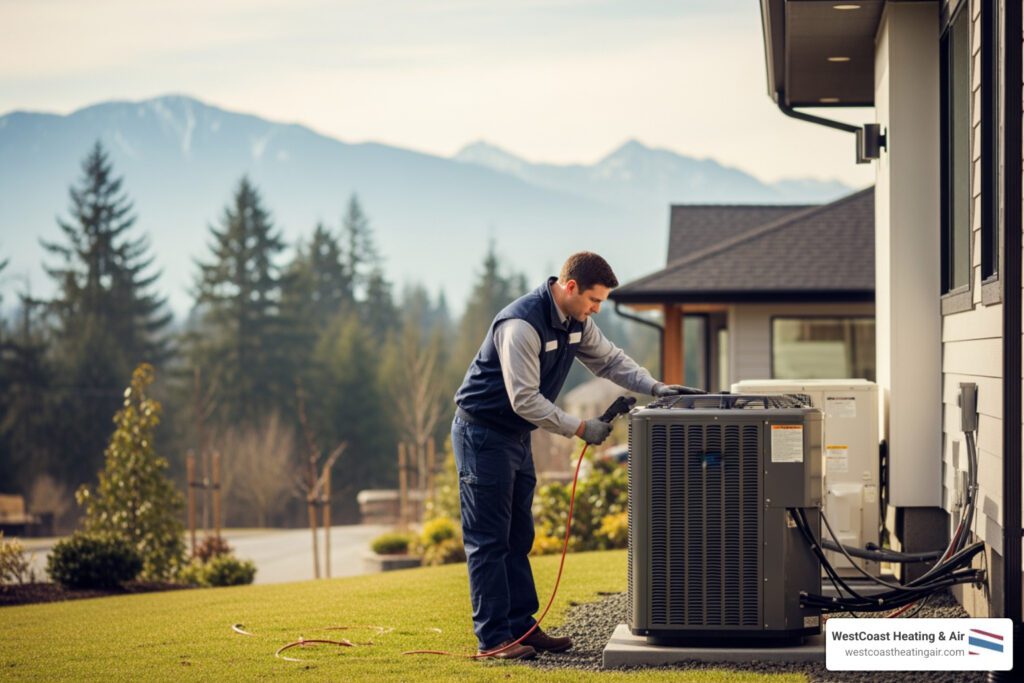
How Often Should You Service Your HVAC in Washington?
How often should you service your HVAC in Washington is one of the most important questions you can ask as a homeowner — and the answer is simpler than you might think:
Quick Answer: HVAC Service Frequency for Washington Homeowners
| System Type | Recommended Service Frequency | Best Timing |
|---|---|---|
| Heat Pump | Twice per year (minimum) | Spring (Feb–Apr) + Fall (Sep–Oct) |
| Gas Furnace | Once per year (minimum) | Fall (Sep–Oct) |
| Central AC | Once per year | Spring (Mar–May) |
| Ductless Mini-Split | Twice per year + monthly filter cleaning | Spring + Fall |
| Any system 10+ years old | Twice per year | Spring + Fall |
Most Washington homeowners should plan for at least two professional HVAC tune-ups per year — one in spring before the cooling season, and one in fall before the heating season kicks in. If you have a heat pump, this twice-yearly schedule isn’t optional; it’s the responsible minimum.
Washington’s climate is harder on HVAC equipment than most people realize. Damp winters around the Puget Sound create corrosion and moisture buildup on outdoor units. Wildfire smoke seasons load filters faster than they would in cleaner air. And heat dome events — like the record 108°F temperatures Washington saw in 2021 — push systems to extremes they were never originally designed for. All of that adds up to a climate that demands more from your equipment, and more attention in return.
Neglected systems don’t just break down more often — they use up to 25% more energy, deliver noticeably weaker airflow, and can fail years before their time. Regular maintenance is what stands between a reliable, efficient system and an expensive urgent call on the hottest day of the year.
I’m Michael Smith, owner of WestCoast Heating & Air in Puyallup, and after 30 years at Boeing followed by hands-on HVAC work serving families across the Pacific Northwest, I’ve seen what Washington’s unique climate does to systems that don’t get the attention they need. In this guide, I’ll walk you through exactly how often you should service your HVAC in Washington, broken down by system type, season, and the specific conditions in our corner of the state.
For most homeowners in Puyallup, Tacoma, Sumner, Spanaway, University Place, Tumwater, and nearby areas, the best rule is simple: schedule service in spring and again in fall.
That biannual schedule prepares your system before the two times of year it matters most:
- Before summer heat arrives
- Before cold, wet weather puts heating equipment to work
This timing helps protect efficiency, comfort, and system life. It also makes scheduling easier, since waiting until the first heat wave or first freezing night is a little like shopping for umbrellas after you’re already soaked.
If you want a deeper look at timing, see The Best Time To Schedule Your Heating And Cooling Tune Ups.
The short answer to how often should you service your HVAC in Washington
Here is the practical breakdown:
- Heat pumps: twice per year, minimum
- Gas furnaces: once per year, ideally in fall
- Central AC: once per year, ideally in spring
- Ductless mini-splits: twice per year, plus regular filter cleaning
- Older systems, homes with pets, allergy households, or heavy-use systems: often need more attention between visits
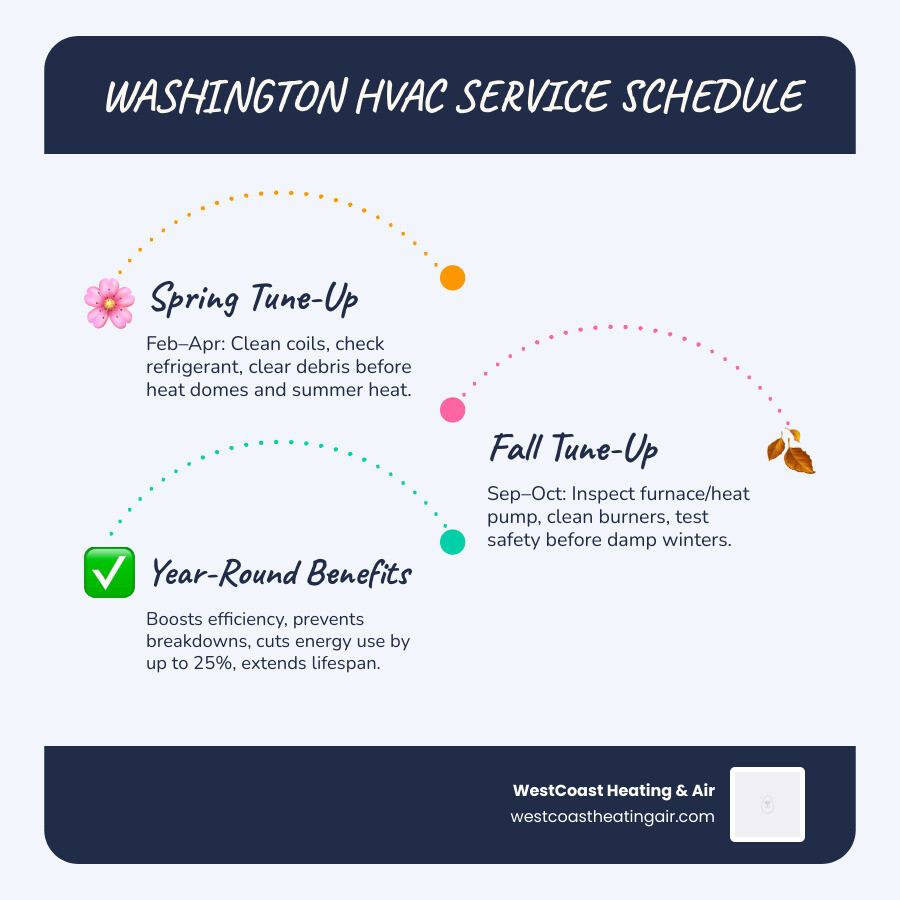
For Washington homes, spring service usually fits best between February and April, while fall service is best between September and October.
Why once a year is usually the bare minimum in Washington
In some climates, annual service may be enough. In our part of Washington, it is usually just the floor, not the goal.
Why? Because our systems deal with:
- Long damp periods that encourage corrosion and debris buildup
- Year-round operation, especially for heat pumps
- Smoke events that clog filters and reduce airflow
- Sudden summer heat spikes that expose weak components fast
That is why many local homeowners benefit more from twice-yearly care than a once-a-year approach. For more on that baseline schedule, read How Often Should You Schedule An Hvac Tune Up.
Why Washington Homes Need More Frequent HVAC Maintenance
Washington weather is not always dramatic, but it is persistent. Damp air, leaf debris, pollen, smoke, and occasional extreme heat all affect residential HVAC systems.

A neglected system can lose 10% to 30% in efficiency, and some research shows neglected equipment may use up to 25% more energy. Regular maintenance can also extend equipment life by 5 to 7 years on average, and in many cases prevent 70% to 80% of breakdowns.
Damp winters, moisture, and corrosion stress HVAC equipment
Western Washington’s wet season puts steady pressure on outdoor equipment. Moisture can contribute to:
- Rust on metal components
- Coil corrosion
- Moss or organic buildup around units
- Condensate drain issues
- Extra strain on blowers and airflow components
This matters even more for homes with crawlspaces, older ductwork, or areas where leaves, pine needles, and maple seeds collect around outdoor units. A heat pump or AC condenser needs open airflow to work well. If the coil is dirty or blocked, the system has to work harder for the same comfort.
Wildfire smoke and summer heat spikes change the maintenance schedule
Wildfire smoke has changed the normal filter routine for many Washington homeowners. During smoke events:
- Check filters weekly
- Replace them if they look gray, clogged, or ash-covered
- Clean mini-split filters more often than usual
- Watch for reduced airflow and worsening indoor air quality
Smoke particulates can load filters quickly, especially in homes with continuous fan use, pets, or allergies. Add a heat dome or hot spell on top of that, and restricted airflow can become a real system stressor.
A dirty filter on a 90-degree day is bad enough. A dirty filter during wildfire smoke season is the HVAC equivalent of asking your system to run a marathon while breathing through a straw.
Homes with pets, allergies, older systems, or heavy use need extra attention
Some homes need more maintenance than the standard schedule.
That includes homes with:
- One or more pets
- Family members with asthma or allergies
- High occupancy
- Ongoing remodeling dust
- Systems older than 10 years
- Heat pumps that run nearly year-round
Pet hair and dander can shorten filter life. Allergy households may benefit from more frequent filter checks and cleaner coils. Older systems often need closer monitoring because worn motors, capacitors, contactors, and safety components are more likely to fail between annual visits.
For more practical upkeep ideas, see Maintenance Secrets To Keep Your Hvac Running Smoothly.
Seasonal HVAC Maintenance Schedule for Washington Homeowners
The easiest way to stay on track is to think seasonally.
Spring: prepare cooling before the first hot spell
Spring is the time to make sure your cooling side is ready before the first surprise warm week.
A spring visit often focuses on:
- Cleaning outdoor coils
- Checking refrigerant levels and system pressures
- Inspecting electrical components
- Testing thermostat operation
- Clearing the condensate drain
- Confirming proper airflow
- Removing leaves and debris from around the outdoor unit
We usually recommend scheduling early, before the rush. In Washington, warm days can arrive earlier than people expect.
For seasonal advice, visit Washington Spring Hvac Maintenance Tips For Local Homeowners.
Fall: service heating before cold rain and freezing nights
Fall maintenance is all about safe, reliable heat.
For gas furnaces, a professional tune-up may include:
- Inspecting burners
- Checking ignition components
- Testing safety controls
- Inspecting the heat exchanger
- Checking for carbon monoxide concerns
- Measuring airflow
- Cleaning dust and debris that built up during the off-season
For heat pumps, fall service also helps verify defrost performance, heating mode operation, and auxiliary heat function before winter demand ramps up.
For more on heating prep, read Why You Need A Furnace Tune Up In Pierce County.
How often should you service your HVAC in Washington if you have a heat pump, furnace, AC, or mini-split?
Here is the homeowner-friendly version:
| System Type | Professional Service Frequency | Homeowner Upkeep |
|---|---|---|
| Heat pump | Twice per year | Filter checks monthly, outdoor unit clear |
| Gas furnace | Once per year minimum | Filter changes every 1 to 3 months |
| Central AC | Once per year | Keep condenser clear, monitor drain and filter |
| Ductless mini-split | Twice per year | Clean filters every 30 days |
| 10+ year-old system | Twice per year | Watch closely for noise, airflow, cycling issues |
A few notes:
- Heat pumps need spring and fall service because they handle both heating and cooling.
- Gas furnaces should be serviced every fall, even if they “seem fine.”
- Central AC should be checked each spring before heavy use.
- Ductless mini-splits need especially consistent filter cleaning. In smoke season, check them weekly.
What Professional HVAC Maintenance Includes and What Homeowners Can Do
Professional service and homeowner upkeep work best together. One does not replace the other.
What a professional tune-up usually includes
A real tune-up is more than a quick glance and a sticker.
Professional maintenance often includes:
- Inspecting system components for wear or damage
- Cleaning evaporator or condenser coils as needed
- Checking refrigerant charge and performance
- Inspecting electrical connections
- Testing capacitors and controls
- Cleaning blower components
- Clearing condensate drains
- Lubricating moving parts where applicable
- Calibrating the thermostat
- Testing safety controls
- Verifying airflow and temperature split
For gas heating systems, combustion-related checks are especially important. For heat pumps, we also want to confirm proper switching between heating and cooling modes.
If you want a step-by-step look at what a visit involves, read Everything You Need To Know About Your Next Hvac Service Visit.
DIY tasks Washington homeowners should do between visits
There is plenty homeowners can do safely between tune-ups.
The biggest wins are:
- Check your filter monthly
- Replace standard filters every 30 to 90 days as needed
- Clean mini-split filters every 30 days
- Keep at least 24 inches of clearance around outdoor units
- Remove leaves, cottonwood fluff, grass clippings, and moss nearby
- Vacuum return grilles and supply vents gently
- Make sure vents are not blocked by furniture or rugs
- Watch for visible ice, water leaks, or damaged insulation
- Replace thermostat batteries if your model uses them
During wildfire smoke events, increase filter checks to weekly. If the filter looks loaded, replace it even if it is “not due yet.”
For simple in-between tasks, see 3 Easy Diy Hvac Upkeep Tasks Homeowners Can Do Between Professional Visits.
How often should you service your HVAC in Washington to protect warranty and indoor air quality?
Many manufacturers require documented professional maintenance to keep warranty coverage in good standing. While details vary by brand, annual service is commonly the minimum, and keeping records matters.
Regular service also supports better indoor air quality by helping reduce:
- Dust buildup
- Pet dander circulation
- Mold risk from drainage problems
- Smoke residue in filters and equipment
- Airflow restrictions that leave rooms stuffy
If your home has ongoing dust, odors, allergy concerns, or recent smoke exposure, duct inspection or cleaning may also be worth discussing. Learn more here: How Often Do You Need Air Duct Cleaning.
Signs Your HVAC Needs Service Now and the Risks of Skipping It
Even with a schedule in place, some problems should not wait until the next seasonal visit.
Warning signs you should not wait on
Call for service sooner if you notice:
- Banging, squealing, grinding, or rattling noises
- Musty or burning odors
- Weak airflow from vents
- Rooms heating or cooling unevenly
- Frequent on-and-off cycling
- Sudden energy bill increases
- Ice on refrigerant lines or coils
- Water pooling near indoor equipment
- A heat pump stuck in one mode
- A furnace that struggles to ignite or stay on
For gas furnaces, any sign of combustion trouble deserves prompt attention. Safety always comes first.
What happens if you skip recommended maintenance in Washington
Skipping maintenance may seem harmless for a while, but the consequences build.
Common results include:
- Higher energy use
- Reduced airflow
- Dirtier indoor air
- More frequent breakdowns
- Greater wear on motors and compressors
- Shorter system lifespan
Research consistently shows maintained systems perform better. Some well-maintained units can last 15 to 20 years, while neglected systems may fail closer to 10 to 12 years. Professional cleaning can also improve airflow significantly, with reported gains ranging from 10% to 46% depending on system condition.
Smoke season makes the risk worse. If filters and coils are already dirty, smoke can push the system over the edge.
For a closer look at the downside of delay, read What Happens If You Skip Hvac Maintenance.
The biggest homeowner benefits of staying on schedule
When you stick to a maintenance plan, the benefits add up:
- Lower energy use
- More reliable heating and cooling
- Better airflow
- Cleaner indoor air
- Fewer surprise repairs
- Longer equipment life
- Better protection for your warranty
- Safer furnace operation
In plain English: your system runs better, lasts longer, and is less likely to choose the worst possible day to quit.
Frequently Asked Questions About How Often Should You Service Your HVAC in Washington
Do new HVAC systems in Washington still need regular service?
Yes. New systems still need maintenance.
Even brand-new equipment benefits from:
- Establishing a performance baseline
- Catching installation or early component issues
- Keeping coils and drains clean
- Protecting manufacturer warranty coverage
A newer system may run quietly enough to make you think it needs nothing. That is flattering, but not accurate.
How often should air filters be changed in Washington homes?
For most homes, inspect filters monthly and replace them every 30 to 90 days depending on conditions.
You may need more frequent changes if you have:
- Pets
- Allergies
- Heavy HVAC use
- Ongoing construction dust
- Wildfire smoke exposure
For ductless mini-splits, clean filters about every 30 days during normal use. During smoky periods, check weekly.
Is preventive HVAC maintenance required by Washington law?
There is no single Washington law that says every homeowner must service HVAC on a fixed schedule. But maintenance still matters for a few legal and practical reasons:
- Manufacturer warranties may require it
- Certain repairs or replacements may trigger permit requirements, even though routine maintenance does not
- Good records help document proper care and system history
So while preventive maintenance is not universally mandated on a set calendar, it is still the smart path for warranty protection, safety, and long-term performance.
Conclusion
For most local homeowners, the answer to how often should you service your HVAC in Washington is clear: plan on spring and fall service, with extra filter attention during wildfire smoke season and closer monitoring if your system is older, works hard year-round, or shares a home with pets.
At WestCoast Heating & Air, we believe maintenance should not feel mysterious. It should feel like good planning. A little attention at the right time can help your system run more efficiently, last longer, and keep your home comfortable through damp winters, smoky late summers, and surprise heat waves.
If you want more guidance, start with How Often Should You Schedule An Hvac Tune Up or visit the West Coast Heating Air homepage to learn more about our residential HVAC services across Puyallup, Tacoma, Sumner, Spanaway, University Place, Tumwater, and nearby communities.