

Do Maintenance Plans Save Money? Here’s What Homeowners Need to Know
Do maintenance plans save money for most homeowners — and the short answer is yes. Here’s a quick breakdown of how:
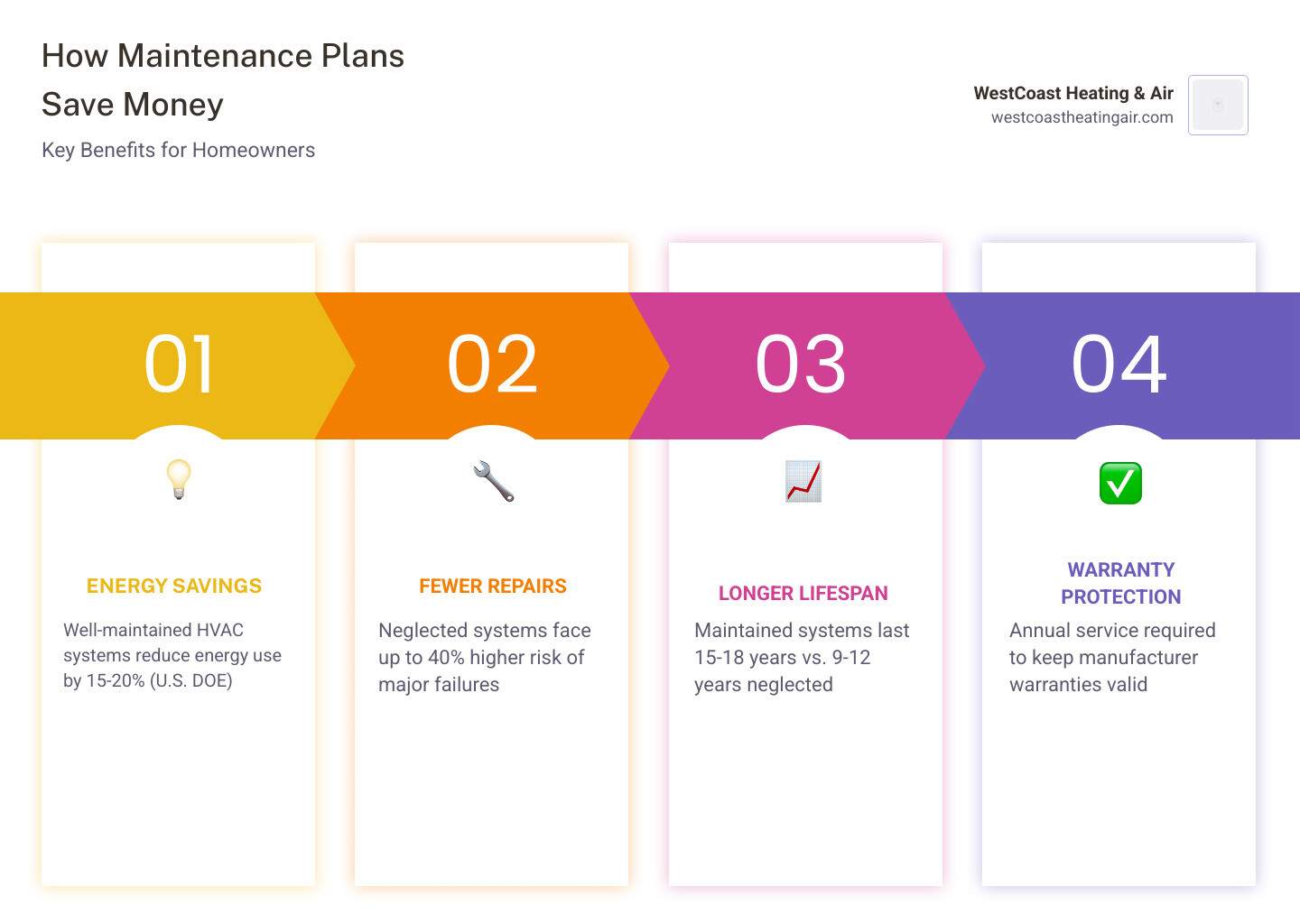
- Lower energy bills: A well-maintained HVAC system can reduce energy use by 15–20%, according to the U.S. Department of Energy
- Fewer costly repairs: Neglected systems are up to 40% more likely to suffer a major component failure within the first ten years
- Longer system life: Maintained systems last 15–18 years on average, compared to just 9–12 years for neglected ones
- Warranty protection: Most manufacturers require documented annual maintenance to keep parts warranties valid
- Priority service: Plan members typically get faster scheduling during peak seasons when demand is highest
When something stops working in the middle of a Puyallup winter, the last thing you want to hear is that the repair bill could have been avoided. Yet according to industry data, nearly half of all drivers — and a comparable share of homeowners — end up paying for repairs that routine maintenance would have caught early. The same pattern plays out with HVAC systems year after year. A small, ignored issue becomes an expensive urgent. A system that could have lasted 18 years gets replaced at 10. The question isn’t really whether maintenance matters — it’s whether paying for a structured plan is the smartest way to handle it, or whether another approach saves more.
This guide breaks down the real numbers, the fine print, and the situations where a maintenance plan genuinely pays for itself — versus when it may not.
I’m Michael Smith, owner of WestCoast Heating & Air in Puyallup, and after transitioning from a 30-year career at Boeing into the HVAC industry, I’ve seen how the question of do maintenance plans save money plays out differently depending on the home, the system, and the household. My goal here is to give you an honest, numbers-based answer so you can make the right call for your home.
1. What Maintenance Plans Actually Are for Homeowners
For homeowners, a maintenance plan is usually a service agreement that bundles routine HVAC care into a structured schedule. Think of it less like an extended warranty and more like a health checkup plan for your heating and cooling system.
Most residential HVAC plans are built around preventive service, not repairs after something fails. The goal is to keep the system efficient, catch wear early, and reduce the odds of a breakdown when you need heating or cooling most.
What a residential HVAC maintenance plan usually includes
Most plans include seasonal tune-ups, usually one before cooling season and one before heating season. During those visits, technicians commonly perform tasks such as:
- Inspecting system operation
- Cleaning accessible components
- Checking or replacing filters if provided by the homeowner
- Testing thermostat function
- Inspecting electrical connections
- Measuring airflow
- Cleaning coils when needed
- Clearing condensate drain lines
- Checking safety controls
- Looking for signs of wear or small developing problems
If you want a closer look at what happens during a typical appointment, our guide on what to expect during an HVAC service visit walks through it step by step.
What maintenance plans usually do not include
This is where homeowners can get tripped up. A maintenance plan is not the same as full repair coverage.
Plans usually do not include:
- Major component replacements
- Full system replacement
- Duct replacement
- Repairing refrigerant leaks
- Large parts and labor claims
- Damage from age, neglect, or outside events
- Consumable items unless specifically listed
In other words, the plan helps reduce the chance of expensive problems, but it does not magically make every future repair disappear. That is why the fine print matters.
Why plans are structured around spring and fall service
Spring and fall timing is not random. It is practical.
- Spring tune-ups prepare your system for summer cooling demand
- Fall tune-ups prepare your equipment for winter heating demand
- Seasonal visits catch problems before peak use
- Performance checks are more useful before the heavy workload starts
That timing matters in Western Washington, where many homes rely on heat pumps or use their HVAC systems across multiple seasons. If you want help planning timing, see the best time to schedule your heating and cooling tune-ups and how often to schedule an HVAC tune-up.
2. Do Maintenance Plans Save Money? The 5 Biggest Ways
If we strip away the marketing language and just focus on outcomes, there are five main ways maintenance plans can save money.
Do maintenance plans save money through lower energy use?
Usually, yes.
The U.S. Department of Energy says a well-maintained HVAC system can reduce energy use by 15% to 20%. That happens because maintenance helps the system move air properly, transfer heat more efficiently, and avoid working harder than necessary.
Common efficiency killers include:
- Dirty filters
- Dusty coils
- Poor airflow
- Loose electrical connections
- Thermostat issues
- Drain or sensor problems
When those issues build up, your system runs longer to do the same job. That means more wear and higher utility bills.
Filter care matters here too. Our article on seasonal filter changes and airflow optimization explains why this small task has a surprisingly big impact.
Do maintenance plans save money by preventing major repairs?
This is often where the biggest savings happen.
Maintenance visits can catch a weak capacitor, a clog forming in the drain line, an electrical issue, or a blower problem before it turns into a no-heat or no-cooling call. Small failures have a habit of inviting larger failures to the party.
Research shows neglected systems are up to 40% more likely to suffer a major component failure within the first ten years. That does not mean every unmaintained system will fail early, but it does mean the odds get worse.
And those odds matter. Preventive visits are about risk reduction. We cannot promise no breakdowns, but we can improve the chances of avoiding the expensive, inconvenient ones.
For more on the chain reaction neglect can cause, read what happens if you skip HVAC maintenance.
Do maintenance plans save money by helping systems last longer?
Yes, and this is one of the strongest financial arguments.
Well-maintained HVAC systems often last around 15 to 18 years, while neglected systems may last only 9 to 12 years. That is a major difference in total ownership cost.
Why does this happen?
- Clean systems experience less strain
- Proper airflow reduces wear
- Electrical issues get corrected earlier
- Small imbalances do not compound as quickly
- Components are less likely to overheat or overwork
The longer you delay replacement, the more value you get from your current equipment. That does not mean maintenance makes a system immortal. If it did, every furnace would live to 100 and demand cake. But it absolutely improves the odds of getting a full service life.
For more practical tips, visit maintenance secrets to keep your HVAC running smoothly.
The hidden savings: warranty compliance and priority scheduling
Two benefits are easy to overlook because they do not show up as a line item on a bill.
First, warranty protection. Many manufacturers require documented professional maintenance to keep parts warranties valid. If a major part fails and you cannot show the system was properly maintained, that can create problems during a claim.
Second, priority scheduling. During hot spells and cold snaps, appointment availability gets tight. Plan members often receive faster service or preferred scheduling. That may not sound like a financial benefit until your system quits during peak demand and you are scrambling.
Comfort has value too. Avoiding days without heat or cooling is not just convenient. It can prevent added stress on your household and reduce the chance of urgent decisions.
3. The Math Behind Whether a Plan Is Worth It
This is where the real answer lives. Not every home gets the same value from a plan.
A maintenance plan is worth it when the total benefit over time is greater than the cost of handling everything separately.
A simple homeowner formula for comparing plan value
Use this simple framework:
Plan value = included tune-ups + repair-related savings + efficiency savings + warranty protection + scheduling benefits – plan cost
Ask yourself:
- Would you pay for two professional tune-ups anyway?
- Does the plan include the tasks your system actually needs?
- Have you had repair issues before?
- Is your system older or heavily used?
- Have your utility bills been creeping up?
- Would faster scheduling matter to your family?
Here is a simple comparison:
| Approach | Potential Upside | Potential Downside |
|---|---|---|
| Maintenance plan | Structured service, easier scheduling, better consistency, possible energy and repair savings | May be less valuable if you rarely use the system or already schedule service diligently |
| Pay as needed | Flexibility, no recurring commitment | Easy to postpone service, higher risk of missed maintenance, fewer built-in perks |
| DIY only | Helps with basic upkeep | Does not replace professional testing, cleaning, or safety checks |
The biggest math mistake homeowners make is comparing a plan only to the cost of a single tune-up. The better comparison is total ownership cost over several years.
When paying à la carte may cost less
There are cases where a maintenance plan may not be the best value.
It may be less worthwhile if:
- Your system is brand new and already includes some scheduled coverage
- You use your HVAC very lightly
- You are highly organized and already book tune-ups on time every year
- Your equipment has had very low wear
- You are moving soon and will not benefit long term
In those situations, paying individually for service may work just fine. The key is honesty. If you say, “I will definitely remember to schedule maintenance myself,” and then life happens and three years disappear, the math changes fast.
DIY vs professional maintenance: where each saves money
DIY maintenance absolutely has a place. In fact, homeowners who do the basics usually get better results.
DIY tasks that help include:
- Changing filters regularly
- Keeping outdoor units clear of debris
- Checking thermostat batteries
- Making sure vents are open and unobstructed
- Watching for unusual noises or odors
- Cleaning around indoor equipment
But DIY does not replace professional maintenance. Homeowners generally should not be performing electrical testing, refrigerant diagnostics, combustion safety checks, or internal component inspections.
A good rule: DIY helps support the system between visits. It does not replace the visits.
4. When Maintenance Plans Are Most Likely to Pay Off
Some homes are much more likely than others to benefit from a plan.
Homes with heat pumps or year-round HVAC use
Heat pumps often deliver strong value from regular maintenance because they work in both heating and cooling modes. More runtime means more opportunities for wear, airflow problems, and efficiency loss.
That is why seasonal tuning matters so much for heat pump households. If your system works nearly all year, preventive care is not optional in practice, even if it is optional on paper.
For more on this, see No Surprises: A Guide to Your Spring Heat Pump Tune-Up.
Systems in dusty homes, pet homes, or high-use households
Pets, dust, frequent occupancy, and constant use can all load filters faster and contribute to coil buildup and airflow restriction. That can affect both comfort and indoor air quality.
Homes with these conditions often benefit more from maintenance because the system is under more day-to-day stress.
You may need closer attention if:
- You have multiple pets
- Someone in the home has allergies
- The system runs most days of the year
- The home gathers dust quickly
- Filter buildup happens faster than expected
Our article on spring maintenance to prevent summer problems covers why seasonal prep matters before small issues turn into sweaty regrets.
Older equipment and homes that cannot afford surprise breakdowns
Older systems are often where maintenance plans shine most clearly.
As equipment ages, the goals change a bit. You may not be trying to create a brand-new system feeling forever. You may be trying to:
- Keep the equipment safe
- Stretch remaining service life
- Reduce surprise failures
- Plan replacement on your timeline instead of during an urgent problem
That is especially important for families with young children, older adults at home, or anyone who really cannot afford a heating outage in winter.
For related reading, see how often you should get furnace service and why furnace tune-ups matter in Pierce County.
Situations where a maintenance plan may not be worth it
To keep this honest, here are the most common situations where a plan may offer limited value:
- Brand-new system with duplicate included coverage
- Very light HVAC usage
- Short time horizon before moving
- You already follow a disciplined annual maintenance routine
- The plan has restrictive terms that reduce flexibility
- You sign up but still ignore recommended service windows
A plan only works if it is used. Gym membership rules apply.
5. What to Check in the Fine Print Before You Sign Up
This is where you separate real value from feel-good packaging.
Coverage details that affect real savings
Before signing up, confirm:
- How many visits are included each year
- What tasks are included during each visit
- Whether filter service is included
- Whether coil cleaning is included or extra
- Whether diagnostic fees are reduced or waived
- Whether after-hours or urgent terms are different
- Whether discounts apply to repairs
- What documentation is provided for warranty purposes
The more clearly these items are defined, the easier it is to judge the plan’s actual value.
Restrictions that can reduce flexibility
Fine print can quietly change the economics of a plan. Watch for:
- Limited service area rules
- Narrow scheduling windows
- Auto-renewal terms
- Cancellation fees
- Transferability rules if you sell your home
- Requirements that all repairs be done through the same provider
- Missing maintenance records
Transferability can matter more than people think. If you move, a transferable plan or documented service history may still help provide value.
How to evaluate if a specific plan offers real value
Ask these questions before buying:
- How old is my system?
- Do I have a heat pump or equipment that runs most of the year?
- Have I had repairs in the last few years?
- Have my energy bills increased without another clear reason?
- Am I likely to schedule tune-ups on my own if I do not enroll?
- Does the plan help me maintain warranty records?
- Are the included services the ones my equipment needs?
- Are there restrictions that make the plan hard to use?
If the answers point toward high usage, aging equipment, or inconsistent self-scheduling, a plan often makes good sense.
Frequently Asked Questions About Do Maintenance Plans Save Money
Do maintenance plans save money on newer HVAC systems?
Often, yes, though the savings may look different.
With newer systems, the biggest benefits are usually:
- Keeping efficiency where it should be
- Protecting warranty eligibility
- Catching installation-related issues early
- Building a maintenance record from day one
A newer system may have lower repair risk in the short term, but that does not mean maintenance is unnecessary. In many cases, routine care is what helps the system stay “newer” longer.
Is a maintenance plan better than just changing filters yourself?
Yes, because changing filters is only one part of system care.
Filters help with airflow and cleanliness, but they do not cover:
- Electrical testing
- Drain inspection
- Coil assessment
- Safety control checks
- Refrigerant-related diagnostics
- Internal wear detection
We strongly encourage homeowners to handle basic upkeep, but professional maintenance goes much deeper.
How often should a homeowner schedule professional HVAC maintenance?
For most homes, at least annual professional maintenance is a must. For many systems, especially heat pumps, twice-yearly service is best: once before cooling season and once before heating season.
If you want a more detailed schedule, read how often homeowners should schedule an HVAC tune-up.
Conclusion
So, do maintenance plans save money? For many homeowners, yes, especially when the plan helps lower energy use, reduce repair risk, protect warranty coverage, and extend system life.
The best plan is not always the one with the flashiest label. It is the one that matches your system, your usage, and your household’s tolerance for risk. If you use your HVAC heavily, own a heat pump, have older equipment, or simply want fewer unpleasant surprises, preventive maintenance usually makes strong financial sense.
At WestCoast Heating & Air, we believe homeowners make better decisions when they understand the why behind the service. If you want help evaluating the right maintenance approach for your home in Puyallup, Tacoma, University Place, Sumner, Spanaway, SeaTac, Roy, Orting, Steilacoom, or Tumwater, learn more about our residential heating and cooling services.