
When the Sky Turns Gray: Facing Down Wildfire Smoke in the Pacific Northwest
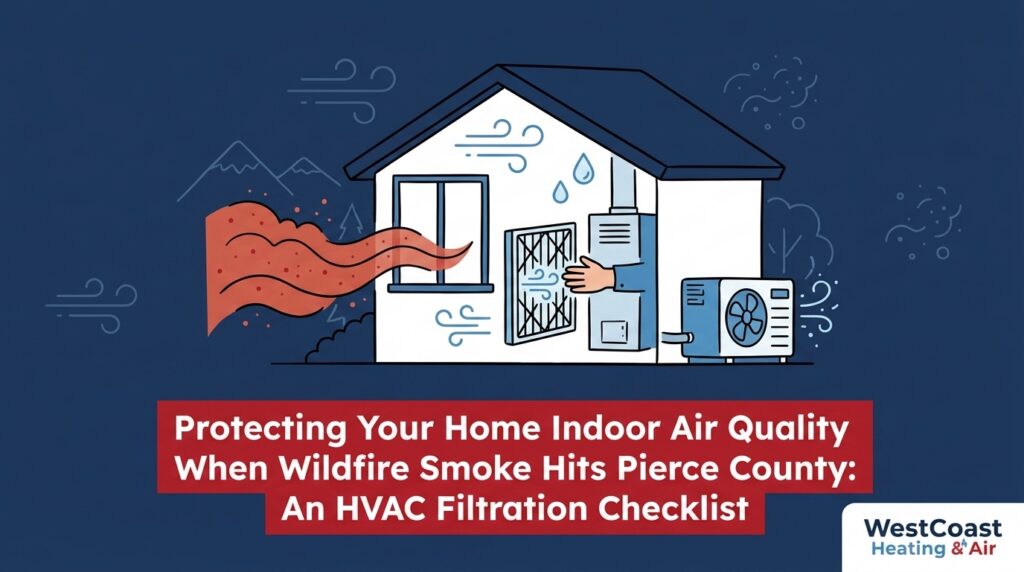
Peak summer in the Pacific Northwest brings a familiar, unsettling shift in the weather. You wake up, look out the window, and instead of a clear morning, the sky is a hazy, unnatural orange. Protecting Your Home Indoor Air Quality When Wildfire Smoke Hits Pierce County is a critical priority the moment you notice that distinct, acrid smell of a campfire seeping into your living room. The peak summer wildfire season has arrived, and simply keeping your windows shut is no longer enough to keep your family safe.
The real danger during these events isn’t the visible ash falling on your driveway; it is the invisible, microscopic particulate matter that easily bypasses standard residential defenses. These tiny pollutants infiltrate through the microscopic gaps around your doors, windows, and electrical outlets. At WestCoast Heating & Air, our team typically sees homeowners panic when the smoke rolls in, but fortunately, your existing cooling system serves as your first, most powerful line of defense—provided it is configured correctly. By making a few immediate adjustments to your thermostat and filtration setup, you can transform your home into a clean-air sanctuary without damaging your mechanical equipment.
If you need immediate assistance optimizing your system, exploring professional HVAC services is the safest way to secure your home’s air.
Why the Puyallup Valley Traps Microscopic Smoke Particles
To effectively combat poor indoor air quality, you first need to understand exactly what you are fighting. Wildfire smoke is a complex mixture of gases and fine particles produced when wood and other organic materials burn. The primary threat to your respiratory system is PM2.5 particulate matter. These particles are 2.5 micrometers in diameter or smaller—about 30 times smaller than a single strand of human hair. Because they are so minuscule, they easily bypass the standard 1-inch fiberglass filters found in most homes, which are designed only to catch large dust bunnies and pet hair, not microscopic smoke.
In Pierce County / Puyallup WA, the local topography actively works against us during the peak summer wildfire season. In our years servicing cooling systems throughout the area, we’ve seen firsthand how the Puyallup Valley acts as a natural geographical basin. When high-pressure weather systems move in, they create thermal inversions. A layer of warm air settles over the valley, acting like a giant lid that traps cooler air—and all the region’s smoke—down at ground level where we live and breathe. Because the smoke cannot clear out naturally, the outdoor Air Quality Index (AQI) can spike to hazardous levels and stay there for days or even weeks.
Understanding the Threat of Microscopic Particulates
When the valley traps this stagnant air, the concentration of PM2.5 particulate matter outside becomes overwhelming. No home is perfectly airtight. Through a process called natural infiltration, changes in wind and barometric pressure force this polluted outdoor air through the tiny cracks in your home’s envelope. Over a prompt period, a poorly sealed home can exchange a significant volume of its indoor air with the smoky air outside. This makes actively filtering your indoor air an absolute health necessity, not just a comfort preference.
| Particle Type | Size (Microns) | Standard 1-Inch Filter Capture Rate |
|---|---|---|
| Pollen & Spores | 10.0 – 100.0 | High |
| Pet Dander | 2.5 – 10.0 | Moderate |
| PM2.5 Particulate Matter (Smoke) | 0.3 – 2.5 | Extremely Low |
Immediate HVAC Defense: The Crucial Difference Between AUTO and ON
When the smoke rolls in, the very first step you must take involves a simple switch on your thermostat. Most homeowners leave their thermostat fan setting on “AUTO” year-round. In AUTO mode, your blower motor only turns on when the system is actively cooling your home. Once the target temperature is reached, the fan shuts off. During a severe smoke event, this setting is a massive liability. If your air conditioner only runs for 15 minutes every hour, your home’s air is sitting stagnant—and unfiltered—for the remaining 45 minutes while PM2.5 particulate matter continues to seep inside.
To combat this, you must adjust your system to actively clean the air.
- Locate your thermostat’s fan settings: Navigate to the fan control, which is usually a physical switch on older models or a menu option on digital thermostats.
- Switch from AUTO to ON: By selecting “ON,” you instruct the blower motor to run continuously, whenever you need us, regardless of whether the air conditioner compressor is running.
- Monitor indoor air movement: You should feel a steady, gentle breeze coming from your supply registers at all times.
- Keep doors inside the home open: Ensure that air can freely travel from the bedrooms back to the central return vent where the filter is located.
Running the fan continuously pushes all the air in your home through your filtration system multiple times per hour, dramatically reducing the concentration of smoke particles. While running the blower motor nonstop will result in a minor increase in your monthly electricity bill, this energy cost trade-off is incredibly small compared to the massive gain in indoor air quality and respiratory safety. If you aren’t sure how to configure your specific thermostat model, contact our local experts for guidance.

The MERV 13 Dilemma: Catching Smoke Without Suffocating Your Blower Motor
Once your fan is running continuously, you need a filter capable of actually trapping the smoke. This is where MERV (Minimum Efficiency Reporting Value) ratings come into play. The higher the MERV rating, the tighter the weave of the filter media, and the smaller the particles it can capture. To effectively trap PM2.5 particulate matter, you generally need a filter rated at MERV 13. However, blindly upgrading to the thickest, highest-rated filter you can find at the hardware store introduces a serious mechanical risk to your system.
High-efficiency filters severely restrict airflow. Think of your HVAC system like a pair of human lungs. If you place a thick, highly restrictive mask over your mouth and try to run a marathon, you will quickly become exhausted. Your blower motor experiences the exact same strain. When you install a MERV 13 filter in a system that was only designed for a MERV 8, the static pressure inside your ductwork skyrockets. The blower motor has to work twice as hard to pull the same volume of air through the dense pleated material.
Balancing Filtration and Airflow
The symptoms of a suffocating system are immediate and dangerous during peak cooling season. You will notice noticeably reduced airflow at your supply vents. The furnace cabinet may start making strange whistling or groaning noises. Most critically, because there isn’t enough warm indoor air blowing over your air conditioner’s indoor evaporator coil, the coil can literally freeze solid into a block of ice, shutting down your cooling entirely.
The quick fix: If you must use a heavy 1-inch MERV 13 filter temporarily during a crisis, monitor your system closely. Check the filter every few days, as it will clog rapidly with ash and smoke. For a permanent solution, you should check your manufacturer specifications or have a professional measure your system’s static pressure. As a company with deep Western WA HVAC expertise, a pattern we see often is blower motors burning out because the ductwork common to Pierce County homes wasn’t designed to handle such high-efficiency restriction. For more insights on this balance, review our guide to filter replacement timing.
Locking Down the Envelope: Managing Mechanical Fresh Air Intakes
Modern homes in the Pacific Northwest are built tightly to conserve energy. Because they are so airtight, building codes often require the installation of mechanical ventilation systems to bring fresh outdoor air inside. Under normal circumstances, this is highly beneficial for indoor air quality. During the peak summer wildfire season, however, these systems become massive liabilities, actively pulling toxic PM2.5 particulate matter directly into your living space.
To truly lock down your home envelope, you must identify and temporarily disable these fresh air intakes. Here is what you need to look for:
- Heat Recovery Ventilators (HRVs) and Energy Recovery Ventilators (ERVs): These are usually box-like units hung near your main furnace. They have a dedicated switch or control panel. Turn them off completely until the outdoor air clears.
- Fresh Air Dampers: Look for a duct that runs from an outside wall directly into your furnace’s return air plenum. There is often a manual lever or an electronic motorized damper on this duct. Slide the lever to the “closed” position.
- Make-up Air Units: Often tied to large kitchen exhaust hoods, these systems pull outside air in when you cook. Avoid using high-powered exhaust fans during a smoke event, as they depressurize the house and force smoke in through the cracks.
- Window AC Units and Portable ACs: If you use a window unit, ensure the “fresh air” or “exhaust” vent on the unit is closed so it only recirculates indoor air.
Remember that this is a temporary urgent measure. Once the smoke clears from Pierce County / Puyallup WA and the AQI returns to healthy levels, it is vital that you re-engage these mechanical ventilation systems. Leaving them closed indefinitely will lead to stale indoor air, trapped humidity, and elevated carbon dioxide levels.
Running Your Air Conditioner Safely During Peak Summer Smoke
One of the most common fears homeowners have during a wildfire event is that turning on their central air conditioner will flood the house with smoke. This is a misconception based on a misunderstanding of how residential cooling works. Central air conditioners are “split systems.” They do not pull outside air indoors. The large unit sitting in your backyard (the condenser) and the unit inside your home (the evaporator) are connected only by copper pipes filled with refrigerant. The system cools your home by absorbing heat from the indoor air and transferring it to the outside. The air blowing out of your vents is the exact same indoor air, just cooled and filtered.
Therefore, running your AC is completely safe and actually beneficial, as it keeps the indoor air circulating through your filter. However, the outdoor condenser unit faces its own challenges during a smoke event. Our technicians frequently find outdoor units where heavy ash falling from the sky has completely coated the aluminum fins. When these fins are clogged with ash and debris, the system cannot effectively release heat. The compressor has to run longer and harder, drawing more electricity and driving up your utility bills.
Furthermore, peak summer heat combined with a restrictive MERV 13 filter puts maximum strain on your indoor blower motor. The system is fighting heat on the outside and restricted airflow on the inside. This is why pre-season or mid-season mechanical checkups are so vital. Ensuring your blower motor is operating at peak efficiency and your outdoor coils are clean ensures the system can handle the immense stress of a smoke event. Staying on top of your AC maintenance guarantees that when the sky turns gray, your equipment won’t let you down.
Frequently Asked Questions About Wildfire Smoke and HVAC Systems
Should I set my thermostat fan to ON or AUTO during wildfire smoke?
You should set your thermostat fan to ON during a smoke event. This forces the blower motor to run continuously, pushing your indoor air through the system’s filter whenever you need us. If left on AUTO, the air is only filtered when the system is actively cooling, allowing PM2.5 particulate matter to build up in the home while the system is idle.
Can a MERV 13 filter damage my air conditioner?
Yes, if your system is not designed to handle the restricted airflow, a MERV 13 filter can cause damage. The dense filter media creates high static pressure, forcing the blower motor to work harder and potentially leading to overheating. It can also reduce airflow enough to cause the indoor evaporator coil to freeze solid during cooling cycles.
Does running the AC bring smoke into the house?
No, running a standard central air conditioner does not bring smoke into the house. Central AC systems are closed loops that only circulate indoor air over cold refrigerant coils to remove heat. They do not pull outside air into your ductwork, making them safe to operate during poor outdoor air quality events.
How often should I change my filter during a continuous smoke event?
You should check your filter every week during a heavy, continuous smoke event. Because the filter is capturing a massive volume of microscopic ash and PM2.5 particulate matter, it will clog much faster than it would under normal conditions. A clogged filter severely restricts airflow, so replace it as soon as it appears dark gray or black.
Are standalone HEPA purifiers better than upgrading my central filter?
Standalone HEPA purifiers are an excellent supplement to your central HVAC system, but they treat smaller, localized areas rather than the whole house. Using a HEPA purifier in the bedroom while simultaneously running your central HVAC fan on ON with a safe, upgraded filter provides the most comprehensive defense against indoor smoke.
Breathe Easier This Summer: Protecting Your Home Indoor Air Quality When Wildfire Smoke Hits Pierce County
Navigating the peak summer wildfire season in the Pacific Northwest requires proactive, decisive action. By switching your thermostat fan to ON, temporarily closing your mechanical fresh air intakes, and utilizing the correct filtration media, you can drastically reduce the amount of PM2.5 particulate matter in your living space. Protecting Your Home Indoor Air Quality When Wildfire Smoke Hits Pierce County comes down to treating your HVAC system as an active air management tool, rather than just a temperature control device.
Remember that guessing on static pressure and blower capacity can lead to costly mid-summer breakdowns just when you need your cooling the most. Do not risk suffocating your system with the wrong filter. We highly recommend you seek a professional assessment of your home’s filtration capabilities before the smoke arrives. Reach out to local experts to design a customized indoor air quality strategy, ensuring your home remains a safe, breathable sanctuary no matter what the skies look like outside.