
What to Do Right Now If Your HVAC System Goes Down
Knowing how to stay comfortable while waiting for repair can make a real difference between a stressful few hours and a manageable situation — especially here in Puyallup, where summer heat and cold, damp winters can make a broken HVAC system feel like a genuine emergency fast.
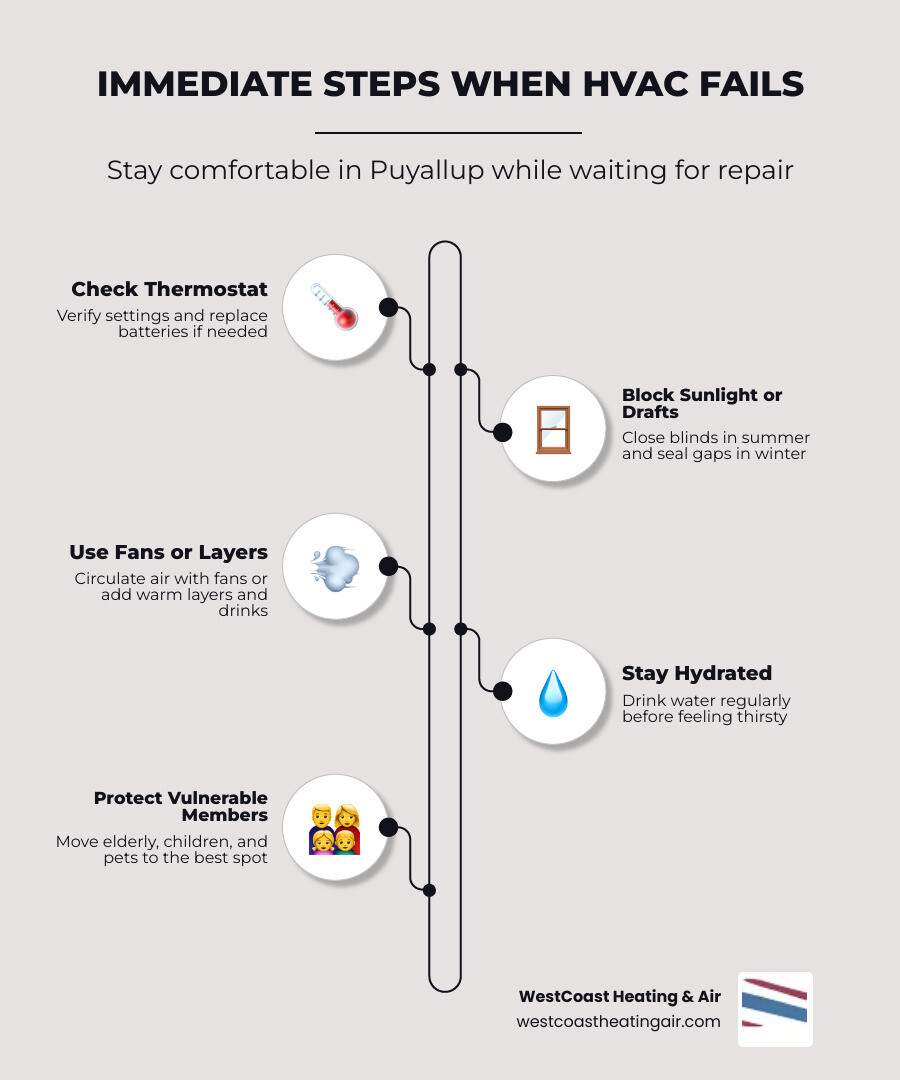
Here are the most important steps to take right now:
- Check your thermostat — make sure it is set correctly and the batteries are not dead.
- Block sunlight or drafts — close blinds in summer and seal gaps under doors in winter.
- Use fans or extra layers — fans help circulate air in heat; blankets and warm drinks help in cold.
- Stay hydrated — especially in summer heat, drink water frequently even before you feel thirsty.
- Protect vulnerable family members first — move elderly, young children, and pets to the most comfortable area of the home.
- Avoid using heat-generating appliances in summer — skip the oven and dryer until the AC is back up.
- Call your HVAC technician and describe your symptoms clearly so they can prepare.
When temperatures outside swing to extremes, a non-working HVAC system stops being a minor inconvenience and starts posing real health risks — particularly for older adults, young children, and anyone with a respiratory condition. The good news is that with a few simple steps, you can stay safe and reasonably comfortable while you wait for your technician to arrive.
I’m Michael Smith, owner of WestCoast Heating & Air in Puyallup, and after 30 years at Boeing followed by hands-on experience in the HVAC industry, I’ve helped hundreds of local homeowners navigate exactly this kind of situation. In this guide, I’ll walk you through everything you need to know about how to stay comfortable while waiting for repair, from quick DIY checks to protecting your family during the wait.
How to stay comfortable while waiting for repair basics:
- how to prevent hvac emergencies with maintenance
- signs you need emergency hvac service
- what to do when your hvac breaks down unexpectedly
Safe Troubleshooting Steps Before the Technician Arrives
Before we dive into the best personal comfort strategies, it is always a good idea to perform a quick, safe assessment of your system. Sometimes, a completely non-responsive heater or air conditioner is caused by a simple issue you can resolve yourself.
We recommend checking these four areas before our technician pulls into your driveway:
- Review Your Thermostat Settings: It sounds simple, but double-check that your thermostat is set to the correct mode (“Cool” for summer, “Heat” for winter). If the screen is blank or flashing, try replacing the batteries. A dead battery can break the communication line between your thermostat and your heating or cooling system.
- Inspect the Air Filter: A heavily clogged, dirty air filter blocks airflow entirely. In the summer, this can cause your air conditioner’s evaporator coils to freeze over into a block of ice. In the winter, restricted airflow can cause a furnace to overheat and trigger a safety shutdown. If your filter is caked in dust, replace it immediately.
- Check the Circuit Breaker: Head to your home’s main electrical panel. Look for the breakers labeled for your indoor HVAC unit and your outdoor condenser or heat pump. If a breaker has tripped to the “off” position, flip it completely off, wait five seconds, and then flip it back to “on.” Note: If the breaker trips again immediately, do not force it. This indicates an electrical fault, and you should leave it off until we arrive.
- Inspect the System for Ice or Standing Water: Take a look at your indoor unit. Do you see puddles of water on the floor or ice building up along the copper refrigerant lines? If you see ice, turn your system completely off at the thermostat but switch the fan setting to “On.” This allows the fan to circulate ambient air and safely melt the ice before the technician arrives.
If you notice more severe symptoms like sweet chemical smells, burning odors, loud grinding noises, or heavy water leaks, you should shut down your system completely at the breaker panel. For more help identifying these critical situations, read our guide on Don’t Ignore These Signs of a True HVAC Emergency and learn about what happens next in The Emergency Repair Process Explained for Homeowners.
How to Stay Comfortable While Waiting for Repair During Summer Heat
When summer temperatures spike in places like Tacoma, Steilacoom, or Puyallup, a broken air conditioner can turn your home into a greenhouse in a matter of hours. Solar heat gain through your windows is the primary cause of rapid indoor temperature spikes.
To combat this and keep your body temperature down while we head your way, try these practical steps:
- Block Out the Sun: Immediately close all curtains, blinds, and shades. If you have south- or west-facing windows receiving direct sunlight, hanging a thick blanket or cardboard over them can block out up to 80% of incoming solar heat.
- Create a Strategic Cross-Breeze: Only open your windows if the outdoor temperature is cooler than the indoor temperature. This is typically during the late evening and early morning hours. If you open them, place a box fan in one window blowing outward to exhaust hot indoor air, and open a window on the opposite side of the house to pull cool air in.
- Stay Hydrated with Cool Water: When you sweat, your body loses moisture, which limits your natural ability to cool down. Drink plenty of cold water and avoid dehydrating beverages like coffee, soda, or alcohol.
- Target Your Pulse Points: To cool down your core body temperature quickly, apply cold, damp cloths or ice packs wrapped in a towel to your pulse points. These include your wrists, the back of your neck, your temples, and behind your knees. Because your blood vessels are close to the skin’s surface in these areas, the cold helps lower your temperature faster.
- Try the Ice Bowl Trick: Place a large bowl filled with ice or salted ice water directly in front of a portable fan. As the fan blows air across the ice, it creates a localized, chilly mist that acts like a temporary, personal air conditioner.
If you are dealing with a sweltering home in Pierce County, we can help restore comfort quickly. Explore your options for Don’t Sweat It with Reliable AC Repair in Tacoma.
How to Stay Comfortable While Waiting for Repair During Winter Cold
A winter furnace breakdown in Western Washington brings damp, bone-chilling cold into your living spaces. When you are waiting for a heating repair on a freezing night in Orting or Sumner, your primary goal is preserving your body heat and keeping your home’s plumbing from freezing.
Here is how to stay warm and safe:
- Bundle Up and Layer Correctly: Put on loose, breathable layers. Start with a moisture-wicking base layer, add an insulating layer like a fleece sweater, and top it off with a windproof jacket if your home is drafty. Do not forget thick wool socks, slippers, and a warm beanie—a significant amount of body heat escapes from your head and feet.
- Maximize Passive Solar Heating: During daylight hours, open curtains on any windows that receive direct sunlight to let radiant warmth naturally heat your rooms. As soon as the sun sets, close those curtains and blinds tightly to trap the heat inside and block cold window drafts.
- Consume Warm Foods and Drinks: Hot herbal tea, warm apple cider, or a hot bowl of soup do wonders for raising your core body temperature. Using your stove or oven to prepare a warm meal also adds passive ambient heat to your kitchen and living areas. Warning: Never use your gas oven or stove as a primary home heating source, as this poses a severe carbon monoxide hazard.
- Keep Moving: Light physical activity, such as tidying up, doing a few stretches, or walking around the house, increases your blood flow and generates natural body heat.
If your heating system has failed during a cold snap, read our Emergency Gas Furnace Repair Puyallup Guide or check out our advice on Emergency Ductless Heating Repair in Puyallup WA to get professional help fast.
Protecting Vulnerable Family Members and Pets
During an HVAC outage, our top priority must always be the safety of those who cannot easily regulate their own body temperatures. This includes elderly family members, infants, individuals with chronic health conditions, and our pets.
- Caring for the Elderly and Infants: Older adults are at a much higher risk for heat-related illnesses like heat exhaustion or hypothermia in the winter due to natural changes in circulation and medication side effects. Infants also struggle to regulate their body temperature. Keep them in the most insulated, central room of the home. In summer, use cool compresses and frequent sips of water. In winter, ensure they are bundled in warm, breathable layers, but avoid heavy blankets for infants to maintain safe sleep environments.
- Keeping Pets Safe: Dogs and cats do not sweat like humans do; they rely on panting and cooling their paws to stay comfortable. During a summer outage, provide your pets with multiple bowls of fresh, cold water. You can place damp towels on the floor for them to lay on, or set up a battery-operated fan near their favorite resting spot. Watch for signs of heat stress in pets, such as excessive panting, drooling, lethargy, or red gums.
- Utilize the Cooler Levels of Your Home: Because hot air rises, your basement or lower levels can be 10 to 15 degrees cooler than the upper floors of your home during a summer heatwave. If your home has a multi-story layout, move your family’s camp—including pets—downstairs to the lowest level while you wait for our team.
If your heat pump has quit during extreme weather, you do not have to wait out the cold alone. Get in touch with us for Same Day Heat Pump Repair in Tacoma to Save Your Toes.
When to Seek Temporary Shelter or Alternative Accommodations
While we always strive to complete repairs as quickly as possible, there are times when staying in your home is simply unsafe. Extreme weather can push indoor temperatures to dangerous levels within a day of an HVAC failure.
Use this guide to determine when it is time to pack a bag and seek temporary shelter:
| Indoor Temperature | Season | Risk Level | Recommended Action |
|---|---|---|---|
| Above 85°F (29°C) | Summer | High Risk | Move vulnerable family members and pets to an air-conditioned location (library, mall, or community shelter). |
| Above 90°F (32°C) | Summer | Extreme Danger | Vacate the home. Seek immediate shelter at a hotel, cooling center, or a friend’s home. |
| Below 55°F (13°C) | Winter | Moderate Risk | Bundle up in heavy layers. Keep interior doors closed to trap heat in a single room. |
| Below 45°F (7°C) | Winter | High Risk | Vacate the home to prevent hypothermia. Drip your faucets to prevent pipes from freezing. |
If you are facing an extended outage during a severe winter storm or a historic summer heatwave, seeking alternative accommodations is a smart, safe choice. If your system is beyond repair, we can help with fast solutions like an Emergency Heat Pump Installation in Puyallup for Frigid Nights or an Emergency Gas Furnace Installation in Puyallup WA.
How to Stay Comfortable While Waiting for Repair: Preparing for Your Technician’s Arrival
Once our WestCoast Heating & Air technician is on the way, you can take a few simple steps to make the repair process go as smoothly and quickly as possible. Clear preparation allows our team to diagnose and resolve the issue without unnecessary delays.
- Clear the Workspace: Make sure there is a clear, unobstructed path to both your indoor HVAC unit (located in your basement, attic, utility closet, or garage) and your outdoor condenser or heat pump. Move any stored boxes, toys, or household items out of the way.
- Check the Outdoor Unit: Ensure that your outdoor unit has at least two feet of clear space around it. Clear away any overgrown weeds, fallen branches, or leaves. In the winter, gently clear away any snow or ice accumulation from the top and sides of the unit.
- Write Down System Symptoms: Note when the system stopped working, any strange noises (squealing, grinding, banging) or unusual smells (burning, musty, metallic) you noticed leading up to the failure, and whether you have noticed your utility bills rising recently.
For a complete breakdown of what to expect during our visit, take a look at our Emergency Ductless Heating Repair Tacoma Guide.
Preventing Future HVAC Emergencies with Regular Maintenance
The absolute best way to handle an HVAC emergency is to prevent it from happening in the first place. Nearly 80% of all emergency heating and cooling breakdowns could have been avoided with regular, professional maintenance.
We recommend scheduling a professional tune-up at least once a year:
- Spring AC Maintenance: Schedule your cooling system check-up in the spring before the peak summer heat arrives. This ensures your system is clean, fully charged with refrigerant, and ready to handle the hottest days of the year.
- Fall Heating Maintenance: Schedule your furnace or heat pump check-up in the early autumn. We will check electrical connections, inspect the heat exchanger for dangerous cracks, clean the burners, and ensure your system operates safely and efficiently all winter long.
- Regular Filter Changes: Change your air filters every 30 to 90 days. A clean filter keeps air flowing freely, which reduces strain on your equipment, lowers your energy bills, and protects your indoor air quality.
To learn more about keeping your system in peak condition year-round, check out our guide on When Your Heat Pump Quits Same Day Maintenance in Spanaway WA.
Frequently Asked Questions About HVAC Outages
What should I do first when my heating or cooling system fails?
Start by checking your thermostat to ensure it is set to the correct mode and has fresh batteries. Next, inspect your air filter and replace it if it is dirty. Finally, check your home’s electrical panel to see if the circuit breaker for your HVAC system has tripped. If these basic checks do not resolve the issue, turn the system off and contact us for service.
Is it safe to use a fireplace or space heater while waiting for furnace repair?
Yes, electric space heaters are safe to use as a temporary heat source, provided they are kept at least three feet away from flammable materials like curtains, furniture, or blankets. Never leave a space heater running unattended or while you are sleeping. If you are using a wood-burning fireplace, ensure the damper is fully open and your carbon monoxide detectors are functioning properly. Never use outdoor propane heaters, camp stoves, or your kitchen oven to heat your home indoors.
How long does a typical residential HVAC repair take?
Many common residential HVAC repairs—such as replacing a faulty capacitor, a bad contactor, or a clogged drain line—can be completed within one to two hours once our technician arrives. If your system requires a specialized, brand-specific replacement part that is not stocked on our service trucks, we will secure the part as quickly as possible to minimize your downtime.
Conclusion
When your heating or cooling system breaks down, knowing how to stay comfortable while waiting for repair can keep your family safe, calm, and cooperative while our team is on the way. By taking immediate steps to control your home’s perimeter, staying hydrated, and keeping a close eye on your loved ones and pets, you can easily manage the wait.
At WestCoast Heating & Air, we are proud to be Puyallup’s trusted, family-owned residential HVAC experts. With over 20 years of local experience, we specialize in customized comfort designs, honest communication, and high-quality service tailored to our Western Washington climate.
Whether you need emergency support in Tacoma, Sumner, Spanaway, or right here in Puyallup, we are here to help. Contact our friendly team today on our Residential Heating and Cooling Service Page to get your home’s comfort back on track!