
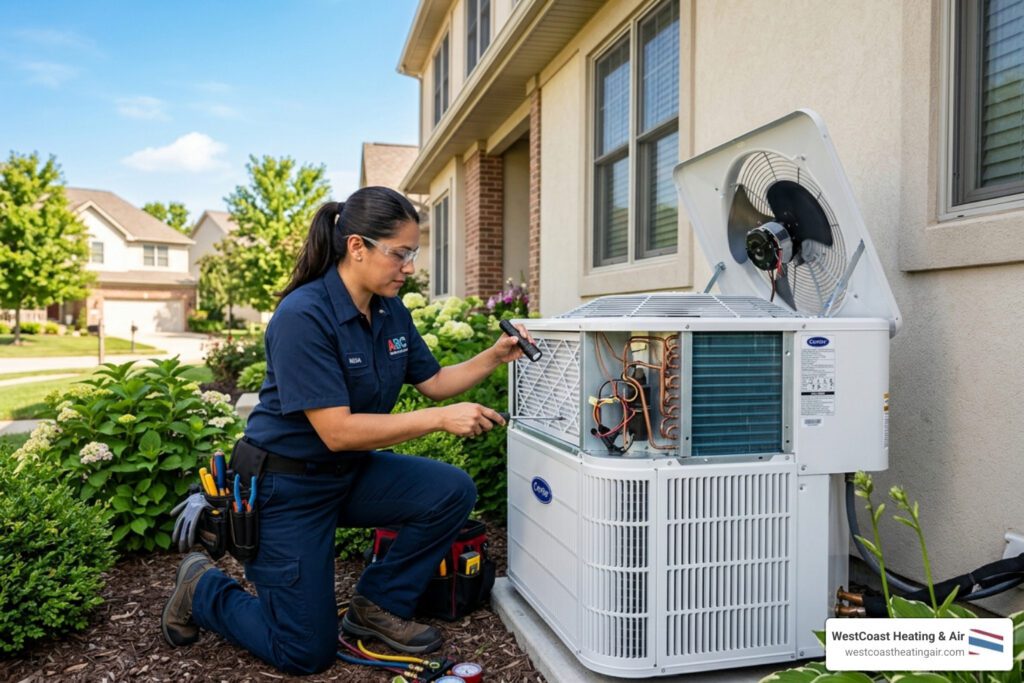
Why Learning How to Prevent Residential HVAC Urgent Situations with Maintenance Could Save Your Home This Season
How to prevent residential HVAC urgent situations with maintenance comes down to a handful of consistent habits that most homeowners overlook until something breaks. Here’s a quick summary:
- Change your air filter every 1–3 months to protect airflow and reduce system strain
- Schedule professional tune-ups twice a year — once in spring before cooling season, once in fall before heating season
- Keep your outdoor unit clear of debris, leaves, and overgrowth
- Check your thermostat for accuracy and replace batteries regularly
- Watch for warning signs like strange noises, short cycling, weak airflow, or rising energy bills
- Seal duct leaks to prevent air loss and unnecessary system strain
- Test carbon monoxide detectors monthly and replace batteries annually
These steps alone can cut your risk of an urgent problem breakdown in half.
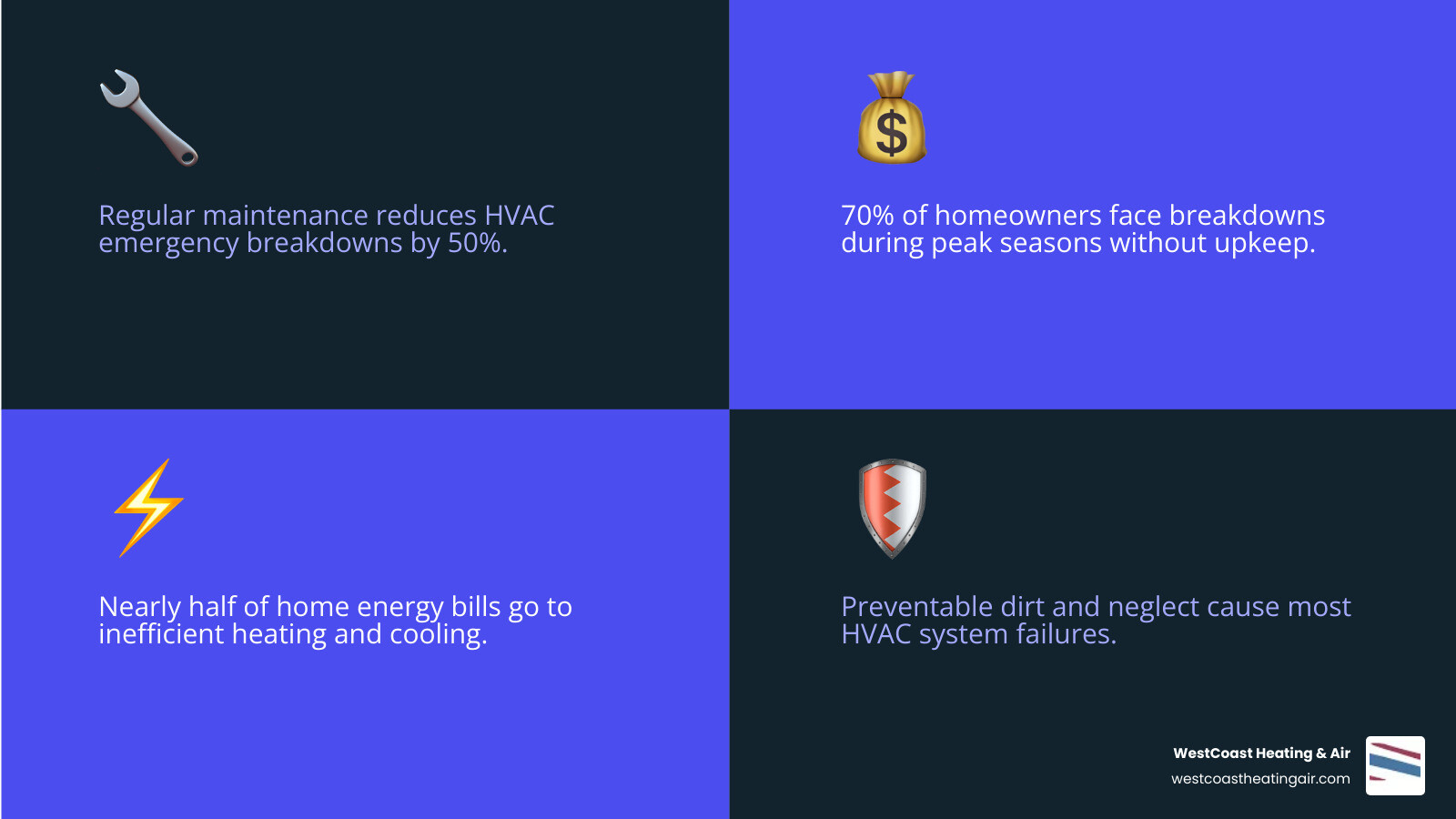
Think about this: 70% of homeowners experience a residential HVAC breakdown during peak seasons — exactly when they need their systems most. And yet, homeowners who stick to a regular maintenance routine are 50% less likely to face that kind of stressful, costly situation. That’s not a small margin. That’s the difference between a comfortable home and a frantic call for urgent service on the hottest day of a Puyallup summer.
Nearly half of the average home’s annual energy bill goes toward heating and cooling. When your home’s HVAC system is running inefficiently because of a dirty filter, a loose electrical connection, or a blocked condensate drain, you’re not just risking a breakdown — you’re paying more every single month for worse performance. Dirt and neglect are, consistently, the leading causes of residential HVAC system failure. The good news is that both are entirely preventable.
I’m Michael Smith, owner of WestCoast Heating & Air in Puyallup, and after decades of hands-on experience in complex systems — first at Boeing, and now in residential HVAC — I’ve seen how knowing how to prevent residential HVAC urgent situations with maintenance separates homeowners who stay comfortable year-round from those caught off guard when their system fails. In this guide, I’ll walk you through exactly what to do and when, so you can protect your home and your family before a small issue becomes an expensive urgent.
Understanding What Qualifies as a Residential HVAC Urgent
Before we dive into the “how-to” of prevention, we need to define what a true urgent problem looks like in April 2026. Not every hiccup requires a 2:00 AM phone call, but certain situations pose a direct threat to your health, safety, or the structural integrity of your home.
Safety Hazards: The “Call Now” Scenarios
Safety is our absolute priority. If you smell rotten eggs, that is a classic sign of a natural gas leak. You should vacate your home immediately and call your gas provider. Similarly, a burning smell or visible smoke indicates an electrical short or a motor failure that could lead to a fire.
Extreme Temperatures
In the Pacific Northwest, our weather can be unpredictable. If your furnace fails when temperatures drop below 50°F, or your AC quits during a 95°F heatwave, it’s an urgent problem—especially if you have infants, elderly family members, or pets who can’t regulate their body temperature well.
Water Damage and Mechanical Failure
A frozen AC evaporator coil or a clogged condensate drain can lead to significant water damage in your attic or crawlspace. If you see water pooling around your indoor unit, it’s time to take action. Understanding these Signs It’s Time to Upgrade Your HVAC System can help you decide if a repair is enough or if your aging unit is simply reaching the end of its reliable life.
How to Prevent Residential HVAC Urgent Situations with Maintenance
The secret to avoiding a crisis isn’t magic; it’s proactive care. Think of your home’s HVAC system like a car. You wouldn’t drive 50,000 miles without an oil change and expect the engine to survive. Your home’s heating and cooling system runs for thousands of hours a year, often under high stress during our humid Puyallup summers and damp winters.
Regular maintenance allows us to catch “the small stuff” before it cascades into a total system shutdown. For example, a slightly worn belt might cost very little to replace during a scheduled visit. If that belt snaps in July, it could take out the blower motor or compressor, leading to a much larger bill and a very hot house.
By focusing on early detection, we ensure system longevity and peak energy efficiency. A well-maintained system can save you 10–20% on energy consumption. As you transition between seasons, following a guide for Fall HVAC Maintenance: Prepare Your Home for the Autumn Cold ensures your furnace is ready to fire up safely the moment that first frost hits.
Monthly and Seasonal Steps for How to Prevent Residential HVAC Urgent Situations with Maintenance
You don’t need a tool belt to be a hero for your home’s HVAC system. There are several high-impact tasks you can handle yourself that significantly lower the risk of a breakdown.
- Air Filter Replacement: This is the single most important DIY task. A dirty filter restricts airflow, forcing the motor to work harder and potentially causing the system to overheat or the coils to freeze. Check it monthly and replace it every 30 to 90 days.
- Outdoor Unit Clearance: Walk outside and look at your condenser or heat pump. Ensure there are at least two feet of clear space around it. Remove dead leaves, grass clippings, and overhanging branches that can choke the system’s “breathing.”
- Thermostat Health: Check your thermostat batteries once a year. A dead battery can make it seem like your whole system has died when it just needs two AAs.
- Visual Inspections: Look for these 3 Easy DIY HVAC Upkeep Tasks Homeowners Can Do Between Professional Visits to keep things running smoothly.
Professional Residential Tune-Ups: The Key to How to Prevent Residential HVAC Urgent Situations with Maintenance
While DIY steps are great, there are technical components that require a professional eye. During a WestCoast Heating & Air precision tune-up, we go deep into the system’s “organs.”
- Electrical Connections: We tighten loose wires that could cause sparks or shorts.
- Refrigerant Levels: We verify your system has the exact charge needed. Too little refrigerant makes the system run constantly; too much can damage the compressor.
- Lubrication: We oil moving parts to reduce friction, which prevents wear and keeps your energy bills lower.
- Safety Controls: We test the limit switches and sensors that shut the system down if it gets too hot or if dangerous gases aren’t venting correctly.
Whether you need Heat Pump Maintenance Services in Puyallup WA or a furnace check, the goal is the same: factory-fresh performance. If you’re wondering How Often Should You Schedule an HVAC Tune-Up?, the industry standard is twice a year—once for heating and once for cooling.
Recognizing the Warning Signs Before a Total Breakdown
Your home’s HVAC system usually tries to tell you it’s struggling before it actually quits. Being an observant homeowner is a vital part of how to prevent residential HVAC urgent situations with maintenance.
- Unusual Noises: Squealing, banging, or grinding noises are not normal. They often point to a failing belt or motor bearing.
- Short Cycling: If your system turns on and off every few minutes without reaching the set temperature, it’s under immense stress.
- Weak Airflow: If the air coming out of your vents feels like a whisper, you might have a clogged filter, a failing blower, or leaky ducts.
- Inconsistent Temperatures: If the living room is a sauna but the bedroom is an icebox, your system is struggling to balance the load.
- Spiking Bills: An unexplained jump in your energy bill is a major red flag that something is working way too hard.
In our local area, knowing Why You Need a Furnace Tune-Up in Pierce County is especially important because our high humidity can lead to rust and corrosion inside your heating unit if it isn’t cleaned and inspected annually.
Maximizing Efficiency Through Airflow and Duct Integrity
Airflow is the lifeblood of your HVAC system. When airflow is restricted, every other component has to work harder, leading to premature failure.
| Component Condition | Efficiency Impact | Potential Urgent |
|---|---|---|
| Clean Air Filter | 100% (Baseline) | None |
| Dirty/Clogged Filter | 15% Reduction | Overheated Motor / Frozen Coils |
| Leaky Ductwork | 20-30% Loss | System Won’t Reach Temp / High Bills |
| Blocked Vents | Variable | Static Pressure Damage |
We can’t emphasize The Importance of Seasonal Filter Changes: Airflow Optimization enough. It is the easiest way to prevent a service call. If you’re curious about the technical fallout, read more about What Happens If You Don’t Get an Air Filter Change?—it ranges from poor air quality to a cracked heat exchanger.
Furthermore, your ducts are just as important as the furnace or AC unit itself. In a typical house, 20% to 30% of the air is lost through leaks and holes. Sealing these leaks using mastic or metal tape (never duct tape!) keeps the air going where it belongs and reduces the strain on your blower motor.
Frequently Asked Questions about Residential HVAC Upkeep
How often should I schedule professional furnace service?
We recommend an annual inspection every fall. This isn’t just for comfort; it’s for safety. We check for cracked heat exchangers that could leak carbon monoxide and ensure your burners are tuned for clean combustion. Most manufacturers also require documented How Often Should You Get Your Furnace Service? to keep your equipment warranty valid. In the Pierce County climate, the damp air can cause components to corrode faster than in drier regions, making that annual check-up even more vital.
What immediate steps should I take during a cooling failure?
Before you panic, check the basics. Is the thermostat set to “Cool” and the temperature lower than the room temp? Check your circuit breaker—did a power surge trip the switch? Finally, look at your filter. If it’s black with soot or dust, replace it and see if the system resets. If these don’t work, you may need Reliable Heat Pump Maintenance in Puyallup to get your home back to a safe temperature.
Why is my home HVAC system making loud banging or screeching noises?
A screeching sound usually means a belt is slipping or a motor bearing is failing. A loud bang when the furnace starts could be “delayed ignition,” which is a serious issue where gas builds up before lighting. If you hear these, turn the system off and call a pro. For those with specialized systems, Ductless Heating Maintenance in Puyallup WA can address the unique fans and motors used in mini-split units.
Conclusion
At WestCoast Heating & Air, we believe that a little bit of knowledge goes a long way. Our mission in Puyallup, Sumner, and across Pierce County is to provide more than just a repair; we provide customer education and customized system designs that fit your specific home. With over 20 years of local experience, we know exactly what our Washington weather throws at your equipment.
Don’t wait for the first heatwave or the first snowstorm to find out your system isn’t up to the task. By following these maintenance secrets, you can enjoy a quiet, efficient, and—most importantly—reliable home environment. Protect your home today with our residential heating and cooling experts and let us help you stay ahead of the seasons.