
The Marine Climate Challenge: Rain, Humidity, and Your Home
How pacific northwest weather affects your hvac system is something every homeowner in the Puyallup area eventually learns the hard way — usually right when they need their heat or AC the most.
Here is a quick look at the main ways PNW weather puts stress on your home comfort system:
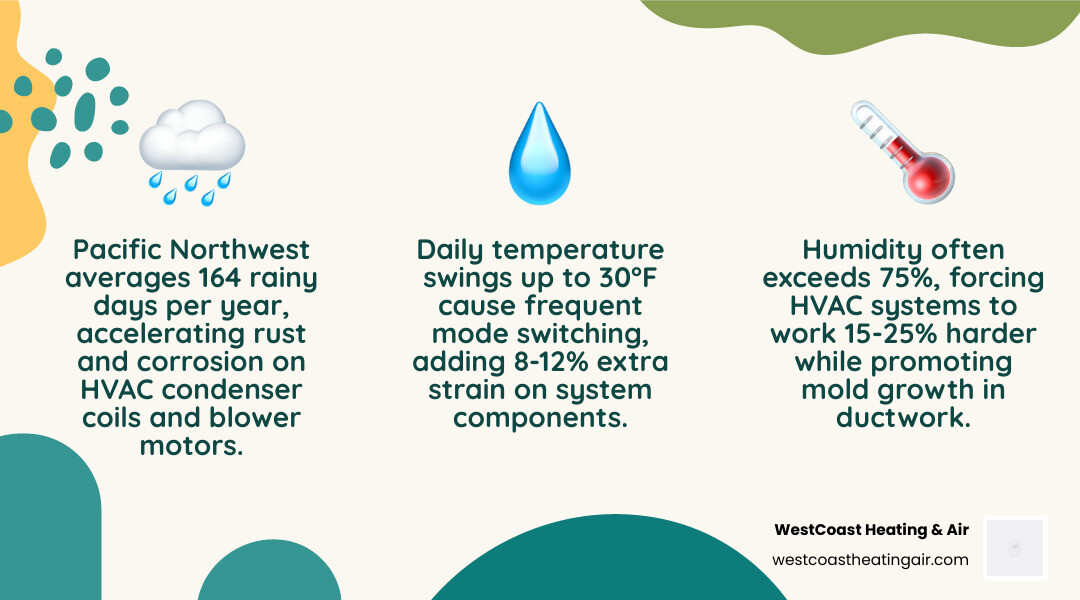
- Heavy rainfall (164+ rainy days per year) accelerates rust and corrosion on metal HVAC components like condenser coils and blower motors
- High humidity (often above 75%) forces your system to work 15-25% harder, reducing efficiency and encouraging mold growth in ductwork
- Daily temperature swings of up to 30°F cause repeated mode switching, adding 8-12% more strain on components over time
- Atmospheric rivers and windstorms bring power surges, debris blockage, and flooded crawlspaces that can damage electronics and electrical components
- Coastal saltwater exposure near Puget Sound corrodes outdoor units faster than in drier inland regions
- Snow, ice, and thick forest coverage block airflow to outdoor units, triggering freeze-ups and overheating
- Prolonged cloudiness extends your heating season, pushing systems to run longer than they would in sunnier climates
The bottom line: the PNW’s marine climate is genuinely hard on HVAC equipment in ways that most general maintenance advice simply does not account for. Understanding these regional stressors is the first step toward protecting your system and keeping your home comfortable year-round.
I’m Michael Smith, owner of WestCoast Heating & Air in Puyallup, Washington, and after years of hands-on work serving local families, I’ve seen how pacific northwest weather affects your hvac system in ways that catch even diligent homeowners off guard. In this guide, I’ll walk you through exactly what’s happening to your equipment — and what you can do about it.
Living in places like Tacoma, Sumner, or Orting means embracing the “Marine” climate zone. While our winters are relatively mild compared to the Midwest, they are relentless. With an average of 164 rainy days per year, your HVAC system is essentially living in a giant outdoor shower for eight months of the year.
The primary enemy here is moisture. When humidity levels frequently exceed 75%, your air conditioner or heat pump has to deal with something called “latent heat.” This is the energy required to pull moisture out of the air before the system can actually lower the temperature. This extra work doesn’t just feel “sticky” indoors; it actively forces your system to work harder, which can lead to premature wear on blower motors and compressors.
Beyond the workload, constant moisture is a catalyst for rust and corrosion. Condenser coils, which are vital for heat transfer, are often made of aluminum or copper. Over time, the acidic nature of rainwater and persistent dampness can lead to “coil pitting” or corrosion. You can learn more about the specifics of this in our guide on How Does Rain Affect The Hvac Equipment.
Furthermore, we can’t ignore the impact on your indoor air quality. If moisture finds its way into your ductwork—either through leaks in a damp crawlspace or via condensation in the air handler—it creates a breeding ground for mold and mildew. This is why many homeowners in SeaTac and Spanaway notice a “musty” smell the first time they kick on their heat in the fall.
How Pacific Northwest Weather Affects Your HVAC System
When we talk about how pacific northwest weather affects your hvac system, efficiency is usually the first casualty. In the dry heat of Arizona, a system might hum along perfectly. But here in the Puget Sound region, that same system might see a 15-25% drop in performance simply because it is fighting high humidity.
This moisture increases air density, which makes it harder for fans to move air through the system. This leads to frequent cycling—where the system turns on and off more often than it should. This “short-cycling” is the #1 cause of component failure, as it puts immense strain on the start-up capacitors and the compressor.
HVAC Performance Comparison: Dry vs. Humid Conditions
| Feature | Dry Climate (e.g., Desert) | PNW Marine Climate | Impact on System |
|---|---|---|---|
| Efficiency (SEER/HSPF) | Operates at rated capacity | 15-25% Efficiency Drop | Higher energy bills |
| Component Lifespan | Standard (15-20 years) | Reduced (12-15 years) | Earlier replacement needed |
| Maintenance Needs | Filter changes, dust removal | Coil cleaning, moss/mold removal | More frequent professional care |
| Humidity Control | Rarely needed | Critical for comfort | Requires variable-speed tech |
As we move through 2026, new efficiency standards are placing even more emphasis on how systems handle these regional variations. It’s no longer just about the raw power of the furnace; it’s about how smart the system is at managing the specific moisture load of a Washington winter.
How Pacific Northwest weather affects your HVAC system during temperature swings
We’ve all seen those classic “four seasons in one day” spring afternoons in University Place or Steilacoom. In May 2025, Seattle residents experienced a massive 31-degree temperature swing, with the mercury dropping from 78°F during the day to 47°F at night.
These rapid fluctuations cause the metal components in your HVAC system—like copper refrigerant lines and steel heat exchangers—to expand and contract rapidly. This thermal stress can lead to:
- Micro-leaks: Refrigerant lines may develop tiny cracks at the joints.
- Loose Connections: Electrical wires can wiggle loose over time, leading to system failure or even fire hazards.
- Mode Switching Stress: Moving from “Cool” to “Heat” multiple times a day adds 8-12% more strain on the reversing valve in heat pumps.
How Pacific Northwest weather affects your HVAC system in coastal areas
If you live near the water in Tacoma or Steilacoom, you have an additional challenge: saltwater. The salty mist from Puget Sound is highly corrosive. It acts like a slow-motion acid bath for your outdoor unit’s aluminum fins. Without protective coatings or regular rinsing, a standard outdoor unit can see its lifespan cut nearly in half. We often recommend specialized “coastal” coatings for our neighbors living within a few miles of the Sound to prevent this rapid degradation.
Storm Damage and Atmospheric Rivers: Protecting Your Investment
Atmospheric rivers—those “firehoses” of moisture in the sky—are becoming more frequent in the Northwest. These events bring intense rainfall, high winds, and saturated soil, all of which pose direct threats to your HVAC system.
Power Surges and Outages
Windstorms in Roy and Orting frequently knock out power. When the grid flickers or comes back online, it often sends a voltage spike through your home. These surges can fry the sensitive control boards in modern, high-efficiency furnaces and heat pumps. We strongly recommend whole-home surge protection to guard against these “invisible” killers.
Flooded Crawlspaces
Many homes in our area have HVAC equipment or ductwork located in crawlspaces. During heavy rains, these areas can flood. Even if the water doesn’t touch the equipment, the massive spike in humidity can corrode gas valves and electrical components. If you’ve had standing water under your home, a professional inspection is a must to ensure your system is still safe to operate.
Debris Blockage
Our beautiful evergreen trees are a blessing until a windstorm hits. Pine needles, leaves, and small branches can clog the top of your outdoor unit, pinning the fan blades or insulating the coils so they can’t shed heat. We always tell our customers to follow the 2-foot clearance rule: keep all vegetation trimmed back at least 24 inches from your unit to ensure proper airflow.
Essential Maintenance for the Evergreen State
Because of the unique ways how pacific northwest weather affects your hvac system, a “standard” maintenance routine isn’t enough. Homeowners in our region need to be more proactive to combat the dampness and debris.
- Filter Replacement: In the PNW, we recommend checking your filters every 30 days. During the “pollen dump” of spring or the damp mold-heavy days of fall, filters clog faster. If you have pets, 30-45 days is the sweet spot to prevent airflow restriction.
- Coil Cleaning: Moss and algae love our climate. If you see green “fuzz” growing on your outdoor unit, it’s choking your system. Professional coil cleaning removes this growth and the salt deposits that cause corrosion.
- Condensate Drain Clearing: Your system pulls gallons of water out of the air every day. If the drain line clogs with “slime” (a common PNW issue), that water can back up into your home, causing thousands in floor and ceiling damage.
- Warning Signs: Listen for “rattling” (loose components from temperature swings) or “hissing” (potential refrigerant leaks). If you see ice buildup on your unit during a 40-degree rainy day, your system is struggling and needs help.
Choosing the Right System for Washington Homes
When it’s time to replace your system, you shouldn’t just buy the first thing you see on a “best of” list. You need a system designed for a marine climate.
Heat Pumps with Inverter Technology
Heat pumps are the gold standard for Western Washington. Modern “cold climate” heat pumps can now provide efficient heat even when temperatures dip below freezing. Look for models with variable-speed blowers—they are much better at removing humidity because they can run at lower speeds for longer periods, acting like a giant dehumidifier for your home.
Ductless Mini-Splits
For older homes in Tacoma or Sumner that lack ductwork, mini-splits are fantastic. They eliminate the 20-30% energy loss associated with leaky ducts in damp crawlspaces and allow you to control the climate in specific rooms.
Smart Thermostats
Installing a smart thermostat with weather-responsive programming can improve efficiency by up to 23%. These units “know” the local forecast and can adjust your home’s temperature gradually to avoid the stress of rapid mode switching during those 30-degree temperature swings.
High-Efficiency Furnaces
If you prefer gas heat, look for a furnace with at least a 90% AFUE rating. In our long, cloudy heating seasons, that extra efficiency adds up to significant savings over the 15-year life of the system.
Frequently Asked Questions about PNW HVAC Care
Why does my heat pump struggle when it is 40 degrees and raining?
This is the “Latent Heat Challenge.” When it’s 40°F and raining, the air is saturated with moisture. Your heat pump has to work much harder to extract heat from that wet air. Furthermore, the moisture can freeze on the coils, forcing the unit into frequent “defrost cycles.” This is normal, but it can reduce efficiency by up to 25% compared to operation in drier conditions.
How often should I change my air filters in the Seattle or Tacoma area?
Due to the dampness and high pollen counts, we recommend checking them monthly. A dirty filter is the #1 cause of system breakdowns in our region because it forces an already-stressed motor to work even harder.
Is it normal for my outdoor unit to steam during a winter storm?
Yes! If you have a heat pump, you might see steam rising from the unit during a cold, wet day. This is the defrost cycle at work—the unit is briefly heating the outdoor coils to melt away frost. However, if the unit is encased in a thick block of ice that doesn’t melt, you should turn it off and call us immediately.
Conclusion
The Pacific Northwest is one of the most beautiful places to live, but its climate is undeniably tough on home comfort systems. From the constant drizzle of a Puyallup spring to the sudden windstorms of a Tacoma winter, your HVAC system is always on the front lines.
At WestCoast Heating & Air, we’ve spent over 20 years helping our neighbors navigate these exact challenges. As a local, family-owned company, we don’t just sell equipment; we design customized residential comfort solutions that account for the specific humidity, salt air, and temperature swings of the Puget Sound. We believe in homeowner education—the more you know about your system, the longer it will last.
Don’t wait for the next atmospheric river to test your system’s limits. Schedule your regional comfort assessment today and let us ensure your home stays a sanctuary of comfort, no matter what the Evergreen State weather throws your way.