
Why the New HVAC Benefits Beyond Comfort Matter for Puyallup Homeowners
The new HVAC benefits beyond comfort are broader than most homeowners realize — and for families in Puyallup and the surrounding Pierce County communities, where wet winters and surprisingly humid summers put real demands on heating and cooling systems, those benefits go well beyond just staying warm or cool.
Here is a quick look at what homeowners actually gain when they upgrade to a modern system:
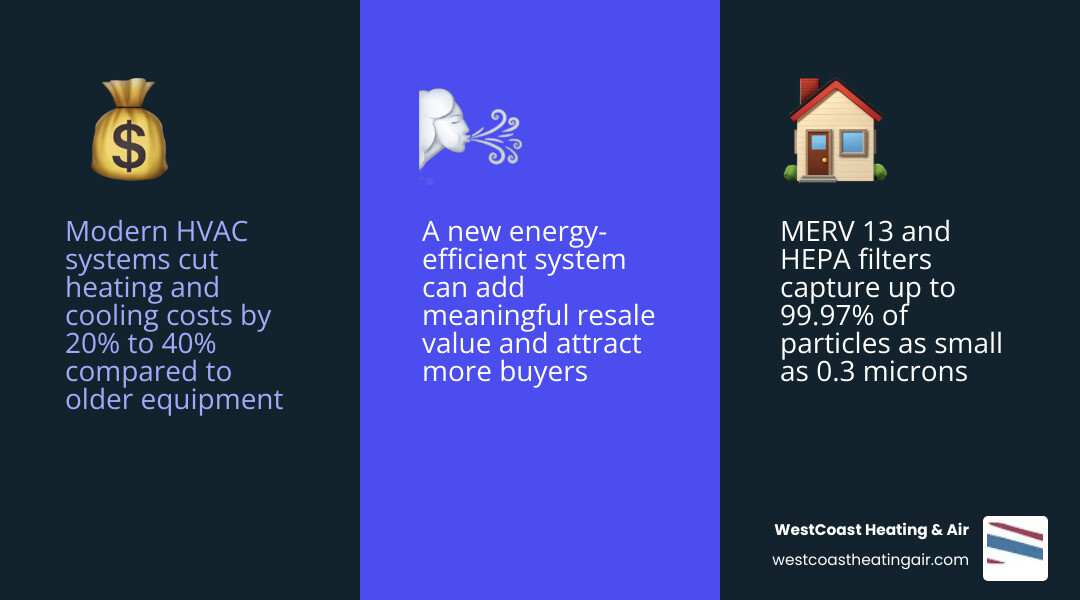
- Lower energy bills — High-efficiency systems can cut heating and cooling costs by 20% to 40% compared to older equipment
- Cleaner indoor air — Modern systems support MERV 13 and HEPA filtration, capturing up to 99.97% of airborne particles as small as 0.3 microns
- Better humidity control — Keeps indoor moisture between 30% and 50%, reducing mold risk and protecting your home’s structure
- Higher home value — A newer, energy-efficient system signals move-in readiness and attracts buyers
- Quieter operation — Modern outdoor units can run as low as 42 decibels, quieter than a normal conversation
- Longer system lifespan — With professional installation and routine maintenance, a high-efficiency unit can last 15 to 25 years
- Environmental impact — Reduced energy consumption and low-GWP refrigerants shrink your household’s carbon footprint
- Smarter controls — Smart thermostats and zoning can add another 10% to 42% in energy savings on top of equipment efficiency gains
Most homeowners only think about replacing their HVAC system when it breaks down. But waiting until that point means years of avoidable energy waste, declining air quality, and growing repair bills. The reality is that heating and cooling account for roughly 43% of the average home’s total energy use — which means even modest efficiency improvements add up fast.
Consider this: the average home loses 20% to 30% of its conditioned air through leaky ductwork alone, before the air ever reaches the rooms it is supposed to heat or cool. Pair that with an aging single-stage system that only runs at full blast or not at all, and you have a setup that is working harder than it needs to while delivering less than it should.
A modern high-efficiency system, properly sized and installed, changes that equation entirely.
I’m Michael Smith, owner of WestCoast Heating & Air in Puyallup, and after a 30-year career at Boeing followed by years serving Pierce County homeowners, I have seen how the new HVAC benefits beyond comfort transform the way families experience their homes — from the air they breathe to the bills they pay. In the sections below, I will walk you through each of those benefits in plain language so you can make the most informed decision for your home and family.
New hvac benefits beyond comfort word guide:
- how a new hvac system increases home value
- how hvac condition affects home appraisals
Financial Windfalls: New HVAC Benefits Beyond Comfort
When we talk about upgrading a heating and cooling system, the conversation naturally turns to the financial side of things. It is no secret that a new system is a significant investment. However, viewing it solely as an expense misses the substantial financial returns that start accumulating the moment the system is turned on. The financial returns of new HVAC benefits beyond comfort act like a quiet, high-yield savings account for your household, systematically chipping away at your monthly overhead.
For homeowners in Puyallup, Tacoma, and Sumner, managing monthly utility bills is a year-round task. Our mild maritime climate means our heating systems run for a large portion of the year, and our summers are increasingly bringing sustained warm spells that make air conditioning a necessity rather than a luxury. When you run an outdated, inefficient system during these peak seasons, you are essentially leaving money on the table.
Why Modern Systems Drastically Reduce Monthly Energy Waste
Older heating and cooling systems are notorious energy hogs. They typically operate on a single-stage design, which means they have only two modes: 100% capacity (on) and completely off. Imagine driving your car by flooring the gas pedal to reach your speed and then turning the engine completely off to coast, repeating this cycle every few minutes. It is incredibly inefficient, causes massive energy spikes, and places immense mechanical strain on the equipment.
Modern high-efficiency systems utilize variable-speed or inverter-driven technology. Instead of cycling violently on and off, these systems act like cruise control. They adjust their output dynamically—sometimes running at just 25% capacity—to maintain a perfectly consistent temperature. Because they run in longer, gentler cycles, they consume significantly less electricity and fuel.
This technological leap is why upgrading to a high-efficiency system can reduce your monthly utility bills by a staggering 20% to 40%. To understand how this translates to your specific heating setup, explore The Definitive Guide to High Efficiency Furnace Cost Savings. If you are considering transitioning away from fossil fuels, you will find similar, highly compelling math in our breakdown of the Advantages of Upgrading to a High Efficiency Heat Pump.
| Feature | Single-Stage Systems (Older Models) | Variable-Speed Systems (Modern Upgrades) |
|---|---|---|
| Operation Mode | 100% On or 100% Off | Dynamic adjustments (25% to 100% capacity) |
| Energy Consumption | High; frequent peak energy spikes | Low; continuous low-energy operation |
| Temperature Control | Temperature swings of 4 to 6 degrees | Consistent within 0.5 to 1 degree |
| Humidity Mitigation | Minimal; cycles are too short to remove moisture | Excellent; continuous airflow extracts humidity |
| System Wear & Tear | High due to constant start-and-stop cycles | Low; gentle, continuous operation extends lifespan |
How Efficiency Ratings Affect Energy Bills in Puyallup
Understanding efficiency ratings is key to predicting your future energy savings. When shopping for a new system in 2026, you will encounter terms like SEER2 (Seasonal Energy Efficiency Ratio 2) for cooling, HSPF2 (Heating Seasonal Performance Factor 2) for heat pump heating, and AFUE (Annual Fuel Utilization Efficiency) for gas furnaces.
These ratings are not just arbitrary numbers; they are direct indicators of how much of the energy you pay for actually turns into heating or cooling, and how much is wasted. For instance, an older furnace with an 80% AFUE rating wastes 20% of the gas it burns right up the flue pipe. A modern 96% AFUE furnace reduces that waste to a mere 4%. In our local Pacific Northwest climate, where heating dominates our utility bills, that difference represents major savings over the course of a single winter.
To demystify these metrics and choose the perfect target ratings for your home, take a look at our comprehensive guide, Energy Efficiency: What Ratings Should You Look For?. For a deeper dive into the actual calculations and real-world results of these ratings, check out How Efficiency Ratings Affect Energy Bills: 5 Methods That Guarantee Results.
Breathing Easier: Indoor Air Quality and Respiratory Health
While lower utility bills are excellent for your wallet, the health and air quality advantages of a new HVAC system are often the real game-changers for families. According to the EPA, indoor air can be two to five times more polluted than outdoor air. Given that Americans spend roughly 90% of their time indoors, our homes are essentially sealed boxes trapping dust, pollen, pet dander, volatile organic compounds (VOCs), and biological pathogens.
In Western Washington, our indoor air quality challenges are highly seasonal. In the winter, we keep our homes tightly shut to keep out the cold and rain, which traps stale air and allows indoor pollutants to accumulate. In the summer, we increasingly deal with wildfire smoke drifting across the Cascades, making outdoor air unsafe and forcing us to rely entirely on our HVAC systems to scrub the air inside our homes.
Advanced Filtration and New HVAC Benefits Beyond Comfort
Older HVAC systems were designed with basic fiberglass filters. These filters were never meant to clean the air you breathe; their sole purpose was to keep large dust bunnies from coating and damaging the system’s internal motor and coils. They are the equivalent of trying to catch gnats with a chain-link fence.
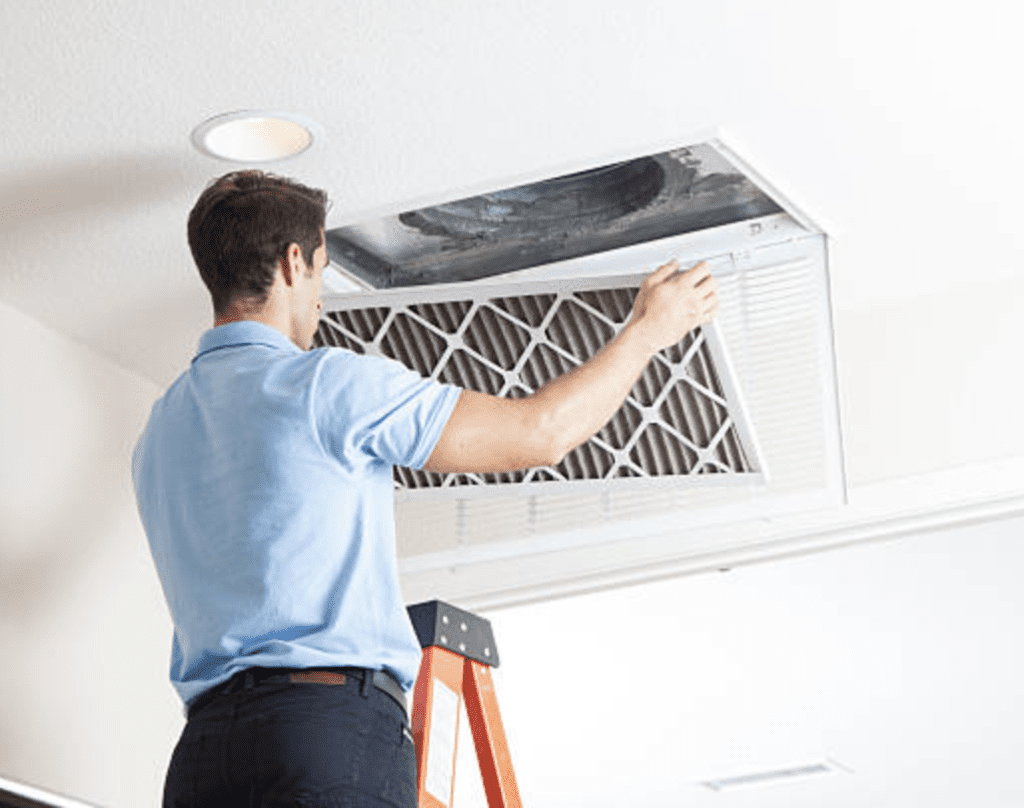
Modern high-efficiency systems are engineered with robust blowers that can handle the static pressure of dense, advanced filtration media without restricting airflow. This allows homeowners to utilize MERV 13 or HEPA-grade filters. These advanced filters act as a true protective barrier, capturing up to 99.97% of microscopic particles as small as 0.3 microns. This includes fine dust, mold spores, pet dander, and even the hazardous particulate matter found in wildfire smoke.
For families in Waller or Puyallup looking to take their filtration to the next level, integrating a whole-home electronic air cleaner is a highly effective step. You can read more about how these systems operate in our article on how to Improve Indoor Air Quality in Waller with the Honeywell Electronic Air Cleaner.
Mitigating Airborne Pathogens and Seasonal Allergens
Beyond dust and pollen, modern HVAC systems can serve as active defense systems against biological contaminants. When air continuously circulates through a high-efficiency system, it does not just pass through a physical filter. Homeowners can integrate advanced indoor air quality (IAQ) accessories, such as ultraviolet (UV) germicidal lights and air scrubbers, directly into their ductwork.
These systems work by exposing the passing airstream to specific wavelengths of UV light, which disrupts the DNA of airborne pathogens—including viruses, bacteria, and mold spores—rendering them harmless. This continuous scrubbing cycle is incredibly beneficial for households with young children, elderly relatives, or anyone suffering from asthma or chronic respiratory conditions.
To learn more about the science behind these systems and how they protect your family, read our guide on Exploring the HVAC System and Germs Connection in Puyallup. If you want to understand the exact mechanics of UV technology, check out How Do UV Air Scrubbers Work and Should You Get One for Your Pierce County Home?.
Here is a quick look at the modern pollutant hit list that a properly equipped new system can capture or neutralize:
- Pollen and seasonal allergens (grass, tree, and weed pollen)
- Fine particulate matter (wildfire smoke, vehicle emissions)
- Biological pathogens (cold and flu viruses, airborne bacteria)
- Mold spores and fungal fragments
- Volatile Organic Compounds (VOCs) from household cleaners, paints, and new furniture
- Pet dander and dust mite proteins
Precision Humidity Control and Structural Protection
When homeowners think about HVAC systems, they almost always focus on temperature. However, managing relative humidity is equally important for both your physical comfort and the physical health of your home. In the Pacific Northwest, moisture is a constant presence. Our rainy seasons are long, and damp outdoor air easily makes its way inside, raising indoor relative humidity to levels that can cause serious, long-term problems.
The optimal indoor relative humidity range for human health and structural protection is between 30% and 50%. When humidity drops below 30%, your skin becomes dry, your nasal passages get irritated (making you more susceptible to viruses), and static electricity rises. When humidity climbs above 50% or 60%, you create a breeding ground for biological pests and structural damage.
Preventing Mold Growth in Rainy Western Washington
Mold is the silent enemy of homes in rainy regions like Steilacoom, Spanaway, and Puyallup. Mold spores exist naturally in the air, but they require moisture to settle, grow, and multiply. If your home’s indoor air is consistently damp, mold will quickly establish itself on drywall, behind wallpaper, in carpets, and inside wall cavities. Once mold takes hold, it releases millions of microscopic spores back into your breathing air, triggering severe allergic reactions, respiratory distress, and persistent coughing.
Older, single-stage air conditioners and heat pumps often fail to control humidity because they run in short, rapid cycles. They cool the air quickly and shut off before the cooling coils have had enough time to condense and drain moisture from the air.
Conversely, a modern variable-speed system runs in longer, gentler cycles. Because the air passes over the cold evaporator coils continuously and at a controlled speed, the system acts as a highly efficient, whole-home dehumidifier, pulling gallons of excess moisture out of your indoor air every day.
To keep your home safe from damp-weather issues, check out our advice on Keeping the Mold Away: HVAC Maintenance for Rainy Regions. For a step-by-step approach to moisture mitigation, read our guide on How to Prevent Mold with HVAC Maintenance.
Protecting Your Home’s Structural Integrity
Excess moisture doesn’t just threaten your health; it actively attacks your home’s physical structure. Over time, high relative humidity can lead to wood rot in wall framing, joists, and subflooring. It can cause drywall to soften and sag, wallpaper to peel, and paint to blister.
For homeowners with hardwood flooring, precision humidity control is absolutely vital. Hardwood is highly hygroscopic, meaning it absorbs and releases moisture based on the surrounding air. When humidity levels swing wildly, hardwood floors can cup, crown, gap, or buckle, leading to incredibly costly repairs. By maintaining a stable, controlled indoor climate, a modern HVAC system acts as a protective shield for your home’s bones, preserving your finishes, furnishings, and structural integrity for decades.
Boosting Property Value and Future-Proofing Your Home
If you plan to live in your current home forever, a new HVAC system is an investment in your personal comfort and health. But if there is any chance you might sell your home in the future, upgrading your system is a highly strategic financial move. In 2026, home buyers are more educated and risk-averse than ever before. They are not just looking at cosmetic finishes like granite countertops or paint colors; they are looking closely at the home’s mechanical infrastructure.
An aging, noisy, inefficient HVAC system that is nearing the end of its lifespan represents an impending urgent expense for a buyer. It is a major red flag that can stall negotiations, lead to aggressive price concessions, or cause a sale to fall through during the inspection phase. On the flip side, a brand-new, high-efficiency system with a transferable warranty is a massive selling point that signals a well-maintained, worry-free home.
How Modern HVAC Upgrades Attract Pierce County Homebuyers
When appraisers evaluate a property in Tacoma, Puyallup, or Orting, they look at the age, condition, and efficiency of the primary heating and cooling systems. A modern system with high SEER2 and HSPF2 ratings directly supports a higher home appraisal, giving you more equity and leverage. Furthermore, a home that can document low monthly utility bills is highly attractive to buyers who are stretching their budgets to afford a mortgage.
For sellers, highlighting a new HVAC system during an open house is a powerful way to stand out in a competitive market. It tells buyers that they won’t have to worry about major mechanical failures or high energy bills for the next 15 to 25 years.
To understand how appraisers view these upgrades, read The Ultimate Guide to How HVAC Condition Affects Home Appraisals. If you are wondering if your current, aging air conditioner is dragging down your home’s appeal, check out our analysis: Is Your Old AC Killing Your Resale Price?.
Meeting 2026 Energy Standards and Refrigerant Regulations
The regulatory landscape for heating and cooling is changing rapidly. Under the federal AIM Act, older high-GWP (Global Warming Potential) hydrofluorocarbon refrigerants like R-410A are being phased down in favor of next-generation, environmentally friendly alternatives like R-32. Upgrading your system in 2026 ensures that your equipment is fully compliant with modern environmental regulations. This future-proofs your home, ensuring that you won’t face skyrocketing refrigerant costs or service limitations down the road because your system relies on obsolete chemical compounds.
Additionally, the federal government and local utilities are offering unprecedented financial incentives to encourage homeowners to transition to high-efficiency systems and heat pumps. Through the Inflation Reduction Act, Washington homeowners can access substantial federal tax credits and rebates for qualifying equipment.
To see how you can maximize these incentives, take a look at our guide on Inflation Reduction Act Benefits for Washington Homeowners. To make sure you aren’t missing out on local savings, explore our article on how to Stop Leaving Money on the Table with Local Utility Perks.
Here are some of the key incentives and financial perks available in 2026:
- Federal Tax Credits (up to 30% of the cost for qualifying heat pumps and high-efficiency furnaces under Energy Efficient Home Improvement Credits)
- Local Utility Rebates from providers like Puget Sound Energy (PSE) and Tacoma Power
- Manufacturer Rebates during seasonal promotional periods
- Lower Operating Costs that provide immediate, ongoing monthly savings on electricity and gas
Maximizing Your Investment: Smart Controls and Proper Design
To truly unlock all the new HVAC benefits beyond comfort, you must look beyond the physical heating and cooling units. A high-efficiency heat pump or furnace is only as good as the system design, ductwork, and controls that support it. Buying a top-tier, high-efficiency system and connecting it to leaky, uninsulated ducts or an outdated thermostat is like buying a high-performance sports car and putting cheap, worn-out tires on it—you will never get the performance or efficiency you paid for.
Smart Thermostats, Zoning, and New HVAC Benefits Beyond Comfort
One of the most common design flaws in older homes is having a single thermostat in the hallway trying to rule over every room in the house. This setup inevitably leads to hot and cold spots, with the upstairs being stiflingly hot in the summer while the basement feels like an icebox.
Pairing your new system with a smart thermostat and a zoning system solves this issue completely. Zoning uses motorized dampers inside your ductwork to direct heating or cooling only to the rooms that actually need it, based on real-time temperature readings and your family’s schedule. This prevents you from wasting energy conditioning empty guest rooms or unused spaces, which can lead to energy savings of 21% to 42% while also reducing wear and tear on your equipment.
Navigating the rebate process for these advanced control systems can be complex, but an experienced contractor can make it simple. To learn how, read How Your HVAC Contractor Helps You Access Rebates. For a broader look at federal and utility options, check out Utility Rebates for High Efficiency Heating: A Federal Overview.
The Critical Role of Proper Sizing and Professional Installation
The single most important day in the life of your HVAC system is the day it is installed. Many homeowners make the mistake of assuming that “bigger is better” when it comes to heating and cooling. However, an oversized system will cycle on and off rapidly (short-cycling), which wastes massive amounts of energy, fails to dehumidify the air, and causes premature component failure.
To prevent this, a professional contractor must perform a detailed Manual J load calculation. This calculation takes into account your home’s square footage, insulation levels, window orientations, and local climate patterns to determine the exact system size your home requires.
Additionally, addressing duct leaks is critical. Since the average home loses 20% to 30% of its air through duct gaps, sealing and insulating your ductwork during installation ensures that the conditioned air actually makes it to your living spaces.
To understand why professional design and ongoing care are so critical to your bottom line, read The Financial Case for Preventive Maintenance. To learn more about how our unique Pacific Northwest climate impacts the lifespan of your heating and cooling equipment, explore The Cold Hard Truth About HVAC Lifespans in the Northwest.
Frequently Asked Questions About Modern HVAC Upgrades
How much can I realistically save on utility bills with a new system?
While exact savings depend on the age and condition of your old system, upgrading an outdated, single-stage unit to a modern, high-efficiency variable-speed system typically reduces monthly heating and cooling bills by 20% to 40%. When you pair the new equipment with a sealed duct system, a smart thermostat, and proper system sizing, the efficiency gains are maximized, allowing the upgrade to steadily pay for itself over time through lower energy bills.
How does a new HVAC system improve indoor air quality and health?
A new HVAC system directly supports your family’s health by accommodating advanced filtration, such as MERV 13 or HEPA filters, which capture up to 99.97% of airborne allergens, dust, pet dander, and wildfire smoke. Additionally, modern variable-speed blowers run in longer, gentler cycles that continuously circulate and scrub the air, while keeping indoor relative humidity between 30% and 50% to prevent the growth of mold, mildew, and dust mites.
What factors beyond the equipment determine the success of an upgrade?
The success of your upgrade depends heavily on three critical factors: accurate system sizing (using professional Manual J load calculations), the condition and sealing of your ductwork, and the quality of the professional installation. Even the most efficient equipment will underperform, waste energy, and fail prematurely if it is improperly sized, connected to leaky ducts, or installed without precise calibration.
Conclusion
Upgrading your home’s heating and cooling system is about so much more than just adjusting the temperature on a thermostat. The new HVAC benefits beyond comfort touch every aspect of your home life—from the health of the air your family breathes and the long-term protection of your home’s structure, to the monthly relief you feel when opening your utility bills and the peace of mind that comes from owning a reliable, future-proof system.
At WestCoast Heating & Air, we have spent over 20 years helping our neighbors in Puyallup, Tacoma, Sumner, Orting, and the surrounding communities design and install customized comfort systems that deliver real, lasting value. We believe in customer education, meticulous system design, and providing top-quality service backed by our deep roots in Pierce County.
If you are ready to experience the health, financial, and lifestyle benefits of a modern home comfort system, we are here to help. Schedule residential heating and cooling services with WestCoast Heating & Air today, and let our family take care of yours.