

Is Your Old HVAC System Quietly Draining Your Home’s Resale Value?
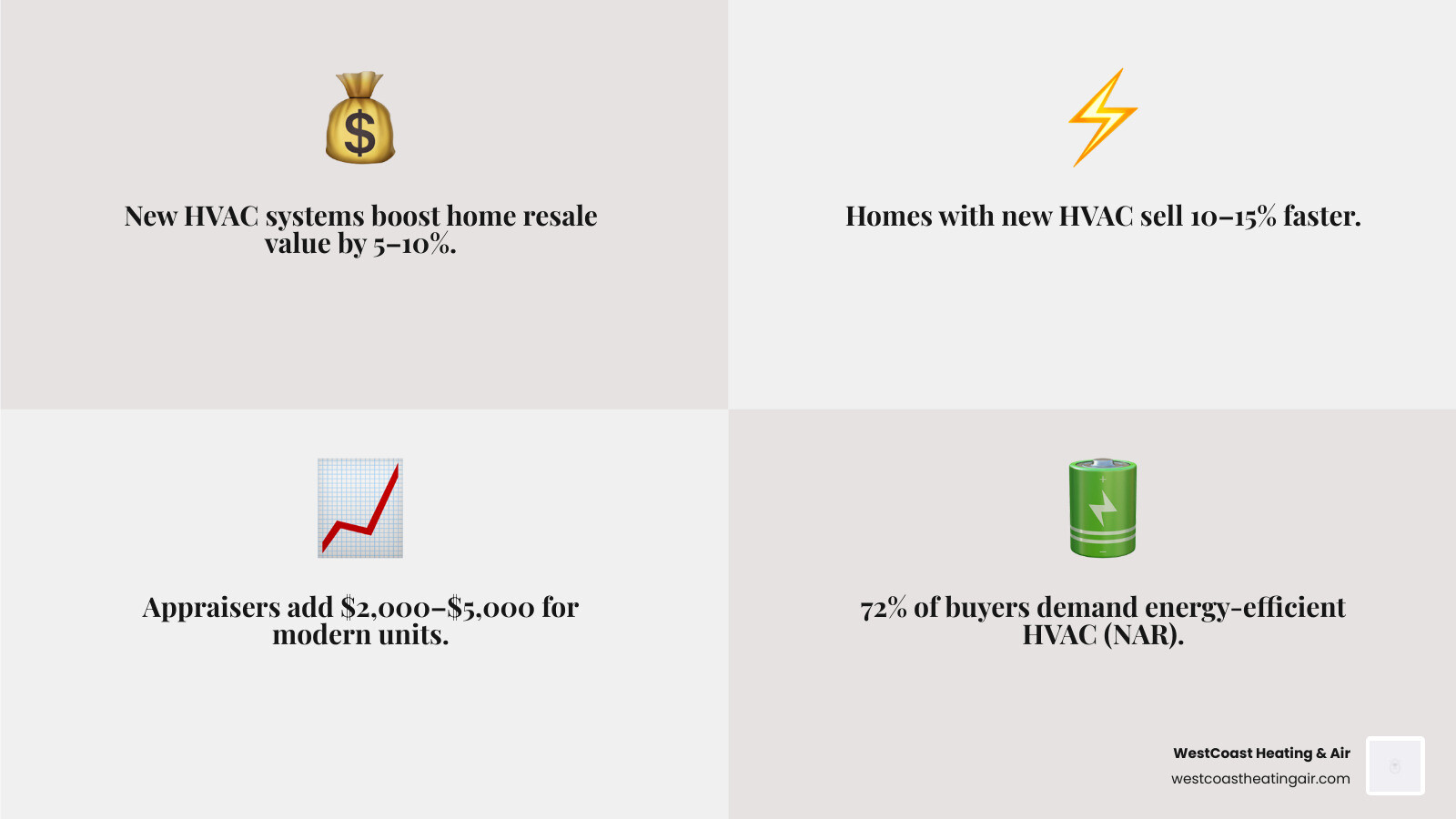
Understanding how a new hvac system increases home value matters more than most homeowners realize — especially heading into the 2026 resale season. Here’s a quick snapshot:
| Factor | Impact |
|---|---|
| Average resale value increase | 5–10% of home value |
| Typical ROI on HVAC investment | ~30% |
| Appraiser adjustment for new system | $2,000–$5,000 added |
| Homes with new HVAC sell 10–15% faster | 10–15% |
| Buyer demand for energy-efficient HVAC | 72% of buyers (NAR) |
Buyers in today’s market are savvy. When they walk through a home and see an aging HVAC unit — one that’s loud, inefficient, or close to the end of its lifespan — they don’t see comfort. They see a bill coming. That perception alone can cost you negotiating power, slow down your sale, or push buyers toward the house down the street that listed “new HVAC” right in the description.
A functional but outdated system is one of the most common reasons sellers face last-minute concession requests after a home inspection. And in a competitive market like Pierce County, where buyers have options, that kind of friction can be expensive.
The good news? A well-timed HVAC upgrade is one of the few home improvements that directly influences your appraisal, your buyer pool, and how fast your home moves — all at once.
I’m Michael Smith, owner of WestCoast Heating & Air in Puyallup, Washington, and after 30 years at Boeing followed by years in the HVAC industry, I’ve seen how understanding how a new hvac system increases home value can be the difference between a smooth sale and a stressful one. Let’s walk through exactly what the data says — and what it means for your home.
How a New HVAC System Increases Home Value in the South Sound
When we talk about how a new hvac system increases home value, we aren’t just looking at a fancy new box sitting outside your house. We’re looking at a fundamental shift in how your property is perceived by appraisers, real estate agents, and most importantly, potential buyers. In our experience serving areas from Tacoma to Puyallup and across Pierce County, the HVAC system is essentially the “engine” of the home. If the engine is 20 years old and sputtering, the rest of the “car” loses its luster.
According to industry data for 2026, a new high-efficiency HVAC system can increase a home’s resale value by as much as 5% to 7%. For a $500,000 home, that’s an additional $25,000 to $35,000 in value. Appraisers often make direct upward adjustments of $2,000 to $5,000 when they see modern HVAC equipment compared to a home with a unit that has reached the end of its 15-to-20-year lifespan.
But the value isn’t just in the appraisal number; it’s in the marketability. A home with a brand-new system stands out in listing descriptions. It signals to the buyer that this home has been meticulously maintained. If the seller took care of the expensive “invisible” stuff like the furnace and AC, they likely took care of the roof and the plumbing too. If you’re wondering if your current setup is helping or hurting, check out these Signs It’s Time to Upgrade Your HVAC System.
How a new hvac system increases home value by boosting buyer confidence
The home inspection is often where sales go to die—or at least where they get a lot more expensive for the seller. When an inspector flags a 15-year-old AC unit, the buyer immediately starts doing “mental math.” They see a future $10,000+ expense and will often ask for a price reduction or a closing cost credit that far exceeds what a proactive upgrade would have cost you.
By installing a new system before you list, you eliminate that “impending tax” feeling. You provide:
- Clean Inspection Reports: No scary “end of life” warnings for the heating and cooling system.
- Maintenance Records: Proof of professional care that builds trust.
- Transferable Warranties: Many modern systems come with 10-year warranties that can be passed to the new owner, offering unparalleled peace of mind.
- Reduced Concessions: You stay in the driver’s seat during negotiations because there are no major HVAC system flaws to exploit.
How a new hvac system increases home value through modern SEER2 efficiency
In 2026, energy efficiency is no longer a “nice-to-have” feature; it’s a baseline expectation. With utility rates rising, buyers are looking for homes that won’t bankrupt them in the summer. Modern systems, particularly those with high SEER2 (Seasonal Energy Efficiency Ratio) ratings, can reduce energy consumption by up to 40% compared to units from just a decade ago.
Eco-conscious buyers are particularly drawn to heat pumps, which provide both heating and cooling with a much smaller carbon footprint. We’ve seen that homes equipped with these systems often command a premium because they align with the growing trend toward home electrification. To see why this technology is taking over, look at the Advantages of Upgrading to a High Efficiency Heat Pump.
Choosing the Right System for Maximum ROI in Western Washington
Not all HVAC systems are created equal when it comes to return on investment. The “best” system depends heavily on your specific climate—whether you’re dealing with the marine layer in University Place or the summer heat up on the plateau.
| System Type | Typical Value Add | Best For |
|---|---|---|
| Heat Pumps | $1,260 – $2,280 | Dual-season climates; high efficiency |
| Central AC | $1,170 – $2,370 | Standard whole-home comfort |
| Ductless Mini-Splits | $600 – $4,350 | Homes without ducts; additions |
| Geothermal | $1,300 – $7,300 | High-end luxury homes |
In the coastal and inland regions we serve, climate suitability is key. A system that is too small will run constantly and fail an inspection; a system that is too large will “short cycle” and leave the home feeling humid. Our customized system design ensures the unit is perfectly matched to the home’s square footage and insulation levels. If you’re weighing your options, here is a guide on The Best High Efficiency Heating Options for Your Home.
Why 2026 Buyers Prioritize Indoor Air Quality and Smart Tech

The modern buyer’s wishlist has evolved. Since 2020, indoor air quality (IAQ) has moved to the forefront of homebuyer concerns. A new HVAC system that features HEPA filtration or advanced air purification can be a massive selling point for families with children or those suffering from allergies.
Furthermore, the integration of smart technology is now standard. Buyers love seeing a smart thermostat on the wall. It’s a visual cue that the home is “smart” and efficient. These devices allow for:
- Zoned Cooling: Keeping the bedrooms cool at night without wasting energy on the living room.
- Remote Access: Cooling the house down while driving home from work.
- Humidity Control: Essential for preserving hardwood floors and preventing that “musty” coastal air feeling.
We also ensure all new installations use the latest eco-friendly refrigerants, such as R-454B, which complies with current EPA standards. This prevents the “R-22 liability” where older systems become impossible to repair because their refrigerant has been phased out.
Preparing Your Home for Sale: Replacement vs. Maintenance
The big question we hear is: “Should I replace the whole thing or just get a tune-up?”
We generally recommend the 15-Year Rule. If your system is over 15 years old, a simple maintenance visit might not be enough to satisfy a modern buyer. Even if it’s currently blowing cold air, its age will be a red flag on the inspection report. However, if your system is only 8 years old, a professional tune-up and a clean bill of health from a certified technician are usually sufficient.
If you do decide to upgrade, it’s important to know What to Expect During an HVAC Replacement. Often, homeowners find that replacing the AC and furnace at the same time is the most cost-effective way to maximize ROI, as it ensures the entire HVAC system is under warranty and operating at peak compatibility.
Frequently Asked Questions about HVAC and Resale Value
Does a new HVAC system increase home value more than cosmetic upgrades?
While a new kitchen or fresh paint might have more “wow” factor in photos, the HVAC system is a “foundational” upgrade. A buyer might forgive an ugly countertop, but they will rarely overlook a broken furnace. In terms of pure ROI and sale speed, HVAC system reliability often outperforms cosmetic fixes because it removes the buyer’s fear of immediate, large-scale repair costs.
How do appraisers factor in a new furnace or heating unit?
Appraisers use “comparables” (comps) to value your home. If two identical houses sold recently, but one had a 20-year-old furnace and yours has a brand-new, high-efficiency model, the appraiser will typically adjust your home’s value upward. They look specifically at the age, efficiency rating, and remaining useful life of the equipment. For more on this, see our thoughts on Furnace System Upgrades.
Do solar-integrated HVAC systems add more value in Washington?
They can. In neighborhoods with growing solar adoption, an HVAC system that is designed to work efficiently with a solar array is a “gold-standard” feature. It promises the buyer a near-zero utility bill, which is an incredibly powerful marketing tool. Combining solar with a high-efficiency heat pump is perhaps the single best way to maximize your home’s “green” value.
Conclusion
Investing in your home’s comfort isn’t just about your own enjoyment; it’s a strategic financial move. Whether you are in Puyallup, Tacoma, or Bonney Lake, understanding how a new hvac system increases home value allows you to make informed decisions that pay off at the closing table.
At WestCoast Heating & Air, we’ve spent over 20 years helping homeowners navigate these choices. We don’t believe in one-size-fits-all solutions. We provide customized system designs that prioritize your home’s unique needs and your long-term financial goals. From high-efficiency heat pumps to smart home integration, our family-owned team is here to ensure your home is the most comfortable—and valuable—one on the block.
Ready to boost your resale price and enjoy a more comfortable home? Contact our residential heating and cooling company today for a consultation.