
Ductless Heating and Cooling Systems Explained for Puyallup Homeowners
Ductless heating and cooling systems explained simply: they are compact, all-electric residential HVAC systems that heat and cool your home without any ductwork, using an outdoor compressor connected to one or more indoor air handlers through a small refrigerant line.
Here is a quick breakdown of what that means for you:
- No ducts required – A small 3-inch hole in the wall is all the installation needs
- Heats and cools – Most units work as heat pumps, handling both seasons
- Room-by-room control – Each indoor unit manages its own zone independently
- High efficiency – Top models reach up to 35 SEER2, far above most traditional systems
- Quiet operation – Outdoor units run as low as 46 decibels, about the level of a normal conversation
- Works in cold climates – Many models operate reliably down to -13°F
If you have ever noticed that one room in your home feels like a sauna while another feels like a freezer, you already understand the core problem these systems solve. Traditional forced-air systems push conditioned air through ducts that can leak up to 30% of their heating and cooling energy before it ever reaches you. Ductless systems skip the ducts entirely, delivering comfort directly where you need it.
I’m Michael Smith, owner of WestCoast Heating & Air in Puyallup, and after spending 30 years solving complex engineering problems at Boeing before moving into residential HVAC, I have helped countless Pacific Northwest homeowners find the right comfort solutions – including getting ductless heating and cooling systems explained in plain language so they can make confident decisions. In the sections below, I will walk you through everything you need to know, from how these systems work to whether one is right for your home.
What are Ductless Mini-Split Systems?
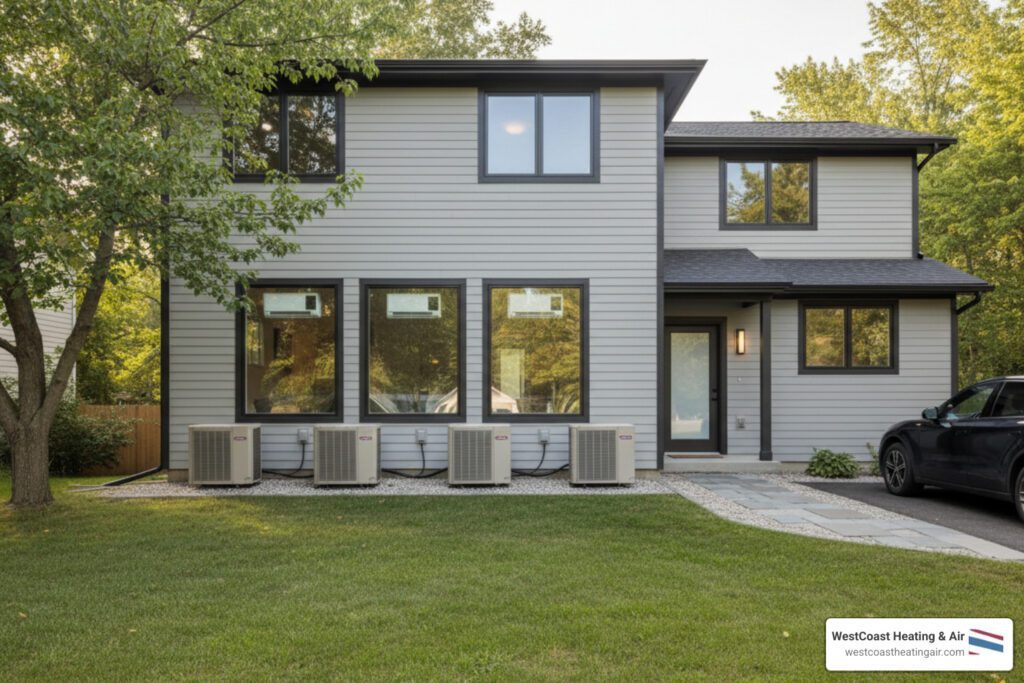
When we talk about Ductless Heating And Cooling, we are referring to a system that provides targeted climate control without the massive network of metal pipes hidden in your attic or crawlspace. A ductless mini-split consists of two primary parts: an outdoor condensing unit (the compressor) and one or more indoor air-handling units.
These components are linked by a “conduit” which houses the power cable, refrigerant tubing, suction tubing, and a condensate drain. Unlike central air, which forces air through a single large internal unit and then distributes it, a mini-split delivers the air directly into the living space.
The indoor units are often sleek, wall-mounted fixtures, but they can also be recessed into the ceiling or mounted near the floor. Because they don’t need ducts, they are the “Swiss Army knife” of the residential HVAC world—versatile, efficient, and capable of fitting into spaces where traditional systems just can’t go.
Single-Zone vs. Multi-Zone Configurations
One of the most common questions we hear in places like University Place and Tacoma is whether a homeowner needs a single-zone or a multi-zone setup. The choice depends entirely on how much of your home you want to condition.
A single-zone system connects one outdoor compressor to one indoor air handler. This is perfect for a specific room that is always too hot or too cold, like a sunroom or a finished garage.
A multi-zone system allows one outdoor unit to power multiple indoor units—sometimes up to five or eight, depending on the model. This allows you to create “zones” throughout your house, each with its own thermostat. You can keep your bedroom at a crisp 68 degrees while the living room stays a cozy 72.
| Feature | Single-Zone System | Multi-Zone System |
|---|---|---|
| Indoor Units | 1 | 2 to 8 |
| Best For | Additions, Garages, Single Rooms | Whole-home comfort, Zoned living |
| Control | One thermostat | Individual control for every room |
| Installation | Quick and simple | Requires planning for multiple lines |
Ductless Heating and Cooling Systems Explained: How They Work
To truly have ductless heating and cooling systems explained, we have to look at the “magic” of heat transfer. These systems don’t actually create heat or cold in the way an electric space heater or an old-fashioned furnace does. Instead, they move heat from one place to another.
In the summer, the indoor unit’s evaporator coil absorbs heat from your room air. This heat is carried by the refrigerant through the lines to the outdoor unit, where it is released into the atmosphere. In the winter, the process reverses. Even in chilly Puyallup winters, there is thermal energy in the outdoor air. The system extracts that heat and pumps it indoors.
The real secret to their performance is inverter technology. Traditional residential HVAC systems are like a light switch—they are either 100% on or 100% off. This leads to uncomfortable temperature swings. Ductless systems use variable-speed compressors that act more like a dimmer switch. They slow down or speed up as needed to maintain a perfectly steady temperature, using only the exact amount of energy required.
Why Ductless Heating and Cooling Systems Explained Matter for Efficiency
Efficiency isn’t just a buzzword; it’s the reason many homeowners in Steilacoom and SeaTac are making the switch. Traditional ducted systems can lose more than 30% of their energy consumption to duct leaks and heat loss in unconditioned spaces like attics. By eliminating ducts, you immediately reclaim that lost energy.
You’ll want to look at two main ratings:
- SEER2 (Seasonal Energy Efficiency Ratio): This measures cooling efficiency. While standard central air units often hover around 14 to 17 SEER2, top-tier ductless systems can push 30 or even 35 SEER2.
- HSPF2 (Heating Seasonal Performance Factor): This measures heating efficiency.
By choosing a high-efficiency system, you are not just helping the environment; you are taking advantage of Ductless Heating Benefits For The Modern Home, which include significantly lower monthly utility bills and a smaller carbon footprint.
Key Benefits and Ideal Applications for Homeowners
One of the greatest joys of our job is seeing a homeowner realize they can finally use a room they’ve avoided for years. Whether it’s a “hot” upstairs bedroom or a “chilly” basement, ductless systems provide personalized comfort that central air simply can’t match.
Ideal Applications include:
- Older Homes: Many houses in Tacoma were built before central air was standard. If you’re wondering, Aircon Mini Split AC For Older Homes Near Tacoma Is This Doable, the answer is a resounding yes. You can get modern comfort without tearing out your lath-and-plaster walls.
- New Additions: If you’re adding a sunroom or a mother-in-law cottage, extending existing ductwork is often expensive and can strain your current furnace. A mini-split is the perfect standalone solution.
- Quiet Zones: Ductless units are whisper-quiet. The loudest part of the system is the compressor, which stays outside. Indoor units operate at decibel levels comparable to a library or a quiet conversation (around 46 dB).
Beyond comfort, these systems offer superior air filtration. Because the air doesn’t travel through dusty, mold-prone ducts, and each unit has its own filter, the indoor air quality is often much higher than in ducted homes.
Getting Your Ductless Heating and Cooling Systems Explained by Local Pros
At WestCoast Heating & Air, we don’t believe in “cookie-cutter” residential HVAC. Every home in the South Sound is different. A home in Roy has different needs than a condo in University Place. That’s why we focus on customized design.
We take the time to perform a proper load calculation, ensuring your system isn’t too big (which causes short-cycling and humidity issues) or too small (which leaves you shivering). If you are looking for the Best Ductless Heating Installation Tacoma Guide, it always starts with a professional consultation to match the technology to your lifestyle.
Maintenance and Professional Care
One of the best things about mini-splits is how easy they are to live with, but they aren’t “set it and forget it” machines. To keep your system running at peak efficiency, you need to be a little proactive.
The Homeowner’s Task:
The most important thing you can do is clean the mesh filters in your indoor units. In most homes, this should be done every 4 to 8 weeks. If you have pets or live in a dustier area like Spanaway, you might want to check them monthly. It’s as simple as popping the front panel, rinsing the filters in the sink, letting them dry, and snapping them back in.
The Professional’s Task:
Once a year, you should have a professional technician come out for a tune-up. We check the refrigerant levels, inspect the electrical connections, and deep-clean the coils. Dust and debris on the outdoor unit can force the compressor to work harder, shortening its lifespan. For those in the know, seeking Expert Care For Your Ductless System Tacomas Finest Maintenance Providers ensures that small issues don’t turn into expensive repairs.
Troubleshooting and Longevity
When properly installed and maintained, a high-quality ductless system can last 15 to 20 years. However, keep an eye out for these common signs that you might need a pro:
- Weak Airflow: This is usually just a dirty filter, but it could also indicate a failing fan motor.
- Water Leaks: Ductless units pull moisture from the air. If the condensate drain line gets clogged with algae or debris, water might drip from the indoor unit.
- Ice Buildup: If you see ice on the coils, turn the unit off immediately. This usually points to an airflow restriction or a refrigerant leak.
If you encounter these issues, it’s worth reading up on Ductless Cooling Repair In Puyallup What Every Homeowner Should Know to understand the process. And remember, staying ahead of maintenance is the best way to figure out How To Keep Your Spanaway Ductless System Happy On A Budget.
Frequently Asked Questions
Do ductless systems work in cold Washington climates?
This is the number one concern for homeowners in Orting and Sumner. The answer is yes! While older heat pumps struggled when temperatures dipped below freezing, modern “hyper-heating” or cold-climate models are engineered for the Pacific Northwest. Many units can provide 100% heating capacity down to 5°F and continue operating efficiently as low as -13°F. Unless we experience a literal ice age, a modern ductless system will keep you warm.
Can I install a mini-split as a DIY project?
While you can buy “DIY kits” online, we strongly advise against it. Installing a ductless system involves handling pressurized refrigerants, high-voltage electrical wiring, and precision flares for the copper tubing. If the lines aren’t vacuumed correctly, moisture can ruin the compressor. Furthermore, most manufacturers will void your warranty if the system isn’t installed by a licensed professional. Professional installation ensures safety, local code compliance, and long-term reliability.
How much energy can I really save?
On average, ductless mini-splits can cut your heating costs by up to 60% compared to traditional electric baseboard heaters or old oil furnaces. By eliminating the 30% energy loss associated with leaky ducts, you’re already ahead of the game. When you look for the ENERGY STAR certification, you’re choosing a system that has been independently verified to save energy and reduce utility bills.
Conclusion
At WestCoast Heating & Air, our mission is to bring customized residential comfort to our neighbors in Puyallup, Tacoma, and throughout Pierce County. We’ve been family-owned and operated for over 20 years, and we pride ourselves on educating our customers so they can make the best choice for their families.
Whether you are looking to fix a single “problem room” or want to overhaul your entire home’s efficiency, ductless technology is a game-changer. It’s quiet, powerful, and remarkably efficient. If you are ready to get your own Ductless Heating And Cooling system started, we are here to help you design a solution that fits your home perfectly. Give us a call today—we’d love to show you why so many of your neighbors are making the switch in 2026.