
Why Homeowners Worry About Rain and Outdoor HVAC Units
Understanding how rain and moisture affect your outdoor hvac unit is something most homeowners don’t think about until they’re standing in their yard after a Pacific Northwest downpour, staring at a soaking wet condenser and wondering if it’s about to fail. The good news? In most cases, rain is not your enemy. But moisture — especially the persistent, weeks-long dampness common in Western Washington — can quietly cause real problems if you’re not paying attention.
Here’s a quick answer to what homeowners most often want to know:
| Situation | Is It a Problem? | What to Do |
|---|---|---|
| Light or moderate rain | No — units are built for this | Keep running normally |
| Heavy storm with lightning | Possible surge or strike risk | Turn off at breaker |
| Floodwater above 15 inches | Yes — serious damage risk | Shut off power, call a pro |
| Persistent dampness and humidity | Can reduce efficiency over time | Schedule seasonal maintenance |
| Debris, moss, or poor drainage | Yes — blocks airflow and causes corrosion | Clear regularly, check drainage |
| Plastic tarp covering the unit | Yes — traps moisture and causes rust | Remove it; use breathable cover only |
Rain alone rarely ruins an outdoor HVAC unit. The real threats are flooding, power surges, trapped moisture from improper covers, and the slow creep of moss, debris, and poor drainage that builds up over a long wet season. This guide walks you through all of it — what’s safe, what’s not, and what to do to protect your system year-round.
I’m Michael Smith, owner of WestCoast Heating & Air in Puyallup, Washington, and after years of servicing homes across the Pacific Northwest, I’ve seen how rain and moisture affect your outdoor hvac unit in ways that most generic HVAC advice simply doesn’t account for. This guide is built specifically for homeowners in wet climates who want straight answers and practical steps they can actually use.
What homeowners should know first about how rain and moisture affect your outdoor hvac unit
The first thing we tell our neighbors in Tacoma and Puyallup is to take a deep breath. Your air conditioner or heat pump was born to live outside. Manufacturers design these systems specifically to handle the elements. The electrical components are sealed, the fan motor is protected, and the cabinets are treated with corrosion-resistant finishes.
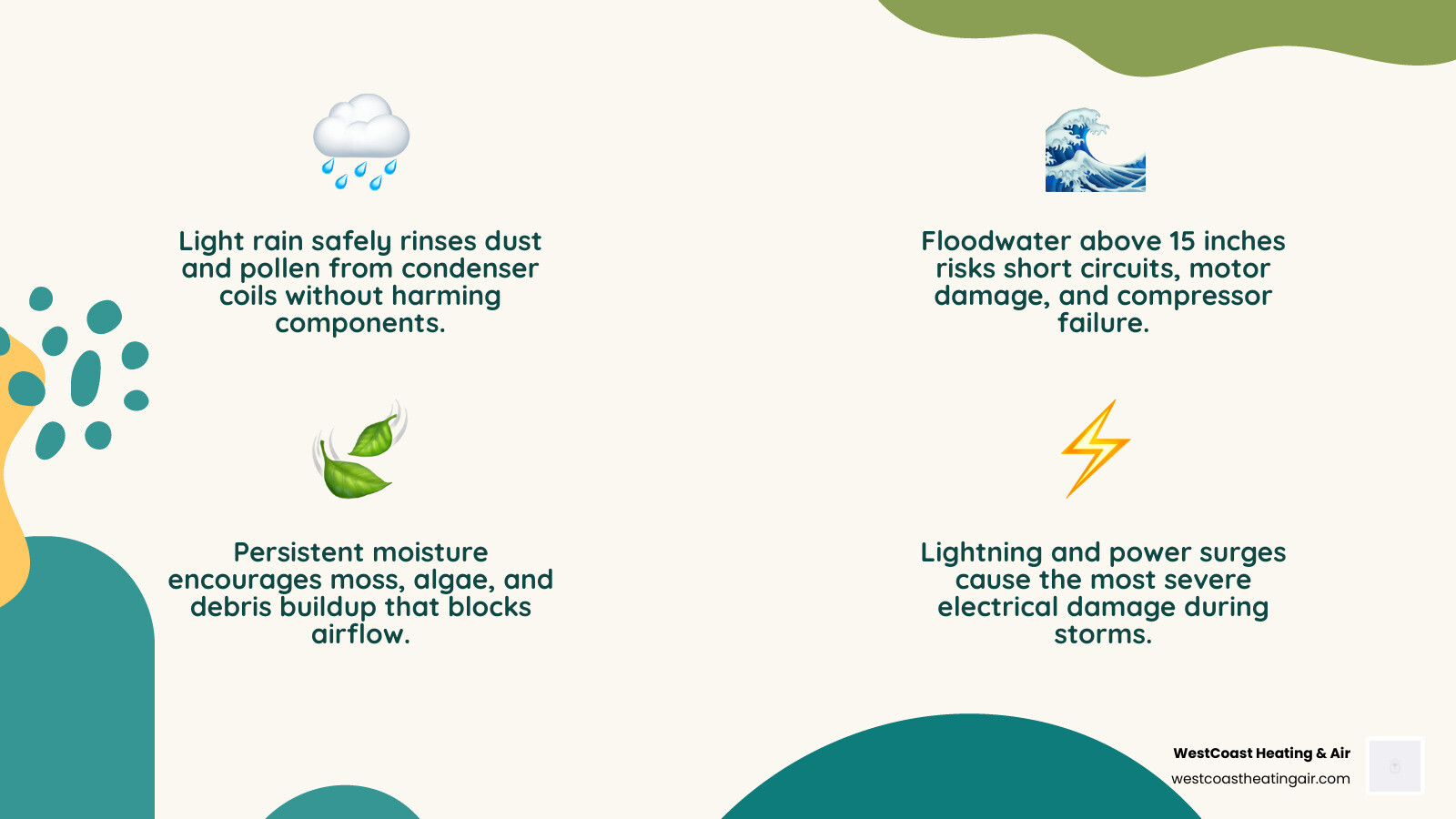
In fact, light rain can actually be a bit of a helper. It can wash away dust, pollen, and light debris that might be clinging to your condenser coils. However, while “sky water” is fine, “standing water” is a different story. The primary concerns for a homeowner should be humidity control inside the home and preventing the unit from becoming a habitat for moss or a victim of flash flooding.
Why this matters more in wet climates like Western Washington
Living in the Puget Sound region means dealing with over 150 rainy days per year. Unlike regions that get a massive thunderstorm once a month and then dry out, we deal with a persistent, gray drizzle. This constant moisture exposure creates a “micro-climate” around your outdoor unit.
In places like Orting or Sumner, where we have plenty of lush greenery, the combination of rain and shade can lead to rapid moss and algae growth on the unit’s pad and fins. Furthermore, our high outdoor humidity levels (often reaching 90% or higher during a rainy stretch) force your HVAC system to work much harder to remove moisture from the indoor air. If your system isn’t maintained, that extra workload translates directly into higher energy bills and a shorter lifespan for your equipment.
How Rain and Moisture Affect Your Outdoor HVAC Unit
When we talk about how rain and moisture affect your outdoor hvac unit, we have to distinguish between the immediate impact of a storm and the long-term effects of living in a damp environment.
Can rain actually help, or is it harmful?
Believe it or not, a light rain shower can provide a temporary efficiency boost. As rain falls through the air, it cools the ambient temperature around the unit. Additionally, if the rain hits the condenser coils, it can provide a bit of evaporative cooling, helping the system shed heat more effectively.
Rain also acts as a natural rinsing agent. Over time, your outdoor unit collects a “blanket” of dust and pollen. A steady rain can wash some of this away, keeping the fins clear for better airflow. However, don’t let the rain do all the work. Rain cannot remove the sticky grime or heavy debris that a professional cleaning can handle.
How rain and moisture affect your outdoor hvac unit during long wet periods
The real challenge in Western Washington is the “slow soak.” When the ground stays saturated for weeks, several things happen:
- Corrosion Risk: While units are rust-resistant, constant moisture exposure can eventually wear down even the best coatings, especially if debris like wet leaves are trapped against the metal.
- Airflow Restriction: Wet debris (like pine needles or maple leaves) sticks to the condenser coils like glue. Once it dries and gets wet again, it forms a thick mat that blocks airflow.
- Biological Growth: Moss and algae thrive in our damp climate. If they start growing on your unit’s fins, they hold moisture against the metal and block the vital exchange of heat.
How outdoor units are built to handle rain and moisture
Modern HVAC units are marvels of engineering. They are built with:
- Sealed Electrical Components: The “guts” of your unit — the capacitors, contactors, and wiring — are housed in a weather-tight compartment.
- Insulated Wiring: Wiring is rated for outdoor use and often tucked away to prevent direct exposure.
- Corrosion-Proof Materials: Most units utilize copper, aluminum, and high-grade plastics that don’t easily succumb to water damage.
- Top-Discharge Fans: The fan at the top of the unit blows air upward, and the motor is shielded so that rain falling straight down doesn’t enter the motor housing.
For a deeper dive into the engineering side, check out our post on How Does Rain Affect The Hvac Equipment.
When Rain Becomes a Real Threat: Flooding, Wind, Lightning, and Surges
While normal rain is fine, “extreme” weather is where the danger lies. In the Pacific Northwest, we occasionally deal with atmospheric rivers that can lead to localized flooding or high winds.
Is it safe to run your AC or heat pump during a rainstorm?
Yes, it is generally safe to run your system during a typical rainy day. However, if that rain is accompanied by consistent thunder and lightning, we recommend turning the system off at the thermostat. A lightning strike doesn’t have to hit your house to cause damage; a nearby strike can cause a massive power surge through the grid that fries your unit’s expensive control board or compressor.
For those using heat pumps, you might wonder if the rules change. They don’t! Heat pumps are designed for year-round outdoor operation. You can learn more about this in our guide: Dont Let The Rain Dampen Your Comfort With Pnw Heat Pump Benefits.
What floodwater can damage and why the 15-inch rule matters
This is perhaps the most critical safety tip in this guide. The 15-inch rule is an industry standard. If floodwaters rise higher than 15 inches around your outdoor unit, it has likely reached the critical electrical components and the compressor.
If your unit has been submerged:
- Do NOT turn it back on.
- Shut off the power at the main breaker panel immediately.
- Call a professional. Even if the water recedes and the unit looks “dry,” silt and mud inside the electrical components can cause a short circuit or a fire the moment you flip the switch.
Weather events that can really harm the system
Beyond flooding, keep an eye out for:
- High Winds: Wind can hurl branches or lawn furniture into your unit, bending the delicate aluminum fins.
- Power Surges: When the power flickers during a storm, the “on-off-on” cycle can put immense strain on the compressor.
- Pad Erosion: Heavy rain can wash away the soil under your unit’s concrete pad, causing it to tilt. A tilting unit can stress refrigerant lines and prevent oil from circulating properly in the compressor.
What to Do After Heavy Rain or Flooding
Once the clouds part over Spanaway or Steilacoom, it’s time for a quick “post-storm” walk-around.
If your outdoor unit is flooded or submerged
If you suspect the unit was submerged, safety is your first priority. Do not stand in water while touching the unit. Once it is safe to do so, ensure the breaker is off. A professional technician will need to clean and disinfect the unit, check all electrical connections for corrosion, and ensure the fan motor is still functional.
Signs moisture or storm debris may have caused damage
Look for these red flags:
- Bent Fins: If a branch hit the unit, the fins might be crushed. This restricts airflow and kills efficiency.
- Unusual Noises: Buzzing, clicking, or grinding sounds after a storm usually mean debris is caught in the fan or a component is failing.
- Tripped Breakers: If the system keeps tripping the circuit breaker, there is likely a moisture-related short circuit.
- Musty Smells: If you turn the system on and smell “dirty socks,” moisture may have entered your ductwork or settled on the indoor coils.

When to call a professional after heavy rain or storms
You should call us at WestCoast Heating & Air if:
- The unit won’t start after a storm.
- You see visible smoke or smell burning.
- The unit was submerged in more than 15 inches of water.
- The unit is leaning significantly due to soil erosion.
We’ve spent over 20 years Navigating Pnw Weather With A Local Western Washington Hvac Provider, and we know exactly what to look for after a big storm.
Covers, Drainage, Debris, and Other Moisture Mistakes to Avoid
One of the biggest mistakes we see homeowners make is trying to “over-protect” their unit.
Should you cover your outdoor HVAC unit during rain or winter?
The short answer is: No, do not wrap your unit in a plastic tarp.
Outdoor units are designed to be open to the air. If you wrap the unit in plastic, you are creating a “greenhouse effect.” Moisture from the ground evaporates, gets trapped under the plastic, and condenses on the metal components of your HVAC system. This leads to rapid rust and corrosion.
Why plastic tarps and tight covers can do more harm than good
Aside from rust, tight covers provide a warm, dry hotel for rodents. Mice and rats love nesting in covered HVAC units during a Western Washington winter, and they will happily chew through your wiring while they’re there. If you feel you must cover your unit to protect it from falling icicles or heavy pine needles, use a breathable mesh cover or a simple piece of plywood weighted down on the top only — never cover the sides.
| Cover Type | Protects from Debris? | Traps Moisture? | Risk of Rust? |
|---|---|---|---|
| Plastic Tarp | Yes | Yes (High) | Very High |
| Tight Vinyl Cover | Yes | Yes (Moderate) | High |
| Breathable Mesh | Yes | No | Low |
| Plywood (Top Only) | Yes | No | Low |
How poor drainage, wet leaves, and moss create hidden problems
In University Place and Tacoma, many homes have beautiful, mature trees. While great for shade, they drop a lot of “gunk.”
- Clogged Gutters: If the gutter above your unit is clogged, it will overflow directly onto the fan motor.
- Wet Needles: Pine needles are acidic. When they sit in a wet pile against your unit, they can eat away at the metal.
- Moss Growth: Moss acts like a sponge, holding water against the unit’s base and coils.
Make sure your unit has at least two feet of clearance on all sides. Keep the area clear of shrubs, weeds, and leaf piles.
How Rainy-Season Humidity Affects Comfort, Efficiency, and Indoor Air Quality
Rain doesn’t just stay outside; it affects the air inside your home too.
Why your home can feel warmer even when the AC is running
During a humid May day in Puyallup, you might notice that your home feels “sticky” even if the temperature on the thermostat says 72 degrees. This is because of latent heat. Your HVAC system has two jobs: lowering the temperature and removing moisture. When humidity is high, the system has to work twice as hard to pull that water out of the air. If the humidity stays above 60%, your home will never feel truly comfortable.
The best humidity range and what happens when moisture stays too high
The EPA recommends keeping your indoor humidity between 30% and 50%. When humidity creeps higher:
- Mold and Mildew: These thrive in damp ductwork and on window sills.
- Dust Mites: These pests love moist air, which can trigger allergies.
- Wet Insulation: If moisture gets into your attic or crawlspace, your insulation loses its “R-value” (its ability to keep heat in or out).
Maintenance steps that protect HVAC systems during rainy months
To keep your system running through the wet season, follow this checklist:
- Change Filters Monthly: Humid air carries more particles. A dirty filter makes a damp system work even harder.
- Check the Condensate Drain: Ensure the pipe that carries water away from your indoor unit isn’t clogged.
- Clear the Perimeter: Maintain that two-foot “buffer zone” around the outdoor unit.
- Inspect Gutters: Make sure water isn’t dumping directly onto your condenser.
- Schedule a Tune-Up: A professional can clean the coils properly and check for early signs of rust.
For more tips on mold prevention, read: Keeping The Mold Away Hvac Maintenance For Rainy Regions.
Frequently Asked Questions About how rain and moisture affect your outdoor hvac unit
Should I turn off my outdoor unit every time it rains?
No. Your unit is built for rain. Only turn it off if there is a severe thunderstorm with frequent lightning or if you see water starting to pool around the base of the unit.
Can wet insulation or damp ducts affect HVAC performance?
Absolutely. Wet insulation is useless and can become a breeding ground for mold. If you have a leak in your roof or crawlspace that makes your ducts damp, it can lead to musty odors throughout the house.
Does winter rain affect heat pumps differently than summer rain?
In the winter, “freezing rain” is the bigger threat. Heat pumps have a defrost cycle to melt light frost, but a heavy coating of ice from a freezing rainstorm can block airflow. Never use a sharp object or hot water to clear ice; instead, let the unit’s defrost cycle do its job or call us for help. For more winter-specific advice, see The Pnw Guide To Not Freezing In The Winter.
Protect Your System Before the Next Storm
At WestCoast Heating & Air, we’ve spent the last two decades helping homeowners in Puyallup, Tacoma, and the surrounding areas keep their homes comfortable, no matter what the Washington sky throws at them. We are a family-owned company that believes in customer education and top-quality service.
Don’t wait for a major storm to find out if your home HVAC system is ready. Whether you’re in Roy, Orting, or SeaTac, we’re here to ensure your residential HVAC system is clean, clear, and ready to handle the moisture.
Is your HVAC system ready for the next rainy season? Contact us today to schedule your seasonal maintenance and ensure your home stays dry and comfortable all year long!