
Is a Heat Pump Really the Best HVAC Setup for Western Washington Weather?
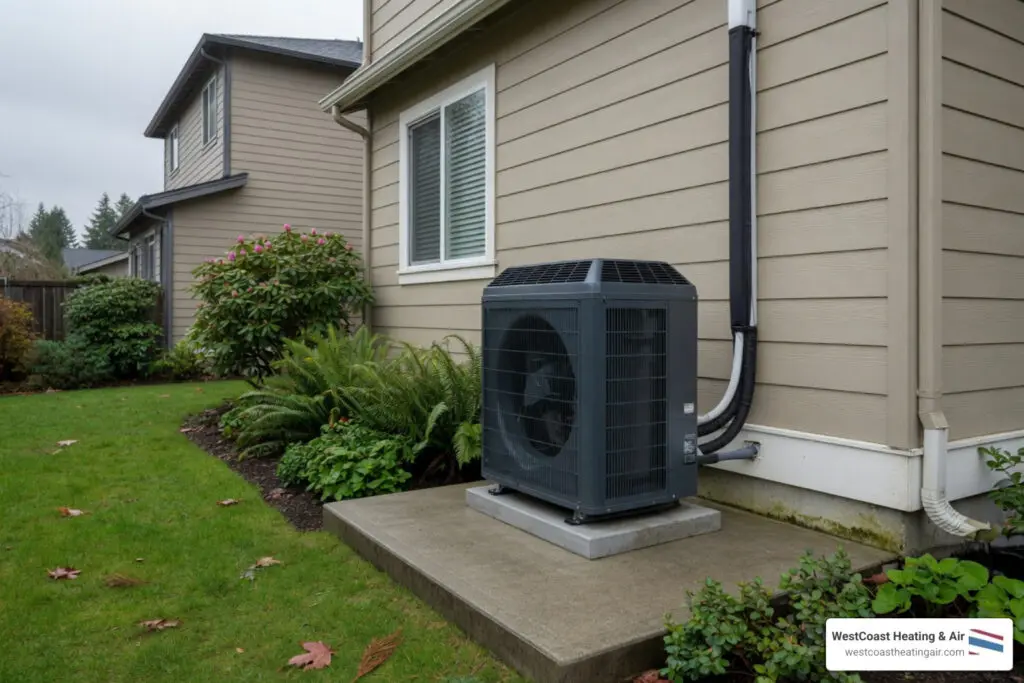
Finding the best HVAC setup for Western Washington weather comes down to one clear answer for most homeowners: a heat pump is the top choice, with ductless mini-splits as the best option for older homes without existing ductwork.
Here’s a quick breakdown:
| HVAC Option | Best For | Key Benefit |
|---|---|---|
| Cold-climate heat pump (ducted) | Homes with existing ductwork | Heats and cools in one system; highly efficient in mild, wet winters |
| Ductless mini-split heat pump | Older homes, additions, specific rooms | No ductwork needed; flexible multi-zone control |
| Heat pump + gas furnace (dual-fuel) | Homes with existing gas furnace | Gas backup for rare cold snaps; lower upfront cost |
| Central AC add-on to gas furnace | Homeowners keeping their furnace | Cooling only; no heating efficiency upgrade |
Western Washington’s climate is uniquely suited to heat pump technology. Winters in the Puget Sound are mild and damp — rarely dipping below the mid-20s°F — with long shoulder seasons and increasingly hot summers. Seattle has already recorded a high of 103°F in recent years, and last year brought at least 45 days above 80°F. That’s a far cry from the “you don’t need AC here” thinking that was common just a decade ago.
The challenge is that most Western Washington homes were built without central air conditioning. Now, homeowners are weighing their options: bolt on an AC unit, upgrade to a heat pump, or go fully electric. The decision involves upfront costs, available rebates, your existing equipment, and how your home is built — factors that look very different for a 1920s Craftsman in Tacoma than a newer build in Puyallup.
I’m Michael Smith, owner of WestCoast Heating & Air in Puyallup, and after working with hundreds of Pacific Northwest homeowners, I know what actually works for our climate when it comes to the best HVAC setup for Western Washington weather. In this guide, I’ll walk you through every major option so you can make a confident, informed decision for your home.
Why a Heat Pump is the Best HVAC Setup for Western Washington Weather
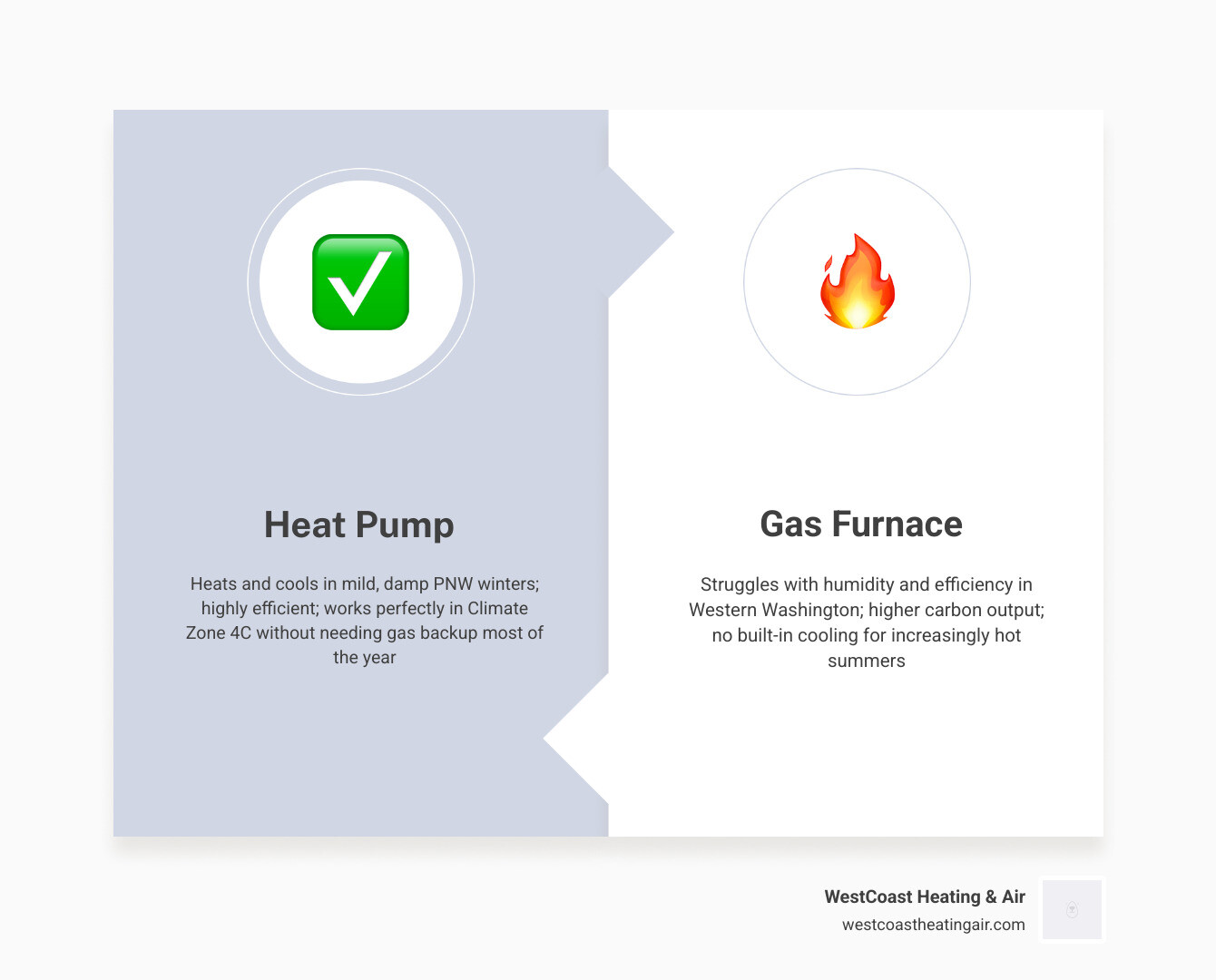
When we analyze the local climate, Western Washington sits squarely within Climate Zone 4C (Marine). This means we experience mild, wet winters and moderate summers with high humidity levels. Unlike the extreme sub-zero winters of the Midwest or the scorching summers of the Southwest, our weather patterns are remarkably consistent. This makes our region the ultimate “Goldilocks zone” for modern heat pump technology.
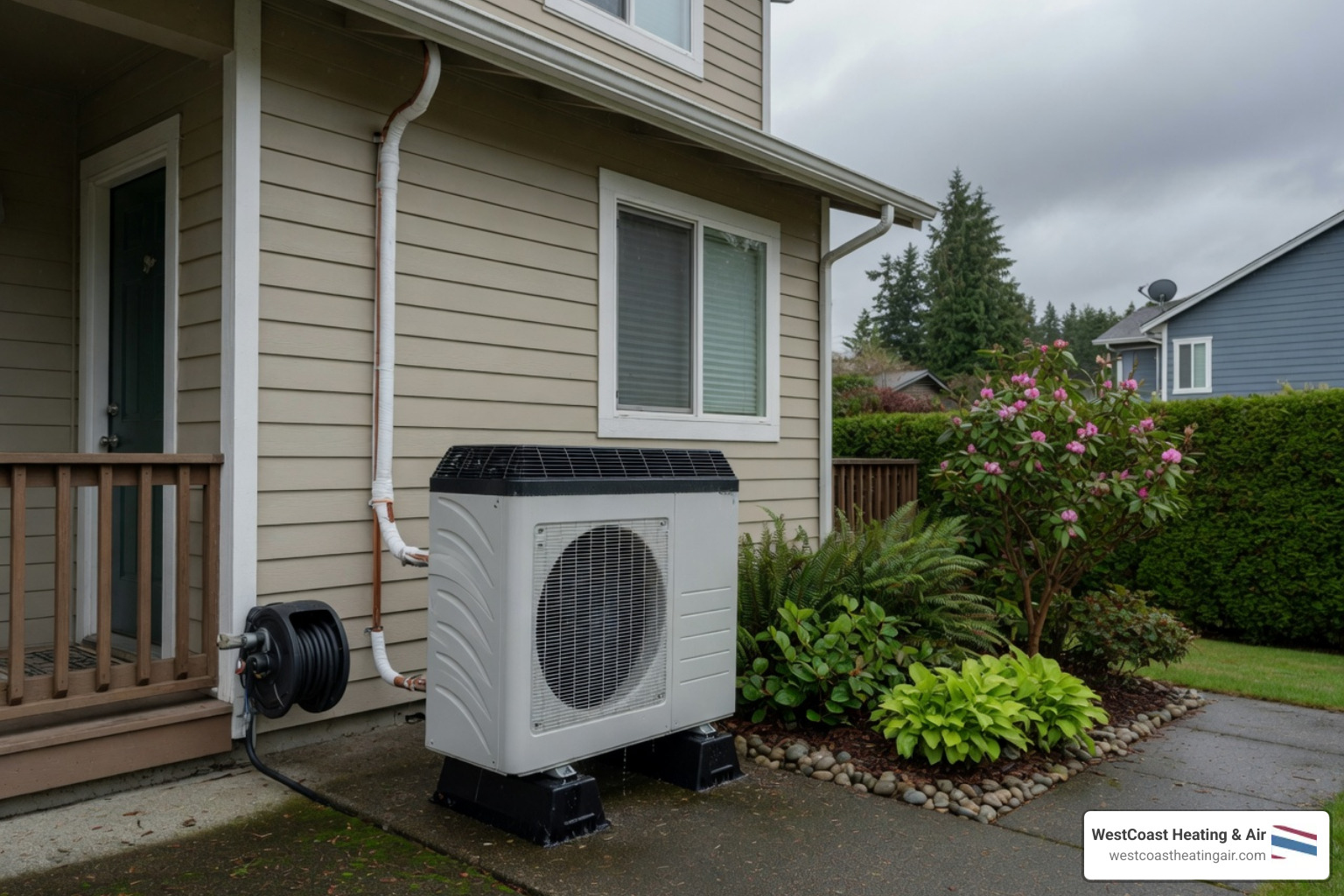
A traditional heating system, like a gas furnace or electric baseboards, has to create heat by burning fuel or running electricity through high-resistance coils. Heat pumps don’t create heat. Instead, they use advanced refrigeration technology to extract ambient heat from the outdoor air and move it inside. Even when it feels chilly outside, there is still a massive amount of thermal energy present in our dense, moisture-rich air.
By simply moving heat rather than generating it, heat pumps deliver 2 to 4 units of heat for every single unit of electricity they consume. This translates to an astounding 300% to 400% efficiency rating. When replacing old electric resistance heating, a high-efficiency heat pump can cut your heating electricity use by up to 50%.
Additionally, because Washington State relies heavily on clean hydropower, electricity is highly affordable and environmentally friendly compared to fossil fuels. Upgrading to a heat pump allows you to leverage this clean energy grid to keep your home warm all winter and cool all summer.
To understand exactly how these systems capture and transfer warmth through our damp air, you can read our detailed breakdown on Moving Heat Around Like a Pro: A Guide to How Heat Pumps Work.
But efficiency is only half the story. The true beauty of a heat pump is its dual-fuel capability. In the summer, the system simply reverses its refrigerant flow, extracting heat from inside your home and pumping it outdoors. This gives you high-efficiency cooling without needing to install a separate central air conditioner.
With our local summers getting warmer every year, having built-in cooling is no longer a luxury—it’s a necessity. To explore how a heat pump keeps your home perfectly balanced during our damp winters and hot summers, take a look at our article, Don’t Let the Rain Dampen Your Comfort with PNW Heat Pump Benefits.
Designing the Best HVAC Setup for Western Washington Weather for Older Homes
If you live in one of the historic neighborhoods of Tacoma, Steilacoom, or University Place, you are likely familiar with the architectural charm of Craftsman, Tudor, or mid-century homes. However, you also know the struggle of trying to keep these homes comfortable. Many of these older homes were built with radiator heating, baseboards, or no ductwork at all.
For these architectural styles, installing traditional ducted central heating and cooling is often impractical. Tearing open plaster walls to run bulky metal ducts is incredibly invasive, expensive, and ruins the historic integrity of your home.
This is where ductless mini-split heat pumps shine as the best HVAC setup for Western Washington weather in older properties.
A ductless mini-split system consists of a small outdoor compressor connected to one or more indoor air-handling units mounted on your walls or ceilings. The only physical connection required is a small three-inch conduit housing the power cables, refrigerant lines, and condensate drain.
This design offers several distinct advantages for local homeowners:
- Zoned Comfort: Each indoor unit operates independently with its own thermostat. If you want your upstairs bedroom cool at 68°F but prefer your main living room at a cozy 72°F, you can set them individually. This eliminates the classic PNW problem of a freezing basement and a sweltering second floor.
- Aesthetic Preservation: We can install these systems with minimal disruption to your home’s structure, preserving original woodwork, plaster walls, and ceiling details.
- Maximum Efficiency: Traditional ductwork can lose up to 30% of its heating energy through leaks and unconditioned spaces like attics or crawlspaces. Ductless systems completely eliminate this energy loss.
To help you weigh the pros and cons of ducted versus ductless solutions for your specific layout, we have put together a comprehensive comparison in The Honest Truth About Ductless vs Central HVAC Systems.
Comparing Heat Pumps vs. Traditional Gas Furnaces in the Puget Sound
For decades, the standard setup in cities like Puyallup, Sumner, and Spanaway was a natural gas furnace. While gas furnaces provide a powerful blast of hot air, modern heat pump technology has completely changed the landscape.
Let’s look at how these two systems compare across the key metrics that matter to local homeowners:
| Feature | Modern Heat Pump | Traditional Gas Furnace |
|---|---|---|
| Energy Source | Electricity (utilizing clean PNW hydropower) | Natural Gas (fossil fuel combustion) |
| Operational Efficiency | 300% – 400% efficiency | 90% – 98% AFUE |
| Primary Function | Both heating and cooling | Heating only (requires separate AC add-on) |
| Comfort Delivery | Continuous, gentle, variable-speed airflow | High-heat cycling (on/off blasts of hot air) |
| Indoor Air Quality | Outstanding filtration; no combustion byproducts | Risk of carbon monoxide; dries out indoor air |
| Average Lifespan | 12 to 15 years (runs year-round) | 15 to 20 years (runs winter only) |
Comfort and Humidity Control
One of the most noticeable differences between these systems is the quality of the heat they produce. A gas furnace burns fuel to create high-temperature heat, typically cycling on and off in loud, sudden blasts. This often results in a home that feels dry, stuffy, and prone to “hot and cold spots.”
In contrast, modern variable-speed heat pumps run continuously at lower speeds to maintain a steady, uniform temperature. Because they don’t rely on combustion, they provide a gentler, more consistent warmth that doesn’t dry out your skin, eyes, and sinuses during the winter months. To learn more about this comfort comparison, check out Comparing the Cost and Comfort of Modern HVAC Systems.
Environmental Impact and Local Energy Rules
Washington State is actively moving away from fossil fuel dependency. Buildings account for roughly one-fifth of our state’s greenhouse gas emissions, which has led to stricter local building codes and energy regulations. Because gas furnaces rely on combustion, they inevitably produce carbon emissions and present a small but real risk of carbon monoxide leaks.
By choosing an all-electric heat pump, you align your home with Washington’s green energy initiatives while enjoying massive operational efficiency. If you are curious about how older gas systems stack up against modern electric options, read Why Your Old Gas Furnace is Feeling the Heat from Modern Heat Pumps.
Sizing and Airflow: Crucial Factors for PNW Home Comfort
Installing the most advanced HVAC system on the market won’t do you any good if it isn’t sized correctly for your specific home. Many contractors rely on lazy “rules of thumb,” such as sizing a system solely based on square footage. In our unique marine climate, this approach is a recipe for disaster.
To design the best HVAC setup for Western Washington weather, we must perform a precise Manual J load calculation. This scientific process evaluates a wide range of factors, including:
- The exact orientation of your home relative to the sun.
- The level and quality of insulation in your attic, walls, and crawlspace.
- The total number, size, and efficiency rating of your windows.
- Local ASHRAE design temperatures (typically 24–26°F for winter heating and 83°F for summer cooling).
- Shading from nearby trees or surrounding structures.
Sizing is a delicate balance. An oversized system will “short-cycle,” meaning it turns on, rapidly heats or cools the home, and turns off before completing a full cycle. This leads to high energy bills, uneven temperatures, premature equipment failure, and poor humidity control.
Conversely, an undersized system will run constantly without ever reaching your desired comfort level. To understand how we calculate these loads to find your home’s perfect fit, refer to How to Size Your HVAC System for the Pacific Northwest.
Once we determine the correct size, we can select high-efficiency equipment that meets or exceeds the strict Washington State Energy Code. For split-system air conditioners, Washington requires a minimum SEER2 rating of 15 (following the DOE rules), while heat pumps must meet a minimum heating efficiency of 7.5 HSPF2.
By pairing a properly sized system with these high-efficiency standards, you ensure peak performance and maximum energy savings. Explore your options further in our guide on The Best High Efficiency Heating Options for Your Home.
How to Maintain the Best HVAC Setup for Western Washington Weather Year-Round
Once your ideal system is in place, routine maintenance is essential to protect your investment and maintain healthy indoor air quality, especially during our notoriously damp fall and winter seasons.
Here are the most effective steps you can take to keep your system running beautifully:
- Replace Air Filters Regularly: Check your filters monthly and replace them every 1 to 3 months (or clean them monthly if you have washable ductless filters). A clogged filter restricts airflow, forcing your system to work harder, which raises your utility bills and shortens the equipment’s lifespan.
- Seal Air Leaks and Drafts: According to the U.S. Department of Energy, sealing drafts around doors, windows, and exterior electrical outlets can reduce your heating costs by up to 20%. Use weatherstripping, caulk, or foam gaskets to keep the cold, damp air outside where it belongs.
- Manage Indoor Humidity: Our target indoor humidity level is between 30% and 50%. During our wet winters, excess indoor moisture can lead to mold growth and poor air quality. Be sure to run your bathroom ventilation fans during and after showers, and use your kitchen range hood when cooking.
- Reverse Your Ceiling Fans: In the winter, set your ceiling fans to run in a clockwise direction at low speed. This gently pushes the warm air that naturally rises to the ceiling back down into your living spaces without creating a chilly draft.
- Schedule Professional Maintenance: Having a licensed technician service your system before the heating and cooling seasons ensures your equipment remains highly efficient, protects your manufacturer warranty, and prevents unexpected breakdowns.
For more seasonal tips tailored to our local climate, read our guide on Navigating PNW Weather with a Local Western Washington HVAC Provider.
Frequently Asked Questions About PNW Heating and Cooling
Are cold-climate heat pumps necessary for Western Washington winters?
While standard heat pumps perform exceptionally well throughout most of our mild winters, cold-climate heat pumps are highly recommended for homeowners who want maximum efficiency and peace of mind.
Standard heat pumps can begin to lose heating capacity when temperatures drop below 40°F. Modern cold-climate heat pumps, however, are engineered with advanced variable-speed compressors and specialized refrigerants that allow them to operate at 100% capacity and high efficiency down to 5°F.
Because we do experience occasional winter cold snaps and freezing winds coming down from the mountains, a cold-climate model ensures you stay warm without relying on expensive backup electric resistance heat. For a deeper dive into staying warm during our coldest weeks, check out The PNW Guide to Not Freezing in the Winter.
Can I add a heat pump to my existing gas furnace?
Yes! This is known as a dual-fuel or hybrid heating system, and it is a fantastic option for many homeowners in the Puget Sound area.
If your current gas furnace is relatively new (under 10 years old) and working well, we can install a heat pump to work alongside it. In this setup, the heat pump handles all your cooling in the summer and provides highly efficient heating during our mild spring, fall, and winter days.
When a severe cold snap hits and temperatures drop below freezing, the system automatically switches over to your gas furnace as an auxiliary heat source. This gives you the best of both worlds: high-efficiency electric heating and cooling for 90% of the year, backed by the raw heating power of gas when you need it most. Learn more about these advantages in Advantages of Upgrading to a High Efficiency Heat Pump.
How does humidity affect HVAC efficiency in the Puget Sound?
Our high outdoor humidity directly impacts how comfortable your home feels. Damp air holds heat differently than dry air, and in the late spring and early summer, indoor spaces can often feel sticky and uncomfortable even at moderate temperatures.
A properly sized heat pump plays a critical role in moisture management. Because heat pumps are designed to run in longer, low-speed cycles, they pass air over their cooling coils continuously. This process pulls excess moisture out of your indoor air, helping you maintain a comfortable, healthy indoor relative humidity of 30% to 50%.
Lowering indoor humidity not only makes your home feel cooler at higher temperatures (allowing you to set your thermostat a few degrees higher), but it also prevents mold, mildew, and dust mites from thriving in your living spaces.
Conclusion
Finding the best HVAC setup for Western Washington weather doesn’t have to be a guessing game. Whether you are looking to upgrade an older home in Tacoma with a ductless mini-split, install a high-efficiency central heat pump in your Puyallup home, or design a hybrid dual-fuel system in Sumner, the key is choosing a system tailored specifically to your home’s unique layout and insulation.
At WestCoast Heating & Air, we are proud to be a local, family-owned company with over 20 years of experience serving our neighbors in Puyallup, Tacoma, Sumner, University Place, Tumwater, Steilacoom, Spanaway, SeaTac, Roy, and Orting. We don’t believe in one-size-fits-all solutions. Instead, we focus on customized system design, thorough homeowner education, and delivering top-quality craftsmanship that keeps your family comfortable through every rainy winter and sunny summer.
Ready to explore the perfect heating and cooling system for your home? Schedule your residential HVAC consultation with WestCoast Heating & Air today, and let our family take care of yours.