
Why Practical HVAC Tips for Pierce and King County Homeowners Are Essential for Your Comfort
Finding the best hvac tips for pierce and king county homeowners is essential when our unique local climate brings damp winter chills, summer heatwaves, and seasonal wildfire smoke. Many families in the region struggle with outdated, unreliable heating and cooling systems that drive up utility bills and fail when needed most. If you are looking for dependable residential HVAC services in Puyallup, WA, you deserve clear, honest guidance to keep your home comfortable year-round. Let’s look at the most effective ways to protect your system, improve indoor air quality, and lower your energy costs.
If you want to optimize your home’s system, explore our main Puyallup HVAC services page or book your comfort consultation with our team today.
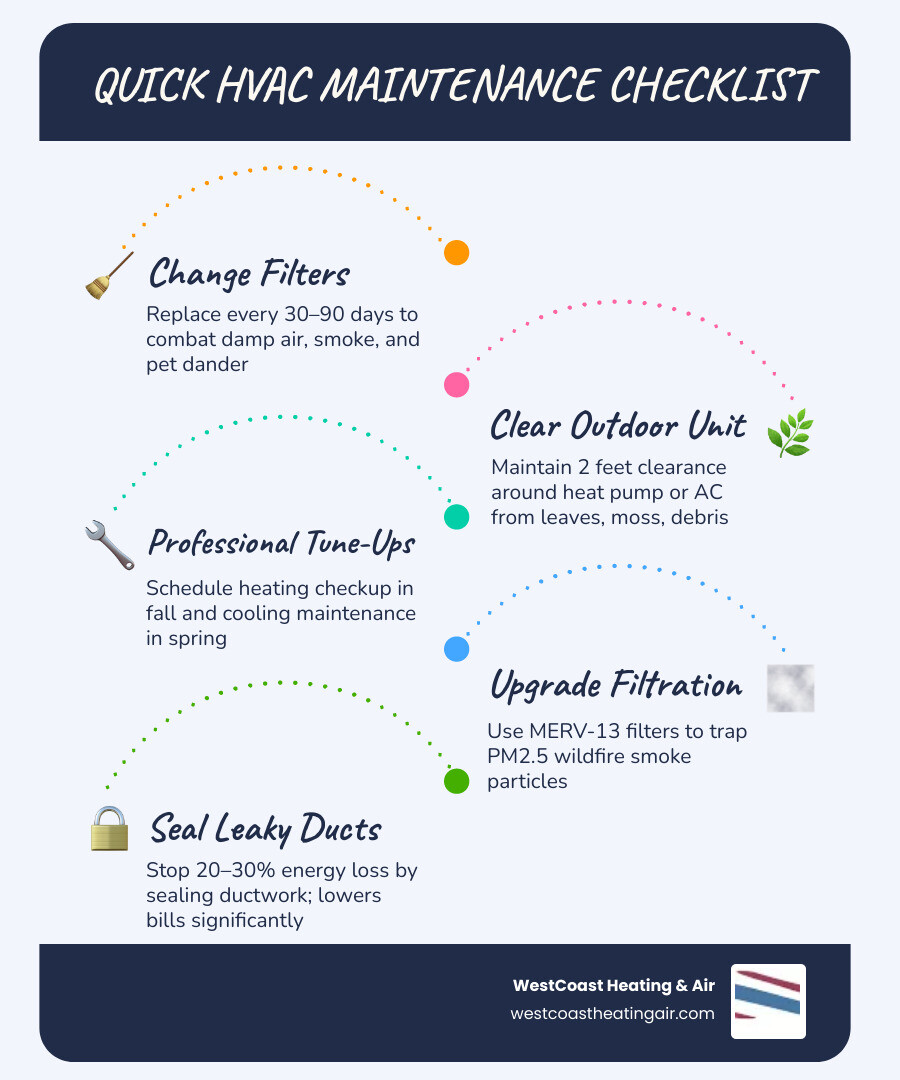
Here is a quick-start checklist of the most important steps to maintain your home’s climate system in the Pacific Northwest:
- Change filters every 30 to 90 days: Damp winter air and summer wildfire smoke clog filters quickly, forcing systems to work harder.
- Maintain outdoor clearance: Keep at least 2 feet of space around your heat pump or AC unit to prevent leaves, moss, and debris from blocking airflow.
- Schedule professional maintenance twice a year: Book a heating checkup in the fall and cooling maintenance in the spring to prevent sudden breakdowns.
- Upgrade to high-efficiency filtration: Use MERV-13 filters to trap fine wildfire smoke particles (PM2.5) and keep your indoor air clean.
- Seal leaky ductwork: Up to 20% to 30% of conditioned air escapes through leaky ducts; sealing them can dramatically lower your energy bills.
As the owner of WestCoast Heating & Air and a former Boeing problem-solver with decades of hands-on experience, I am passionate about sharing practical hvac tips for pierce and king county homeowners to keep their families comfortable. After spending 30 years resolving complex technical challenges, I now dedicate my time to providing honest, dependable residential climate solutions across Puyallup and the surrounding communities.
Hvac tips for pierce and king county homeowners definitions:
- best hvac setup for western washington weather
- how rain and humidity affect your system performance
- how western washington climate affects your hvac system
1. Navigating the Pacific Northwest Climate: Why Damp Air and Wildfire Smoke Demand Action

Our weather in the South Puget Sound is changing. For years, communities like Tacoma, Puyallup, and Spanaway relied on moderate temperatures, but we are now experiencing more intense summer heat domes alongside our classic damp, rainy winters. This transition directly impacts how your residential climate system performs.
The high humidity in our region means your system has to work twice as hard to manage “latent heat”—the moisture trapped in the air. When your system must dehumidify your home before it can effectively lower the temperature, it experiences a significant drop in operating efficiency. Furthermore, the constant shade and damp conditions in areas like Steilacoom and Sumner encourage moss and algae growth on outdoor condenser units, which restricts airflow and corrodes delicate components.
To understand how these unique regional patterns put stress on your home’s setup, explore our detailed guide on Western Washington Weather vs. Your HVAC System. Additionally, you can find helpful advice on protecting your equipment from local environmental wear in our article Don’t Let the Evergreen State Weather Wilt Your HVAC.
Essential HVAC Tips for Pierce and King County Homeowners to Combat Moisture
Excess moisture is the primary enemy of home climate systems in Western Washington. When high humidity levels combine with household dust, they form a thick “biological paste” inside unmaintained ductwork. This paste restricts airflow, harbors allergens, and can lead to mold growth.
To keep your home healthy and your system running efficiently, use these essential moisture-control strategies:
- Keep Indoor Humidity Between 30% and 50%: This range prevents mold growth and keeps your air feeling comfortable.
- Clear Condensate Drain Lines: Algae and mold love to grow in warm, wet condensate lines. Clear them regularly to prevent water damage and system shutdowns.
- Check the Level of Your Outdoor Unit: Heavy PNW rains can cause the soil underneath your outdoor unit’s pad to shift. If the pad becomes uneven, oil can pool in the compressor, leading to premature failure.
For more targeted seasonal advice, check out our Washington Spring HVAC Maintenance Tips for Local Homeowners.
Protecting Indoor Air Quality During Wildfire Smoke Season
In recent years, late summer has brought a new challenge to communities from SeaTac to Orting: wildfire smoke. Wildfire smoke contains fine particulate matter known as PM2.5, which easily bypasses standard fiberglass filters and enters your living spaces.
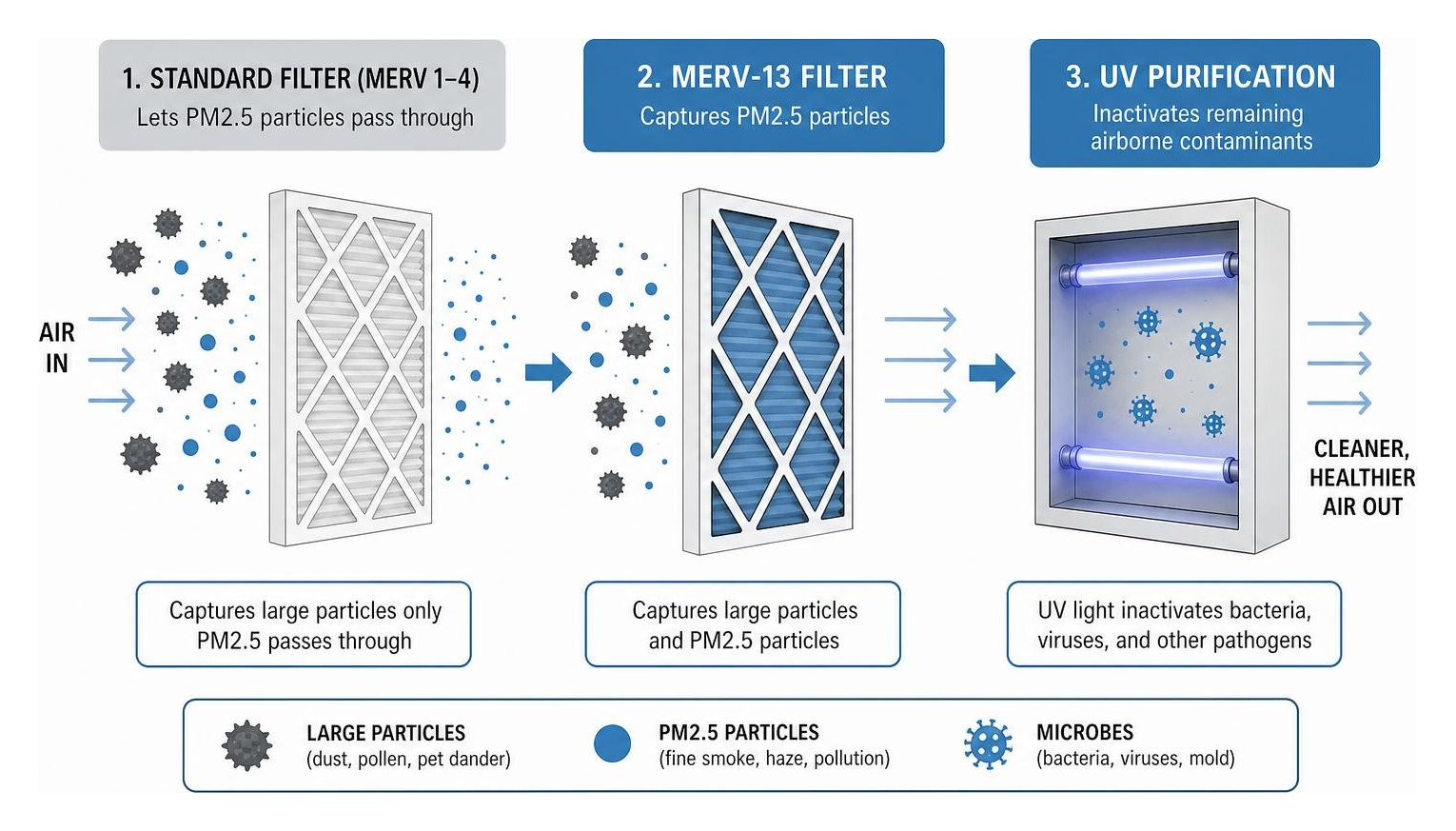
To protect your family during smoke events, keep your windows closed and run your HVAC system on “recirculate” with a high-efficiency filter. Standard filters only trap large dust bunnies, but upgrading to a MERV-13 filter allows your system to capture the microscopic particles found in smoke. For ultimate protection, consider installing a whole-house air purification system. Learn more about how these advanced systems sanitize your indoor air by reading How Do UV Air Scrubbers Work and Should You Get One for Your Pierce County Home?.
2. Choosing the Right System: Heat Pumps, Mini-Splits, and Dual-Fuel Solutions
If your home still relies on baseboard heaters or an aging central furnace, upgrading to a modern system can drastically cut your energy consumption. Because electricity is the primary focus of Washington’s clean energy goals, heat pumps have become the gold standard for home comfort in our region.
Unlike traditional systems that burn fossil fuels or use electric resistance to generate heat, heat pumps simply transfer heat from one place to another. This mechanism allows them to operate at incredible efficiency levels, often delivering three to four times the heating energy they consume. To find out which configuration fits your property best, take a look at our guide on the Best HVAC Setup for Western Washington Weather Explained.
Comparing Heating and Cooling Technologies for Local Homes
Different homes require different climate solutions. Here is a quick comparison of the most popular residential options for our local climate:
| System Type | Best Suited For | Key Advantages | Efficiency Level |
|---|---|---|---|
| Ducted Heat Pump | Homes with existing, well-insulated ductwork. | Provides consistent, whole-home heating and cooling; highly efficient. | High (up to 300%–400% efficiency) |
| Ductless Mini-Split | Older homes, additions, or homes with electric baseboard heat. | Allows for independent temperature control (zoning) in different rooms; no duct loss. | Excellent (SEER2 ratings up to 20–30+) |
| Dual-Fuel (Hybrid) | Colder microclimates (like Roy or Orting) with existing gas lines. | Combines heat pump efficiency with a gas furnace backup for freezing winter nights. | Very High (optimizes fuel source based on outdoor temp) |
3. Maximizing 2026 Rebates, Tax Credits, and Electrification Standards
The regulatory landscape in Washington State is pushing rapidly toward residential electrification. State building codes are tightening, and new environmental regulations require manufacturers to transition to low-GWP (Global Warming Potential) refrigerants, such as R-32 and R-454B. These changes mean older systems utilizing R-410A will become increasingly expensive to service. Upgrading your system now future-proofs your home and protects its resale value.
Leveraging Utility Incentives and Federal Tax Credits
Fortunately, local and federal programs offer significant financial support to help homeowners transition to cleaner, more efficient systems in 2026:
- Puget Sound Energy (PSE) Rebates: PSE offers substantial rebates for homeowners upgrading to qualified ducted or ductless heat pumps, especially when transitioning away from electric resistance heat or older furnaces.
- Seattle City Light Incentives: Residents in portions of King County can access specialized rebates designed to lower the upfront cost of energy-efficient heat pump installations.
- Washington State HEAR Program: This state-level program provides point-of-sale discounts for heat pump space heating, heat pump water heaters, and necessary electrical panel upgrades for qualifying households.
- Federal 25C Tax Credit: Under the Inflation Reduction Act, homeowners can claim a tax credit covering up to 30% of the cost of installing a qualifying high-efficiency heat pump.
4. Practical HVAC Tips for Pierce and King County Homeowners to Lower Energy Bills
You don’t have to replace your entire system to start saving money. Implementing a few smart operational habits can significantly reduce your monthly utility bills:
- Install a Smart Thermostat: Programming your system to lower the temperature by 5 to 10 degrees at night or when you are away can reduce your annual heating costs by up to 10%.
- Reverse Your Ceiling Fans: In the winter, flip the switch on your ceiling fans to run clockwise at low speed. This creates a gentle updraft that pushes warm air trapped at the ceiling back down into your living space.
- Seal Your Ducts: Leaky ductwork can reduce your system’s overall efficiency by up to 20% to 30%. Sealing these leaks ensures that the air you pay to heat or cool actually reaches your living areas.
- Control Your Thermal Envelope: Check doors and windows for drafts, apply fresh weatherstripping where needed, and keep your curtains closed on hot summer days to keep your home comfortable naturally.
For more professional strategies on keeping your monthly utility bills low, read our guide on Maintenance Secrets to Keep Your HVAC Running Smoothly.
5. How to Choose a Qualified Local Contractor and Maintain Your System
Choosing the right contractor is just as important as choosing the right equipment. A poorly installed system will suffer from frequent breakdowns, high energy bills, and a shortened lifespan.
When searching for a residential contractor in the South Sound, ensure they meet these professional standards:
- Insist on a Manual J Load Calculation: Never let a contractor size your system based solely on your home’s square footage. A proper Manual J calculation considers your insulation, window types, layout, and local design temperatures to size your system correctly.
- Verify WA L&I Licensing: Always check the contractor’s active license, bond, and insurance status through the Washington State Department of Labor & Industries online portal.
- Ask About Warranties: A reputable contractor should stand behind their work with robust labor warranties in addition to standard manufacturer equipment warranties.
Crucial HVAC Tips for Pierce and King County Homeowners on System Lifespans
Understanding how long your equipment should last helps you plan for upgrades before an emergency occurs. In our damp Pacific Northwest climate, typical residential system lifespans are:
- Gas Furnaces: 15 to 25 years (with regular annual maintenance).
- Heat Pumps: 12 to 18 years (since they run year-round for both heating and cooling).
- Central Air Conditioners: 15 to 20 years.
If your system is nearing the end of its typical lifespan and requires frequent repairs or causes your energy bills to spike, it is likely time to transition to a modern, high-efficiency system.
Frequently Asked Questions About Puget Sound HVAC Care
How often should I change my HVAC filter in Western Washington?
We recommend checking your filter every 30 days. In homes with pets, allergies, or during active wildfire seasons, you should replace your filter every 30 to 60 days. At a minimum, change it every 90 days to prevent airflow restrictions that strain your system’s blower motor.
What are the best HVAC tips for pierce and king county homeowners to prepare for winter?
Before the cold weather sets in, schedule a professional heating tune-up, clear away any leaves or debris surrounding your outdoor unit, seal drafts around your doors and windows, and set your programmable thermostat to an energy-efficient baseline of 68°F when you are awake.
Why is my heat pump blowing steam during cold weather?
Do not worry—your system is not on fire! In damp, cold climates, frost naturally accumulates on the outdoor coils. Your heat pump will periodically enter a “defrost cycle” to melt this ice, which temporarily reverses the system and creates harmless water vapor or steam.
Conclusion
Taking care of your home’s heating and cooling system does not have to be overwhelming. By following these practical hvac tips for pierce and king county homeowners, you can protect your equipment, breathe cleaner air, and keep your monthly energy costs under control.
At WestCoast Heating & Air, we are proud to be a local, family-owned company with over 20 years of experience serving Puyallup, Tacoma, Sumner, Orting, and the surrounding communities. We focus entirely on residential comfort, offering customized system design, clear customer education, and top-quality products.
Are you ready to optimize your home’s comfort and efficiency? Schedule your residential HVAC consultation today with our friendly, certified team!